
Gołaszewo
Accommodation in Gołaszewo
Gołaszewo is a destination with a distinctly historical focus: documented local history, a cemetery with a changing use, and buildings from different periods shape the place’s best-known themes. If you like choosing places based on their history, you’ll find several specific points of interest here. Gołaszewo is also on the route between Mieścisko and Janowiec Wielkopolski.
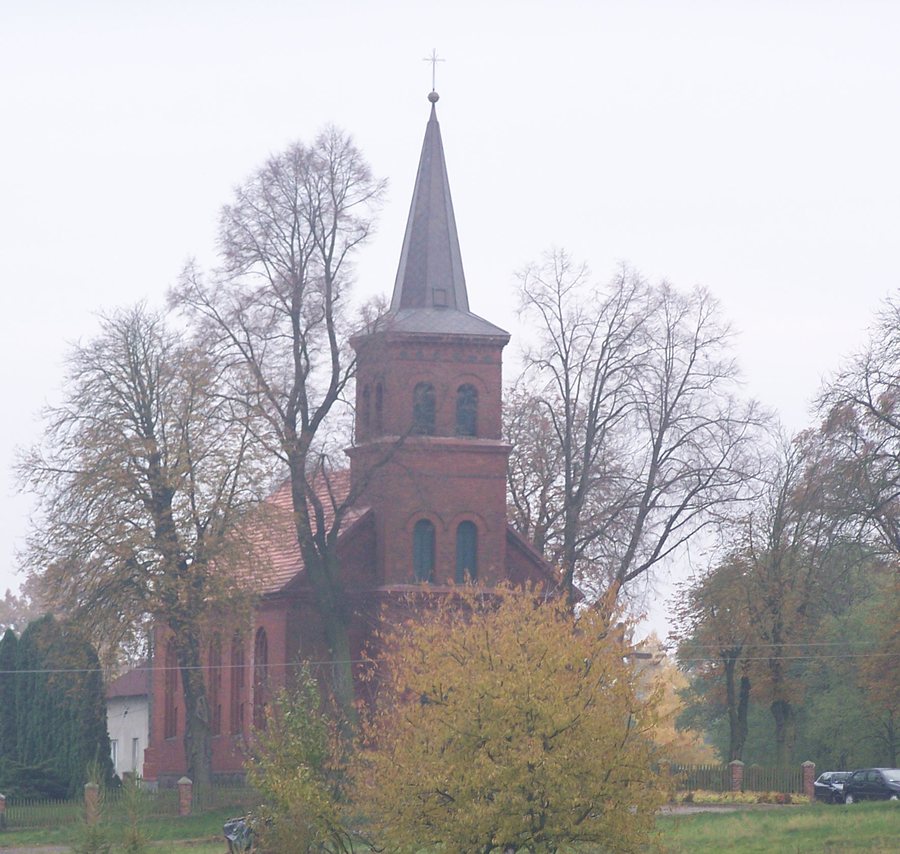
Gołaszewo at a glance
The first documented mention of Gołaszewo dates to 1387, when the place was called Golaszino. Later historical points of reference include a cemetery dating to around 1830 and a railway station building from 1912. The Parish of Saint Stanislaus, Bishop and Martyr, was established in Gołaszewo in 1971. After celebrations marking the church’s anniversary in 2003, a commemorative obelisk with a plaque was erected in the cemetery.
These dates refer to different things: 1387 is the first documented mention of the place, while 1912 is the year the station building was constructed. The school dates from the early 20th century; today, the former school building is used as a home. The former Protestant cemetery dates to around 1830 and is now used as a Roman Catholic cemetery. This makes it possible to associate each date with its respective place or building.
What traces of local history are known?
Several aspects of local history come together at the cemetery. Its former Protestant function and its current Roman Catholic use belong to different periods in its history. There is also the memory of Gołaszewo’s German residents from the pre-war period: the plaque on the commemorative obelisk remembers them. The obelisk was erected after the celebrations marking the church’s anniversary in 2003. The cemetery, memorial, and inscription thus offer different historical points of reference without needing to be conflated into a single event.
The establishment of the parish in 1971 is another distinct chapter in local history. Its full name is the Parish of Saint Stanislaus, Bishop and Martyr. For travelers interested in local religious history and remembrance, these details complement the older traces at the cemetery with a development from a much later period. The date refers to the parish’s establishment, not to the age of the other places or buildings mentioned.
What do the station and former school building tell us?
Gołaszewo’s surviving physical heritage includes a disused railway station and associated railway buildings. The station building in the historic railway complex dates from 1912. It is important to distinguish the age of the building itself from the station’s current operating status: the construction date tells us about the building’s history, while the station is no longer in operation. Visitors exploring Gołaszewo primarily for its local history can consider these railway buildings as a historical theme in their own right, alongside the cemetery and parish.
Another type of building is the former school. It dates from the early 20th century and is now used as a home. Its former function and current use are therefore different. Together with the station building, it shows that the documented examples are not limited to church history but also include former public and infrastructure buildings. Each of the historic buildings mentioned has its own dates and details of use.
How can you plan your trip to Gołaszewo?
Gołaszewo is particularly well suited as a destination if you’re interested in exploring local history through specific places and their former functions. For getting your bearings, its location on the route between Mieścisko and Janowiec Wielkopolski is useful. You can take this location into account when planning your trip and consider Gołaszewo as a possible place to stay if its historical focus suits your plans.
To compare other local pages, you can also visit Mikołajewo, Przysieczyn, Grzybowo, Skoki, Wągrowiec, Kobylec, Legowo, and Sławica.
FAQ
When was Gołaszewo first mentioned?
The first documented mention dates to 1387. At the time, Gołaszewo was called Golaszino.
What is known about the railway station in Gołaszewo?
The station is no longer in operation. The station building in the historic railway complex dates from 1912; the surviving physical heritage also includes associated railway buildings.
How is the former Protestant cemetery used today?
The cemetery, dating to around 1830, is now used as a Roman Catholic cemetery. It also contains a commemorative obelisk with a plaque remembering Gołaszewo’s German residents from the pre-war period.
For the broader travel overview: Wongrowitz.

