
Discover Lulkowo
Accommodation in Lulkowo
Two topics are central to planning a trip to Lulkowo: the history of a palace complex with a landscape park, and several sections of cycling routes. The building and use history spans from the end of the 19th century to 1999. Cyclists can compare two sections of equal length but with different names.
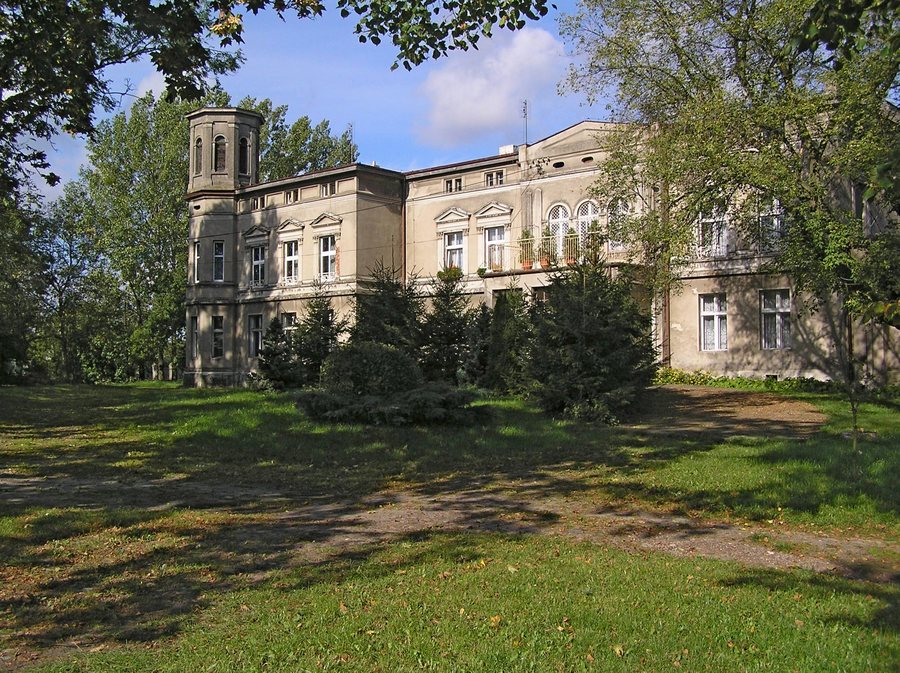
Lulkowo at a glance
- The palace was built by the Weinschenka family towards the end of the 19th century.
- The building complex included granaries and four-family houses.
- After the war, a school occupied the palace until 1999.
- The palace is accompanied by a landscape park whose layout has been preserved, although its tree cover has thinned.
- Remains of a brick enclosure and a gate survive on the northern side of the complex.
- Two cycling route sections are each 3.13 kilometres long; the blue regional cycling route also passes through Lulkowo.
What history does the palace complex tell?
Towards the end of the 19th century, the Weinschenka family had the palace built together with granaries and four-family houses. The complex thus included buildings for storage and housing as well as the palace. Some years after it was built, the indebted estate was acquired and divided into plots by the Królewska Komisja Osiedleńcza dla Prus Zachodnich. The family’s construction of the complex was therefore followed by its later acquisition and the division of the estate. After the war, the palace took on a different use: a school occupied it until 1999. This sequence places the palace’s history in the context of several phases of use.
What remains of the park and the complex?
The palace is accompanied by a landscape park whose layout has been preserved. At the same time, its tree cover has thinned: the park’s preserved structure and the current description of its tree cover are related, but they are not the same thing. Remains of a brick enclosure and a gate also survive on the northern edge of the complex. Alongside the palace, the park’s design and the remaining structural elements of the enclosure can therefore be understood as features of the complex. If you are interested in historic places, these different elements offer a tangible way to explore Lulkowo’s history.
How do the cycling route sections differ?
The Świerczynki–Piwnice–Lulkowo section is 3.13 kilometres long and ends in Lulkowo. The Różankowo–Lulkowo section is also listed as 3.13 kilometres; it runs through Lulkowo, Piwnice and Różankowo. Their equal length makes a direct comparison possible, but the different place names identify distinct sections of the route. In addition, the blue regional cycling route passes through Lulkowo. For its route, consult the latest information from the relevant authority. For conditions on the Świerczynki–Piwnice–Lulkowo section, it is advisable to check locally before setting out.
What does this mean for your trip planning?
The historic features and cycling route information can help you decide what to focus on during your stay. You can consider whether to explore Lulkowo primarily for its palace history and park, or whether the cycling route sections are more important to your plans. When looking for a hotel in Lulkowo, this distinction can be a useful starting point: tailor your search to the interests that shape your trip.
Discover more destinations: Złotoria, Mała Nieszawka, Łysomice, Dzikowo, Stary Toruń, Dobrzejewice, Zławieś Wielka, Wielka Nieszawka.
FAQ
When was the palace in Lulkowo built?
The Weinschenka family had it built towards the end of the 19th century. The building complex at the time also included granaries and four-family houses.
How long are the two cycling route sections?
Both Świerczynki–Piwnice–Lulkowo and Różankowo–Lulkowo are listed as 3.13 kilometres long. The place names distinguish the sections; the blue regional cycling route also passes through Lulkowo.
What remains of the landscape park and enclosure?
The landscape park’s layout has been preserved, but its tree cover has thinned. Remains of a brick enclosure and a gate survive on the northern edge of the complex.
For the broader travel overview: Toruński.

