
Wieniec – Park and History
Accommodation in Wieniec
Wieniec can be explored through two very different themes: a park with a wide variety of trees and shrubs, and a history whose ecclesiastical and estate-related milestones span from the Middle Ages to the 20th century. You can start by exploring the landscape and key historical dates.
Wieniec at a Glance
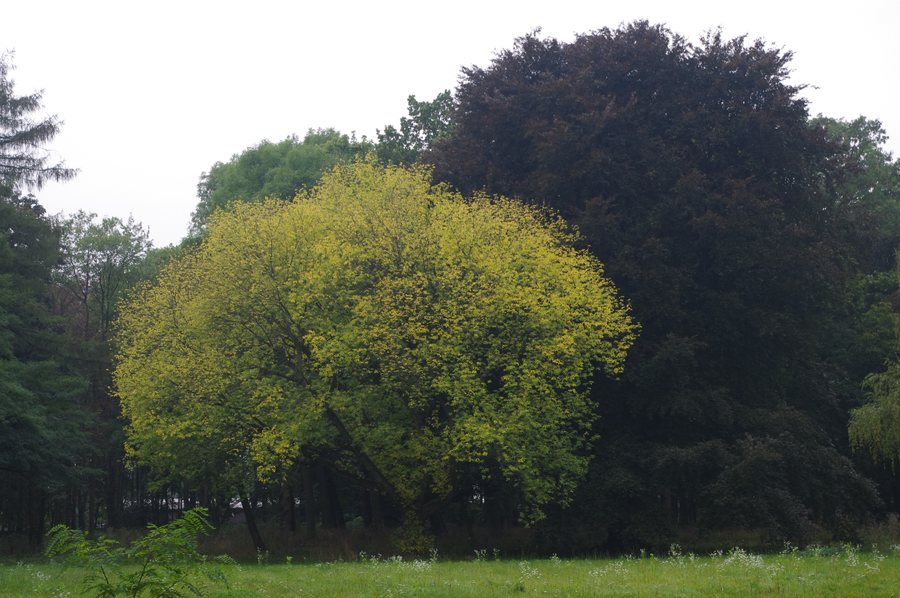
- The park in Wieniec covers 8 ha and contains 1,411 recorded specimens of deciduous and coniferous trees and shrubs.
- Wieniec is first mentioned in a document in 1252.
- Its historic buildings and events include a Neo-Gothic manor house, the Church of St. Nicholas and a distillery dating from 1877.
What makes the park in Wieniec special?
The park’s area of 8 ha gives an indication of its size, while the figure of 1,411 specimens points to a diverse landscape of trees and shrubs. Both deciduous and coniferous trees, as well as shrubs, are mentioned. The species listed include maple, ash, small-leaved lime, European white elm, sycamore maple, chestnuts, larch and plane trees. The park’s described features therefore include different tree species and growth forms.
For trip planning, the park and the town’s history offer two different points of interest: the composition of its trees and shrubs on the one hand, and the historical details about the church and estate on the other. If you are particularly interested in nature, the park’s specific area and species figures may appeal to you; if you prefer historical context, you can explore the milestones in architecture and events that are widely separated in time.
Which milestones shaped the church’s history?
Wieniec is first mentioned in a document in 1252. By the 13th century at the latest, the Bishops of Włocławek had founded the parish and the church dedicated to St. Nicholas. These early dates provide a historical starting point for the town’s ecclesiastical history without conflating them chronologically with later events.
A significant turning point came on 4 March 1941, when German occupation forces blew up the church in Wieniec. The foundation stone for a new church was laid on 11 May 1958, and the first parish Mass there was held at Christmas 1964. In 1967, Bishop Antoni Pawłowski donated the altar to the church. Together, these dates form a clear sequence: destruction, laying of the foundation stone, first Mass and donation of the altar. However, they refer to separate events in different years.
Which buildings are part of the estate’s history?
Between 1826 and 1847, Stanisław Miączyński built a Neo-Gothic manor house in Wieniec, now known as the Old Palace, along with the estate’s farm buildings. The estate complex was later expanded with a distillery dating from 1877. These details distinguish the manor house and farm buildings from the later distillery and place them in chronological order.
Compared with the church’s history, the focus here is on the 19th century: the manor house was built over the period from 1826 to 1847, while the distillery dates from 1877. For an overview of Wieniec, these architectural milestones complement the medieval and more recent dates relating to the church without needing to combine them into a single building history.
Discover more destinations: Skórzno, Brzezie, Antoniewo, Włocławek, Skoki Duże, Izbica Kujawska, Smólnik, Markowo.
FAQ
How large is the park in Wieniec?
The park covers 8 ha. It is listed as containing 1,411 specimens of deciduous and coniferous trees and shrubs.
When was the new church consecrated?
The foundation stone for the new church was laid on 11 May 1958. The first parish Mass was held at Christmas 1964.
What is the Old Palace?
The so-called Old Palace is the Neo-Gothic manor house that Stanisław Miączyński had built in Wieniec between 1826 and 1847.
For the broader travel overview: Włocławek.

