
Nowica: Church, Craft and Forest Quest
Accommodation in Nowica
Nowica combines a puzzle-based forest walk along the Przysłupianka with a church whose furnishings span different periods, and a well-known spoon-carving tradition. This lets you consider nature, sacred art and crafts as separate focuses when planning your trip.
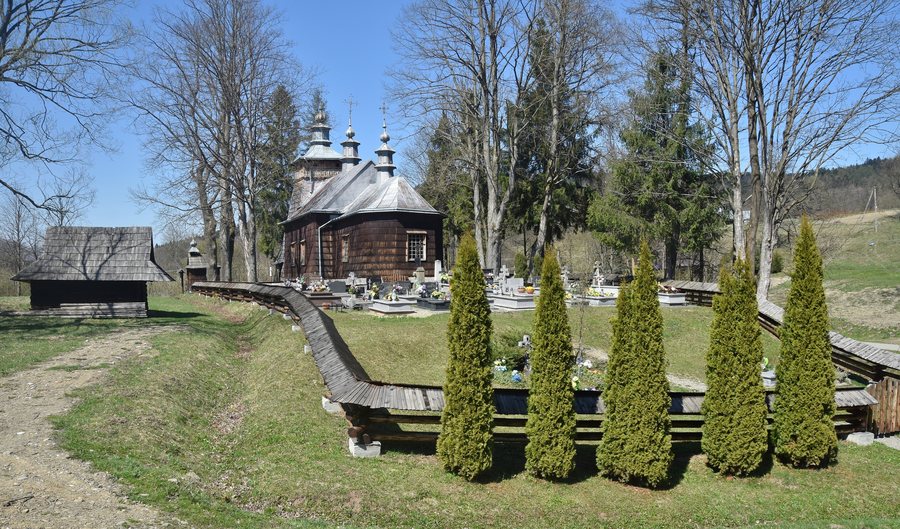 File:Nowica, cerkiew św. Paraskewy (HB11).jpg
Photo: Henryk Bielamowicz via Wikimedia Commons, CC BY-SA 4.0
File:Nowica, cerkiew św. Paraskewy (HB11).jpg
Photo: Henryk Bielamowicz via Wikimedia Commons, CC BY-SA 4.0
Nowica at a glance
- The “Dolina Przysłupianki skarbnicą czystego powietrza” Quest follows a forest walk alongside the Przysłupianka mountain stream.
- The frescoes in the Greek Catholic Church of St. Paraskeva date from 1927; the main and side altars are dated to the 18th century.
- Nowica is known in the region for spoon-making and spoon carving.
What can you experience on the Quest along the Przysłupianka?
The Quest starts in Nowica and combines a walk alongside the mountain stream with a puzzle game. You read rhyming clues and solve the tasks to find the final word needed for a commemorative stamp. The route leads through the forest, where you can discover natural features along the way. This means the game offers more than a series of puzzles: its tasks are incorporated into a walk along the Przysłupianka.
When planning, take the route into account: a temporary trail closure has been reported. Check whether the trail is passable before setting out. The Quest is described as available at any time; this does not, however, guarantee that the route is continuously passable.
What artistic and architectural details define the church?
The Greek Catholic Church of St. Paraskeva offers several distinct details for culturally minded travelers. Its walls are clad in shingles, while the roofs and roof turrets are covered with sheet metal. Inside, the frescoes date from 1927. This date gives the furnishings a specific historical context, while the altars point to older works of art.
A main altar dating from the 18th century stands at the center of the sanctuary. The nave also contains a late Baroque side altar from the second half of the 18th century. It includes icons of the Virgin Mary with the Christ Child and of St. John the Baptist. The details about the building, frescoes and altars can thus be considered as distinct aspects: materials, wall paintings and altar images describe different facets of the church.
What connects Nowica with spoon carving?
Nowica is known in the region for making spoons and carving them. This craft tradition adds a local connection to the production of everyday objects to the village’s nature and culture themes. If you are weighing up your interests, it offers a different perspective from the Quest or church art: here, the focus is on a traditional craft. The well-known tradition does not, however, imply a specific offering for visitors.
How do the experiences in Nowica differ?
The three themes offer different points of focus. The Quest combines movement through the forest, the stream and solving rhyming puzzles. The church focuses on architecture and sacred art, with specific dates ranging from the 18th century to 1927. Spoon-making points to a regional craft tradition. If you align your accommodation plans with your interests, you can consider these themes separately rather than treating them as a single experience.
Discover more destinations: Bystra, Szymbark, Uście Gorlickie, Bobowa, Biecz, Korczyna, Krzywa and Rożnowice.
FAQ
How does the Quest in Nowica work?
You read rhyming clues and solve puzzles to find the final word needed for a commemorative stamp. The Quest follows a forest walk along the Przysłupianka.
What motifs appear on the church’s side altar?
The late Baroque side altar from the second half of the 18th century bears icons of the Virgin Mary with the Christ Child and of St. John the Baptist.
What craft tradition is associated with Nowica?
Nowica is known in the region for making spoons and carving them.
To the main travel overview: Gorlice.

.jpg)