
Discover Wierchomla Wielka
Accommodation in Wierchomla Wielka
Wierchomla Wielka combines a location in a wooded stream valley with a long settlement history and a historic Lemko church. These points of reference can help you decide whether the village matches your travel interests.
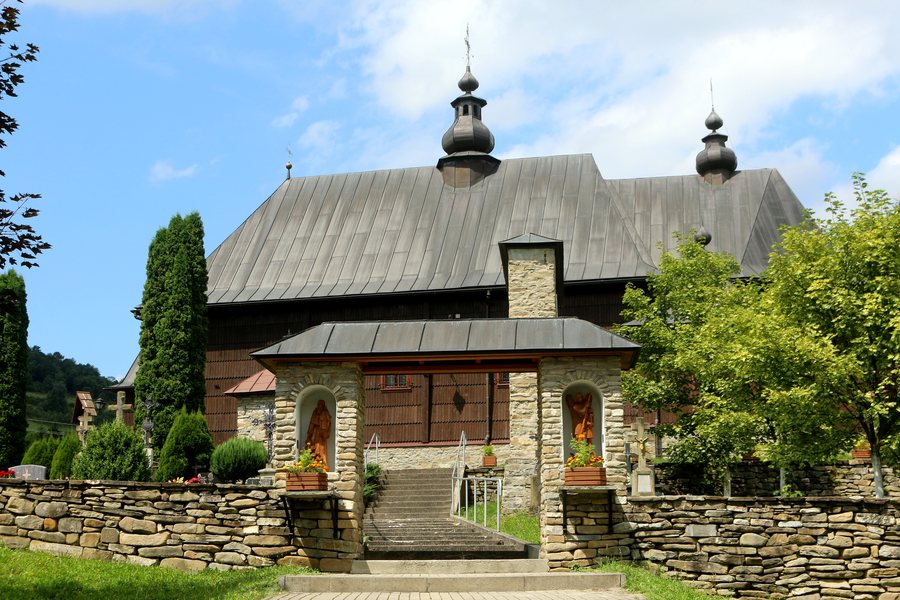 File:Wierchomla Wielka, Cerkiew św. Michała Archanioła 02.jpg
Photo: Piotr Widerski via Wikimedia Commons, CC BY-SA 4.0
File:Wierchomla Wielka, Cerkiew św. Michała Archanioła 02.jpg
Photo: Piotr Widerski via Wikimedia Commons, CC BY-SA 4.0
Wierchomla Wielka at a glance
- The village lies in the Wierchomlanka Valley, within Poprad Landscape Park.
- Wierchomla Wielka stretches for about 6 km along the road and stream.
- The Lemko Church of St. Michael the Archangel dates from 1821.
- Several disused mineral springs produce water containing iron and sulphur.
What is the landscape around the village like?
Wierchomla Wielka and Wierchomla Mała lie in a valley of the Wierchomlanka, surrounded by forested mountains. The stream later flows into the Poprad. The layout of the village is also a useful point of reference: Wierchomla Wielka begins at the entrance to the stream valley and stretches for about 6 km along the road and stream.
Wierchomla Wielka is also located within Poprad Landscape Park. The valley, stream and wooded slopes are key features of its geographical setting. If you are weighing nature against culture while planning your trip, you can consider this landscape alongside the village’s historic traces.
What historic traces can you find in Wierchomla Wielka?
Wierchomla Wielka was founded in 1595 by Cardinal Jerzy Radziwiłł under Wallachian law. The settlers included migrant Wallachian shepherds. These details provide an early historical context for the village without reducing its history to a single era.
At its centre stands the historic Lemko Church of St. Michael the Archangel, dating from 1821, with a cemetery adjoining it. A few old Lemko buildings have been preserved nearby. The church, cemetery and surviving buildings make local architectural and settlement history another topic you can consider alongside the landscape when deciding whether to visit.
What is known about nature and the mineral springs?
The church attic is a protected habitat for lesser horseshoe bats and bent-winged bats. Both are among Europe’s rarest bat species. This adds an ecological dimension to the church’s cultural significance: it is both a historic building and a protected habitat.
The village also has several disused mineral springs with water containing iron and sulphur. Along with the landscape park and the stream, they are another aspect of the village’s character. This can help you decide what interests you most: the wooded valley landscape, the history or the area’s distinctive natural features.
How can this description help you find a hotel?
If you are looking for a hotel for a trip to Wierchomla Wielka, a good place to start is with your main interest: are you drawn to the valley setting, would you like to explore Lemko history, or are you interested in the area’s natural features? Use this information first to decide whether Wierchomla Wielka suits your travel plans, then look for a hotel for your stay.
Discover more destinations: Cieniawa, Uhryń, Mochnaczka Niżna, Rąbkowa, Jazowsko, Żeleźnikowa Wielka, Berest and Florynka.
FAQ
Where is Wierchomla Wielka?
Wierchomla Wielka lies in a valley of the Wierchomlanka, within Poprad Landscape Park. The village begins at the entrance to the stream valley and stretches for about 6 km along the road and stream.
What history is associated with Wierchomla Wielka?
The village was founded in 1595 by Cardinal Jerzy Radziwiłł under Wallachian law. Its settlers included migrant Wallachian shepherds. At its centre stands the Lemko Church of St. Michael the Archangel, dating from 1821.
What is known about the mineral springs?
Wierchomla Wielka has several disused mineral springs with water containing iron and sulphur.
Go to the broader travel overview: Nowy Sącz.

