
Discover Zbylitowska Góra’s history and nature
Accommodation in Zbylitowska Góra
Zbylitowska Góra combines a long history of settlement with a solemn culture of remembrance and a described tree-lined avenue leading to the Soślina Forest. The sites and themes have different focuses, ranging from the settlement’s long history to memorial sites and a route along Pszenna Street.
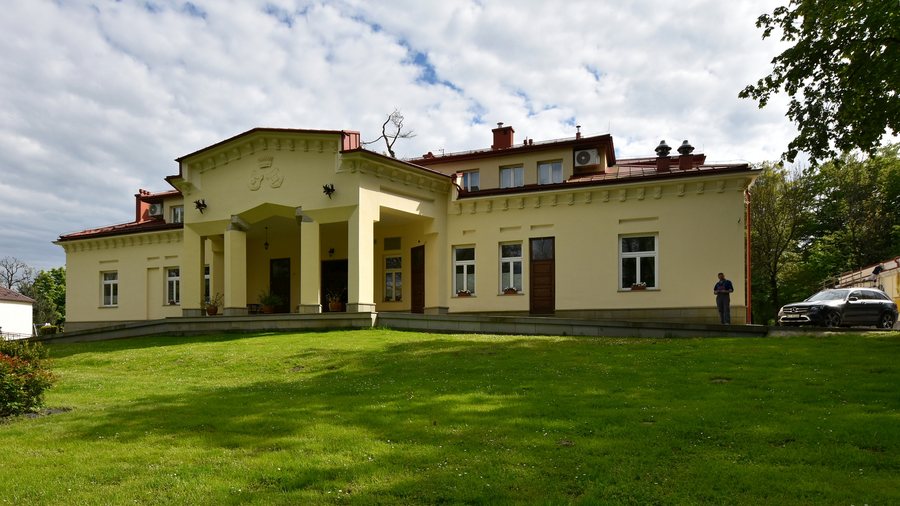
Zbylitowska Góra at a glance
- The settlement’s beginnings date back to the 7th century.
- A memorial in Buczyna Forest commemorates people murdered during the Second World War.
- The Church of the Exaltation of the Holy Cross was built in 1464 on the site of an older wooden place of worship and destroyed during the First World War.
- An avenue along Pszenna Street, 400 metres long, contains 88 trees, mostly sycamore maples.
Which historical themes shape the area?
Zbylitowska Góra is among the oldest human settlements in southern Poland; its beginnings date back to the 7th century. Another point of reference in time is the listed Church of the Exaltation of the Holy Cross: it was built in 1464 on the site of an older wooden place of worship and destroyed during the First World War. The history of settlement and the history of the church thus point to different eras. If you are interested in history, you can consider this span of time one of the themes to explore when learning about the area.
What does Buczyna Forest commemorate?
During the Second World War, Germans carried out mass murders in Buczyna Forest, killing Jewish residents of the Tarnów ghetto and Polish prisoners. The annual prayer gathering of the Galician Jews Remembrance Days, „Galicjaner Sztetl”, begins at the monument „Ofiar Hitlerowskiego Terroru”. The commemorative days remember the people murdered in the forest, most of whom were of Jewish and Polish origin. This part of the area’s history is marked by grief and remembrance. So, if you are exploring the history of Zbylitowska Góra, its older settlement and architectural history is accompanied by the remembrance of the crimes of the Second World War.
What landscape can you discover along Pszenna Street?
A 400-metre-long avenue with 88 trees runs along Pszenna Street; most are sycamore maples. The avenue leads towards Soślina Forest, also known as Sośnina. Beech and oak trees predominate there, while pines are only scattered. The description thus presents two distinct groups of trees: the avenue, dominated by sycamore maples, and the forest, with mostly beeches and oaks. If you are interested in landscapes and trees, this distinction offers a concrete point of reference for adding a nature perspective to the area’s history.
How do you choose suitable accommodation?
The themes described give you a basis for considering whether Zbylitowska Góra suits your travel interests. Then compare hotel offers according to the criteria that matter to your travel group. Choosing accommodation is a separate decision from deciding which aspects of the area you would like to explore further.
Discover more destinations: Rychwald, Świebodzin, Skrzyszów, Wał-Ruda, Janowice, Komorów, Tarnów, Wola Radłowska.
FAQ
How far back does the settlement’s history go?
The beginnings of Zbylitowska Góra date back to the 7th century. The area is among the oldest human settlements in southern Poland.
What does the memorial in Buczyna Forest commemorate?
It commemorates the people murdered there by Germans during the Second World War, including Jewish residents of the Tarnów ghetto and Polish prisoners.
What is known about the avenue leading to Soślina Forest?
The avenue along Pszenna Street is 400 metres long and contains 88 trees, mostly sycamore maples. The avenue leads towards Soślina Forest, also known as Sośnina.
For the wider travel overview: Tarnów.

.jpg)