
Discover Tarnów: culture, nature and regional cuisine
Accommodation in Tarnów
Tarnów combines a Renaissance-influenced old town with museums, green spaces, and regional wine and food culture. For your trip planning, this means you can focus on cultural attractions in the city or also consider nature and wine-related themes in the wider region.
Tarnów at a glance
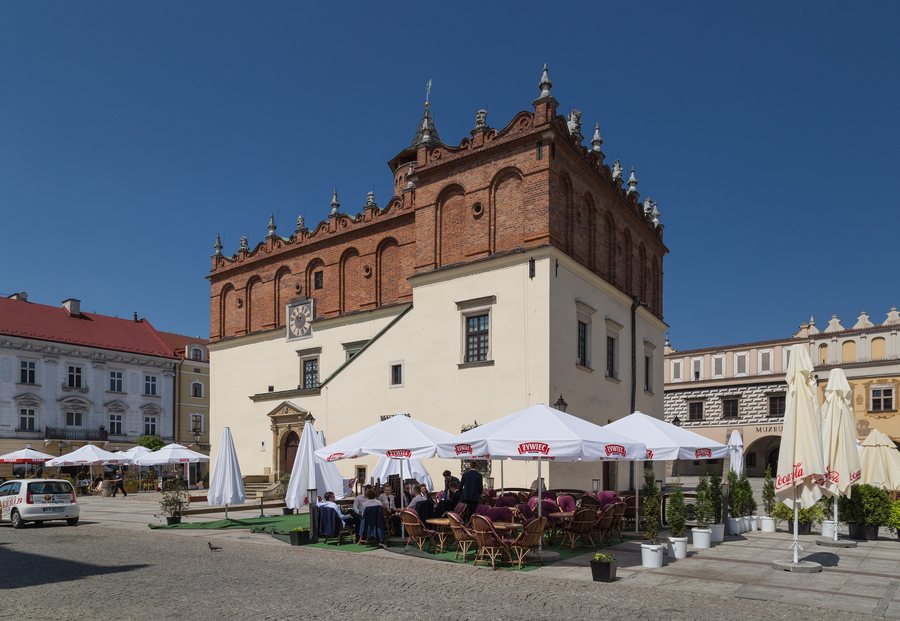
- The market square is lined mainly with two-storey townhouses featuring a variety of architectural styles.
- EuroVelo 4 runs through Tarnów; the 92-kilometre section runs from Wola Batorska via Tarnów to Jodłówka Wałki.
- The enoTARNOWSKIE region brings wine and local cuisine together with culture and tradition, and holds the title of Polish Tourism Brand.
What defines the old town and its cultural attractions?
The Renaissance defines Tarnów’s old town. The market square is lined mainly with two-storey townhouses whose varied stylistic features give the square its architectural diversity. Another distinctive feature of the cityscape is the Szlak Maszkaronów (Mascaron Trail): created in spring 2024, it connects 20 mascarons, each about 30 centimetres tall, at important locations around Tarnów. The figures give a walk through the city its own theme, without requiring a particular pace or set visiting time.
Notable historic sites include the Cathedral Basilica, with Renaissance tomb monuments of the Tarnowski family and a Mannerist tomb monument of the Ostrogski family. The wooden Church of Matki Bożej Szkaplerznej, near the market square, was consecrated in 1440. The Bima is the only surviving fragment of Tarnów’s oldest synagogue, dating from the 17th century; cultural events are held there every year.
The museums also cover a range of subjects. Founded in 1888, the Diocesan Museum is considered Poland’s oldest church museum. A permanent exhibition at the Ethnographic Museum presents the history and culture of the Roma; its exhibits include original horse-drawn wagons. The Panorama Gallery in the main railway station displays fragments of the Panorama that are in the museum’s collection. If you are interested in the city’s history and art, you can include these places in your selection rather than focusing your visit on a single attraction.
What nature and cycling options are there?
The 9.5-hectare “Debrza” nature reserve, a partial forest reserve, lies within the city of Tarnów. It protects a relatively undisturbed lime and oak forest. Strzelecki Park offers a different green setting: its garden is laid out in the English style, with an irregular design and a pond. In the pond stands the mausoleum of General J. Bem, a sarcophagus on six columns with Corinthian capitals.
Skamieniałe Miasto is a nature reserve with unusual rock formations. A blue hiking trail passes through the area. It can be visited year-round, preferably at a time arranged in advance. This excursion adds a nature and hiking focus alongside Tarnów’s cultural attractions.
There is also a clear reference point for a cycling trip: EuroVelo 4, also known as EV4 or VeloMetropolis, runs through Tarnów. The 92-kilometre section goes from Wola Batorska via Tarnów to Jodłówka Wałki. You can include the route in your plans as regional route information; its length alone does not indicate how long a ride will take.
What role do wine and regional cuisine play in a trip?
Tarnów is considered the heart of the enoTARNOWSKIE region, where wine and local cuisine invite visitors to discover culture, tradition and the people. Regular regional events centred on food and wine include the “Wielkie Tarnowskie Dionizje”, held in Tarnów. This could be a point of interest in your trip planning if you would like to get to know Tarnów through its regional cuisine and wine.
In the wider region, you can visit family-run wineries. Guests can taste wines directly from the producers, learn about their history and see how wine is made. For cycling enthusiasts, the EnoVelo route also connects the vineyards of the Pogórze region. Winery visits and the route are separate ways to look beyond the city and explore wine-making and regional cuisine.
Which other destination pages can you compare?
If you’d like to broaden your search beyond Tarnów, here are more destination pages from this selection: Meszna Opacka, Paleśnica, Wojnicz, Ołpiny, Zabawa, Zbylitowska Góra, Jamna, Komorów, Wola Radłowska, Rzuchowa, Wola Rzędzińska, Wał-Ruda, Wierzchosławice, Pleśna, Ładna, Skrzyszów, Zakliczyn, Zgłobice, Ryglice, Janowice, Świebodzin, Tuchów, Siedliska, Milówka, Ciezkowice, Rychwald and Tarnów.
FAQ
How long is the EuroVelo 4 section through Tarnów?
The section described is 92 kilometres long and runs from Wola Batorska via Tarnów to Jodłówka Wałki.
Can Skamieniałe Miasto be visited year-round?
Yes. The nature reserve can be visited year-round, preferably at a time arranged in advance.
Where can you taste wine from the region?
In the wider region, you can visit family-run wineries and taste wines directly from the producers.
For the main travel overview: Lesser Poland.

