
Łódź: Film History, Industrial Architecture and Urban Greenery
Accommodation in Łódź
Łódź brings together impressive architecture, industrial and film history, and extensive green spaces. Its varied themes help you explore the city according to your interests and choose the focus of your stay.
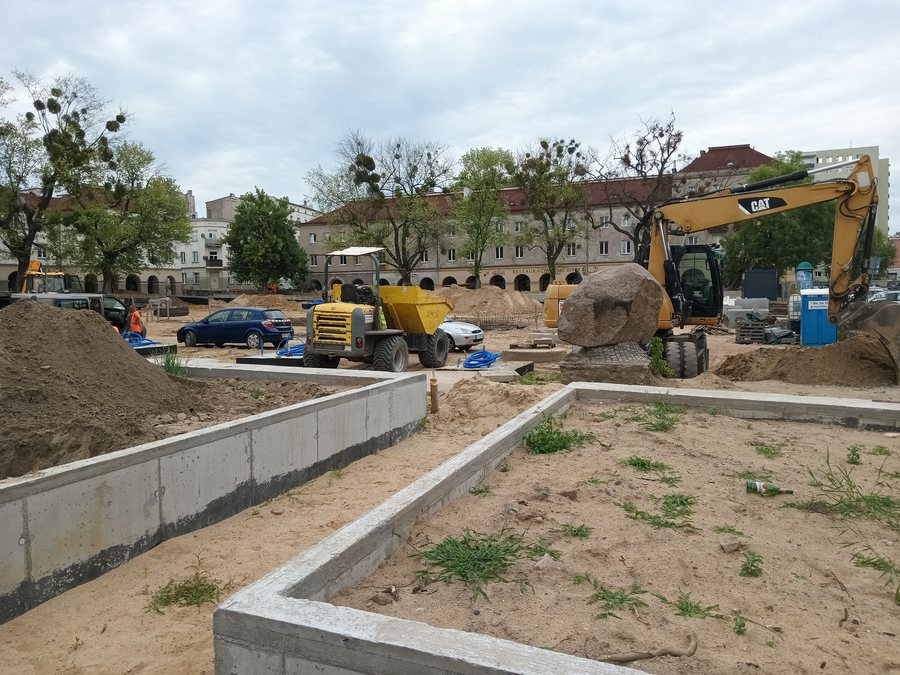 File:12.07.2023 Old Market Square in Łódź, Poland.jpg
Photo: WrS.tm.pl via Wikimedia Commons, Public domain
Łódź at a glance
Among Łódź’s defining features are the neo-Gothic Archcathedral, the richly decorated façades on Piotrkowska Street and historic factory sites. You can encounter film and textile history in museums, exhibitions and the cityscape. At the same time, almost one-third of the city’s area is covered by green spaces. This means you can plan around culture, architecture and nature as distinct themes.
What architecture and industrial history shape Łódź?
The building façades on Piotrkowska Street feature striking eclectic details: caryatids, reliefs and bay windows. Caryatids are supports sculpted as figures, reliefs project from a flat surface, and bay windows extend out from the façade. The neo-Gothic Archcathedral offers a different architectural accent. It is also a venue for organ concerts; individual concert dates vary. If a concert is important to your plans, check the latest schedule.
Łódź’s industrial past can also be explored at a range of sites. Manufaktura is located on the grounds of Izrael Poznański’s former factory. Księży Młyn is Łódź’s largest historic factory complex, dating from the second half of the 19th century. One example points to a former factory site, while the other is an entire historic complex. On Piotrkowska Street, architectural heritage is also part of a lively streetscape: its tenement houses and palaces contain shops, restaurants, cafés, pubs and music clubs.
How can you explore textile and film history?
The Central Museum of Textiles holds one of the world’s largest collections of contemporary artistic textiles. The permanent exhibition “Microhistories. Łódź and its People” at the Łódź City Culture Park offers a different perspective, telling the city’s multicultural textile history through the everyday lives of its residents. The collection and the everyday-life stories therefore highlight different aspects.
At the Film Museum, the main exhibition “Łódź filmowa” traces the development of cinematography in Łódź and how the city became the capital of the Polish film industry. The Walk of Fame on Piotrkowska Street also points to Łódź’s film heritage. This lets you compare an exhibition with another tribute to film situated in the streetscape as part of your cultural itinerary.
EC1 also brings together a range of cultural attractions: it is home to a planetarium, the National Center of Film Culture and the Center of Comics and Interactive Narration. If you prefer to distinguish places and exhibitions by subject, you can consider these institutions alongside the textile and film history attractions.
What historic sites and green spaces are there?
The Old Cemetery on Ogrodowa Street is a testament to Łódź’s multicultural heritage. It was established between 1885 and 1888 as a burial place for Catholics, Protestants and Orthodox Christians. The Jewish Cemetery in Łódź has a different history: it was established in 1892 on land donated to the local community by Izrael Poznański. At more than 40 hectares, it is Poland’s largest Jewish necropolis and one of the largest in Europe. The two sites represent different aspects of the city’s history.
Green spaces are also part of Łódź’s character. Almost one-third of the city’s area is covered by greenery, including more than 40 city parks and Łagiewnicki Forest within the city limits. If you would like to include nature in your travel plans alongside architecture and culture, this is an important part of the city’s profile.
The Survivors’ Park commemorates the survivors of the Litzmannstadt Ghetto with the Monument of Poles Saving Jews and more than 600 “memory trees” planted by survivors. This memorial site adds a tangible remembrance of the survivors to the city’s historical themes.
What activities are mentioned for different age groups?
Manufaktura offers an entertainment center and the Experymentarium for children and adults. At the Tourist Center of Księży Młyn, activities include guided tours of workers’ houses and the historic workers’ residential district, as well as city games. There are also textile-tradition workshops for children and teenagers, and art workshops for children and adults. The workshops mentioned are therefore aimed at different age groups. Check whether the tours and workshops are currently running before your visit.
Discover more destinations: Starowa Góra, Załęcze Wielkie, Rzgów, Borowa, Kurowice, Tuszyn, Brójce, Górka Pabianicka.
FAQ
Which places showcase Łódź’s film history?
The main exhibition “Łódź filmowa” at the Film Museum traces the development of cinematography in Łódź. The Walk of Fame on Piotrkowska Street also points to the city’s film heritage.
How is Łódź’s textile history presented?
The Central Museum of Textiles holds a large collection of contemporary artistic textiles. The permanent exhibition “Microhistories. Łódź and its People” tells the multicultural textile history through the everyday lives of residents.
What activities are mentioned for children and adults?
Manufaktura offers an entertainment center and the Experymentarium for children and adults. The Tourist Center of Księży Młyn lists textile-tradition workshops for children and teenagers, as well as art workshops for children and adults. Check whether they are currently running before your visit.
How much green space is there in Łódź?
Almost one-third of the city’s area is covered by green spaces. These include more than 40 city parks and Łagiewnicki Forest within the city limits.
For the main travel overview: Lodz.

