
Discover Wieluń: History, Trails and Urban Green Spaces
Accommodation in Wieluń
Wieluń brings together traces of medieval fortifications, green spaces and a trail that recalls the history of the narrow-gauge railway. For your planning, an important distinction is that Baszta Męczarnia has set visiting hours, while the trail and parks each offer their own focus.
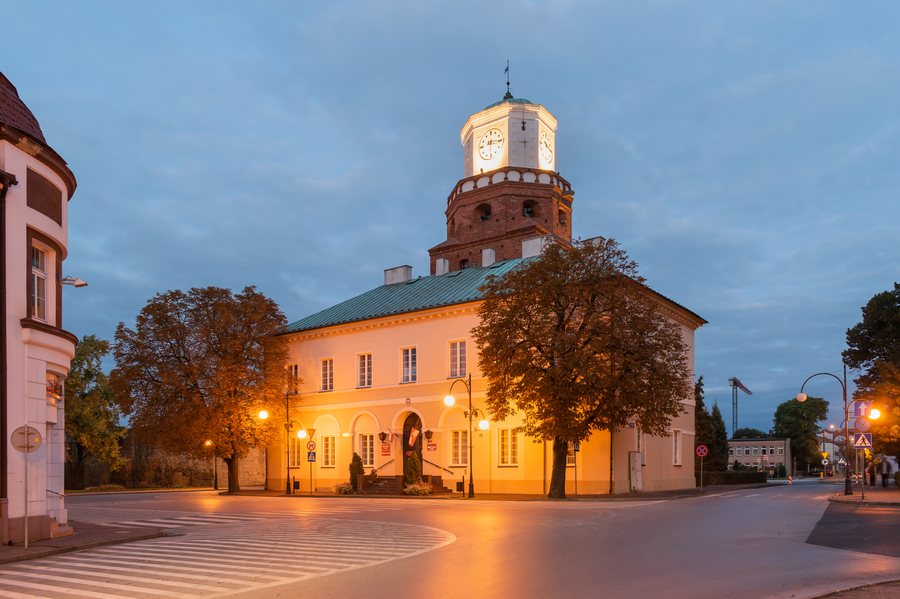
Wieluń at a glance
- Baszta Męczarnia can be visited Monday to Friday from 9:00 to 15:00 after purchasing an admission ticket at the museum.
- The medieval defensive walls were approximately 1,200 to 1,300 metres long.
- The trail following the route of the Wieluń narrow-gauge railway includes a paved section of more than 4 kilometres within the municipality.
- The green spaces described include Miejski im. Żwirki i Wigury Park, Lasek Miejski and Lasek Kurowski Nature Reserve.
Which traces of the city's history can you discover?
The medieval walls of Wieluń were approximately 1,200 to 1,300 metres long. The original fortifications had two gates: the Kaliskie Gate to the west, also known as the Dąbrowska Gate, and the Krakowska Gate to the east, also known as the Rudzka Gate. Each pair of names refers to the same gate; there were therefore two gates, each with an alternative name, not four different gates.
Another glimpse into the city's history awaits at Baszta Męczarnia. The exhibition “W izbie wieluńskiego kata” explores the history of Wieluń's executioners and their workshop. Visits are restricted to specific hours: Baszta can be visited Monday to Friday from 9:00 to 15:00, after you have purchased an admission ticket at the museum. This information can help you fit a visit to the tower into your day. Those interested in history can consider the medieval fortifications and the exhibition as distinct aspects of the city's past.
What does the trail following the narrow-gauge railway offer?
The trail following the route of the Wieluń narrow-gauge railway includes a paved section of more than 4 kilometres within the municipality of Wieluń. Cyclists, walkers, horse riders and inline skaters are listed as users. This makes the route a useful option if you would like to combine your stay with outdoor activity; take its different uses into account when planning your day.
Along the trail, information boards describe the railway's history and display historical photographs. The route offers not only a chance to get active, but also a glimpse into the former narrow-gauge railway. There are also two tourist service points with tables, benches and toilets. The boards and rest stops are separate features of the same trail: one shares the railway's history, while the other provides the listed facilities for a break.
Which green spaces shape Wieluń?
Miejski im. Żwirki i Wigury Park was created in 1852 to a design by district engineer Karol Brochocki. It was laid out on the site of a former moat and defensive walls, between today's Śląska and Krakowskie Przedmieście streets, along Piłsudskiego Street. The park's origins connect it directly with Wieluń's former fortifications.
Lasek Miejski is a forest park north of Wojska Polskiego Street. Its main feature is a walking avenue running parallel to the street. The Wieluński Ogródek Botaniczny was established on ten hectares of Lasek Miejski between 1998 and 2000. These details highlight a different feature of each place: the walking avenue in the forest park, and the known area and establishment period of the botanical garden.
The “Lasek Kurowski” Nature Reserve has a different character. Established on 24 November 1983, it protects natural oak-hornbeam stands with fir trees, as well as alder swamp forest and alder floodplain forest. If you want to distinguish urban green spaces from protected forest communities, these details give you more specific information about the habitats under protection. Kamieniołomy Kowalskiego, meanwhile, is a disused quarry at the intersection of Częstochowska and Polna streets.
Which other local destination pages can you compare?
For further orientation, you can also explore the pages for Wieluń, Janów, Dzietrzniki, Konopnica, Osjaków and Zalecze Male, as well as Piotrków Trybunalski and Brzeziny.
FAQ
When can you visit Baszta Męczarnia?
Monday to Friday from 9:00 to 15:00, after purchasing an admission ticket at the museum.
What does the exhibition at Baszta show?
“W izbie wieluńskiego kata” explores the history of Wieluń's executioners and their workshop.
What facilities are available along the narrow-gauge railway trail?
There are two tourist service points along the trail with tables, benches and toilets.
For the wider travel overview: Łódź.

.jpg)