
Discover Wieluń: Walls, Museum and Culture
Accommodation in Wieluń
Wieluń combines medieval urban history with religious heritage, museum collections and green spaces. The historic fortifications offer a tangible introduction to the town’s development, while exhibitions and walking routes provide other points of interest. You can tailor your trip to whether you are most interested in exploring architecture, historical collections or outdoor paths.
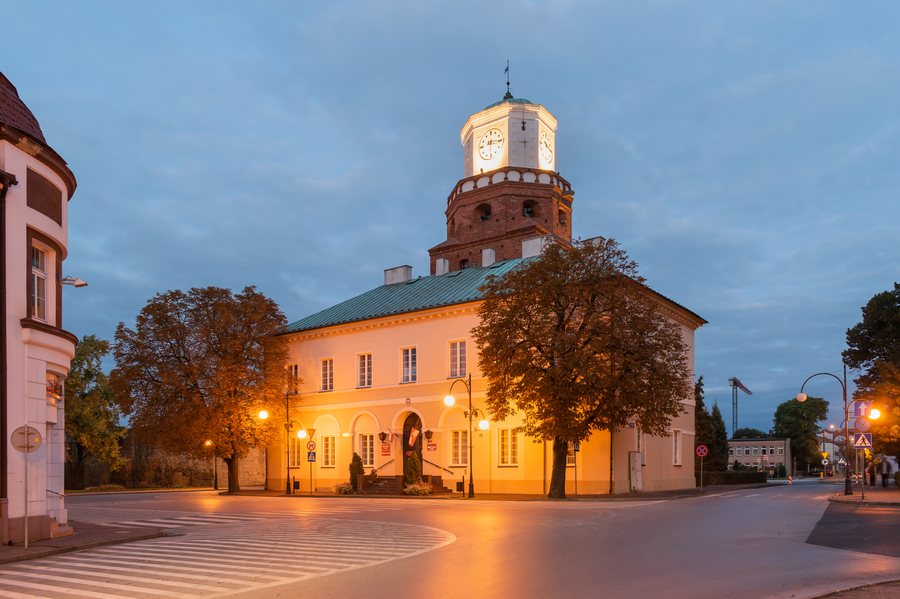
Wieluń at a glance
- The defensive walls enclosed a 12-hectare Old Town and were approximately 1,200 to 1,300 metres long.
- The Kolegiata Bożego Ciała is a church in Wieluń and a collegiate church of the Canons’ Chapter at the sanctuary.
- The Muzeum Ziemi Wieluńskiej displays, among other things, finds from the period of Roman influence and objects from the grave of a blacksmith-goldsmith.
- The Wieluń destination also offers historical exhibitions, green spaces and a route following the Wieluń Narrow Gauge Railway.
What do the walls tell us about Wieluń?
The medieval fortifications are a good starting point for understanding the town’s history in its physical setting. They are estimated to have been about 1,200 to 1,300 metres long and enclosed the 12-hectare Old Town. Wieluń was one of 25 towns surrounded by defensive walls during the reign of Casimir the Great.
The fortifications were built after the town fire of 1335 and gradually replaced the wooden earthworks. They were constructed from local sandstone, with brick crenellations. Originally, there were no bastions, but there were two gates: the Kalisz Gate and the Kraków Gate. Recorded names identify the western gate as Kaliskie, also called Dąbrowska Gate, and the eastern one as Krakowska, also called Rudzka Gate. Together, the dimensions, materials and gates convey a picture of how the Old Town was fortified.
Which church and museum collections are worth a look?
The Kolegiata Bożego Ciała, the Sanctuary of Our Lady of Consolation (Sanktuarium Najświętszej Maryi Panny Pocieszenia), is a church in Wieluń and also a collegiate church of the Canons’ Chapter at the sanctuary. It adds a religious and institutional dimension to the history of the fortifications. If you want to combine different historical topics on a city break, it offers a chance to explore religious heritage alongside walls and gates.
The collections at the Muzeum Ziemi Wieluńskiej reach far back in time. One exhibition room displays finds from the period of Roman influence, associated with the Przeworsk culture from the 1st century BC to the 5th century AD. These include terra sigillata and Roman coins. The grave goods of a blacksmith-goldsmith, including metalworking tools, are also on display. Numerous iron objects from everyday life and warfare, along with reconstructions of weapons and dwellings from the period, provide further context.
What stories do the exhibitions in Baszta Męczarnia tell?
The exhibitions in Baszta Męczarnia explore different aspects of the town’s history. “W izbie wieluńskiego kata” (In the Chamber of Wieluń’s Executioner) focuses on Wieluń’s executioners and their work; items on display include executioners’ clothing, equipment and typical instruments of torture. “Dzieje oręża w średniowieczu i w okresie staropolskim” (The History of Arms in the Middle Ages and the Old Polish Period) explores the site’s defensive role and the participation of Wieluń’s residents in armed conflicts from the town’s beginnings through the 17th century.
The multimedia section of “Dotknij historii Wielunia” (Touch the History of Wieluń) also presents a 3D animated legend about Prince Władysław Odonic’s hunt. If this is important to your plans, check current access arrangements with the museum. Baszta Męczarnia can be visited Monday to Friday from 9:00 to 15:00 after purchasing an admission ticket at the museum; check the visitor arrangements before you travel.
Where can you find green spaces and walking routes in Wieluń?
Park Miejski im. Żwirki i Wigury was established in 1852 to a design by district engineer Karol Brochocki. It was laid out on the site of a former moat and defensive walls and runs along Piłsudskiego Street, between present-day Śląska and Krakowskie Przedmieście streets. Lasek Miejski is a woodland park north of Wojska Polskiego Street; its main feature is a walking avenue parallel to the street. The Wieluński Ogródek Botaniczny was established on ten hectares of Lasek Miejski between 1998 and 2000.
The “Lasek Kurowski” nature reserve offers another nature-related attraction. Established on 24 November 1983, it protects natural oak-hornbeam stands with firs, as well as alder carr and alder alluvial forest. If you want to include green spaces in your travel plans alongside historic buildings, you can explore them as distinct attractions rather than treating them as exhibitions.
The route following the Wieluń Narrow Gauge Railway includes a paved stretch of more than four kilometres within Wieluń municipality. It is intended for cyclists, walkers, horse riders and roller skaters. Information boards along the route tell the railway’s history and show historical photographs. There are also two tourist service points with tables, benches and toilets. Check the route conditions and the state of the facilities before your visit.
How can you tailor your hotel search to your trip?
Next, consider which location best suits your own itinerary. The different historical and natural attractions can help you match your hotel search to your personal interests.
Discover more destinations: Dzietrzniki, Janów, Zalecze Male, Konopnica and Osjaków.
FAQ
How long were Wieluń’s defensive walls?
They were approximately 1,200 to 1,300 metres long and enclosed the 12-hectare Old Town.
What can you discover at the Muzeum Ziemi Wieluńskiej?
The collections described include finds from the period of Roman influence, terra sigillata, Roman coins, tools from the grave of a blacksmith-goldsmith, as well as iron objects and reconstructions.
When can Baszta Męczarnia be visited?
It can be visited Monday to Friday from 9:00 to 15:00 after purchasing an admission ticket at the museum. Check the visitor arrangements before you travel.
To the main travel overview: Wieluń.

.jpg)