
Raciborowice Górne – Church, History and Hiking Trail
Accommodation in Raciborowice Górne
Raciborowice Górne offers something for a range of interests: a church with a long history of construction, historic farmhouses and a blue hiking trail that passes through the village. The facts below can help you put the culture and landscape into context when planning your trip.
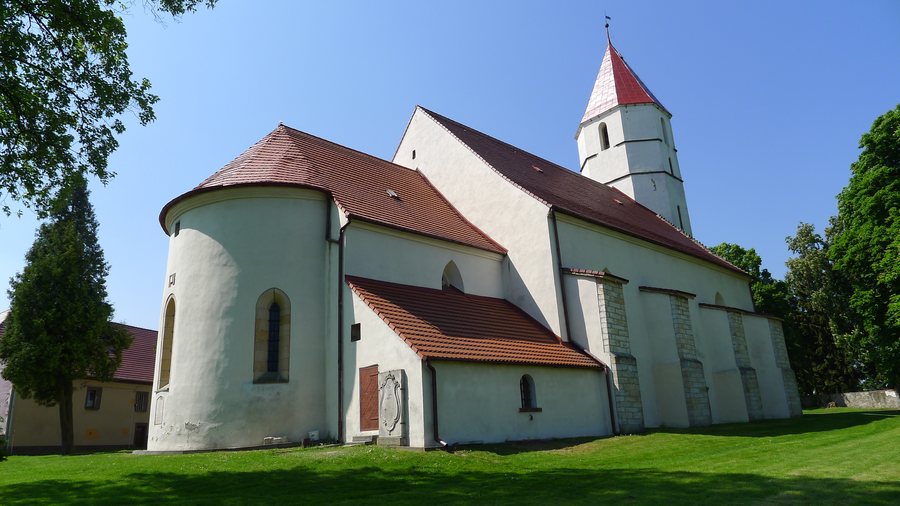 File:Raciborowice Górne, Kościół pw. Św. Michała Archanioła.JPG
Photo: Maciek Kwiatkowski via Source, CC BY-SA 3.0
File:Raciborowice Górne, Kościół pw. Św. Michała Archanioła.JPG
Photo: Maciek Kwiatkowski via Source, CC BY-SA 3.0
Raciborowice Górne: Key Facts
- The Trawnik ridge lies west of the village and reaches 262.7 m above sea level.
- The Church of St. Michael the Archangel is dated either to before the 13th century or to the 13th century; it was remodelled in the late Gothic style in the second half of the 16th century.
- The blue hiking trail passes through Bolesławiec, Wartowice, Raciborowice Górne and Lwówek Śląski.
What is the history of the buildings and what traces of the past remain?
The Catholic Church of St. Michael the Archangel is a prominent landmark in the village’s history. It is dated either to before the 13th century or to the 13th century; it was remodelled in the late Gothic style in the second half of the 16th century. A tower was added in 1577 and a baptismal font in 1578 as part of this work. The dates distinguish two additions within the remodelling phase and provide specific chronological points in the building’s history.
A wayside cross stands on a roadside embankment near the church. It adds a single stone monument to the historic surroundings. The old farmhouses reveal another side of the village’s history: many date from the 18th century. The year 1853 is given as the construction or renovation date for house No. 68, and 1811 for house No. 67. These dates should therefore not necessarily be read as construction dates alone. Together with the church, the houses offer different examples through which to explore the village’s architectural past.
What do the landscape and hiking trail offer as points of reference?
The larger Trawnik ridge, at 262.7 m above sea level, lies west of Raciborowice Górne. If you are mainly interested in the village’s history, the church, wayside cross and farmhouses offer specific points of interest; if you are looking for a hiking route, you can include the blue trail in your plans.
The trail runs through Bolesławiec and Wartowice and continues through Raciborowice Górne to Lwówek Śląski. Before setting out, check the route details relevant to your plans.
How can you plan your visit around your own interests?
The attractions offer different points of interest: the church highlights its architectural history and individual additions, the houses showcase historic building styles, and the blue hiking trail provides a named route. You can use this information to decide in advance which topics matter to your trip. A park in the village is currently intended to be a children’s playground. If you plan to visit the park, ask locally about its current condition.
For a first selection, your personal interests are therefore the main consideration: would you like to explore the church’s architectural history, learn about historic houses or check the route of a hiking trail? You do not need to follow a set order when visiting and can plan further around the places that interest you.
Discover more destinations: Naumburg am Queis, Kruszyn, Kliczków, Zebrzydowa, Kraśnik Dolny, Bunzlau, Osiecznica.
FAQ
When does the Church of St. Michael the Archangel date from?
Its construction is dated either to before the 13th century or to the 13th century. It was remodelled in the late Gothic style in the second half of the 16th century; the tower was added in 1577 and the baptismal font in 1578.
Which places does the blue hiking trail pass through?
The route described passes through Bolesławiec, Wartowice, Raciborowice Górne and Lwówek Śląski.
What is known about the park?
It is currently intended to be a children’s playground. If you plan to visit the park, ask locally about its current condition.
For the broader travel overview: Bolesławiecki.

