
Ołdrzychowice Kłodzkie: Churches, Castle and River Nature
Accommodation in Ołdrzychowice Kłodzkie
A church, mausoleum, castle architecture and the Biała Lądecka give Ołdrzychowice Kłodzkie a character that combines architectural history and river nature.
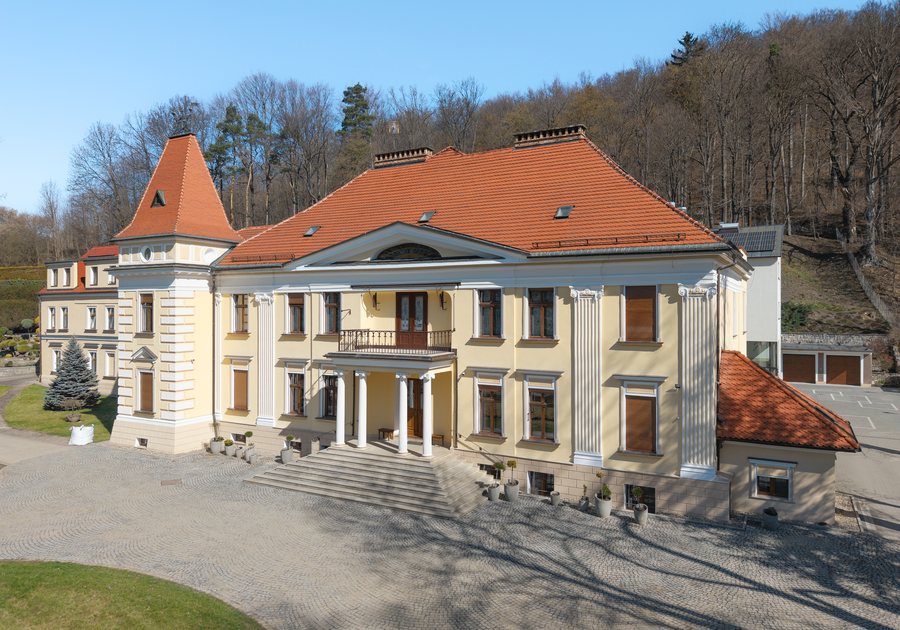 File:2025 Pałac Oppersdorfów w Ołdrzychowicach Kłodzkich (05).jpg
Photo: Jacek Halicki via Wikimedia Commons, CC BY-SA 4.0
Quick facts about Ołdrzychowice Kłodzkie
- The Church of St. John the Baptist is an example of Silesian sacred architecture from around the mid-19th century.
- The mausoleum of the related Oppersdorf and Magnis families was built near the church in 1889.
- The industrialist's palace is considered an example of late Silesian neoclassicism.
- The Biała Lądecka flows through the village; species found in it include brown trout, grayling and the water-crowfoot Ranunculus penicillatus.
Which buildings tell the story of the village?
The Church of St. John the Baptist brings together several features that make it an interesting religious building: carefully executed architectural details, polychromy and furnishings. Polychromy refers to multicoloured decoration; alongside the architectural details, it forms part of the description handed down to us. Its approximate period of construction—the mid-19th century—places the church in time without narrowing the date down to a single year.
The mausoleum, built in 1889 for the related Oppersdorf and Magnis families, stands beside the church. The industrialist's palace offers a different architectural accent: it is classified as late Silesian neoclassicism. In the 1870s, it was extended with a short southwestern section featuring a tower and a recessed western wing with two sections. These details give the stylistic classification a specific architectural context.
Wayside crosses and chapels from the 18th and 19th centuries are also among the village's sights. Together with Oppersdorf Castle, which is also considered a sight, they create a broad range of local cultural heritage—from small religious buildings to larger castles and palaces.
What shapes the river landscape and character of the village?
The Biała Lądecka flows through Ołdrzychowice Kłodzkie. Species cited for the river include brown trout and grayling, as well as the aquatic plant Ranunculus penicillatus, known in English as stream water-crowfoot. The description of the natural environment therefore includes both fish and a plant found in the river. Some of Poland's purest dolomite deposits are also located in the destination's vicinity; they form part of the area's geological context.
The former textile mills are another aspect of the village's history. They are a named stop on the Jan Szczypiński Trail.
What does the wider Kłodzki destination have to offer?
The town of Kłodzko is a separate highlight within the wider Kłodzki destination. The Kłodzko Fortress stands on Zamkowe Wzgórze, west of the Nysa Kłodzka. Beneath the combat hill, the fortress has an underground labyrinth of around seven kilometres of passages. This approximate length gives an idea of the scale of this historic defensive system.
Kłodzko is also home to the Museum of Kłodzko Land, housed in a Baroque building that was formerly a Jesuit college. Its regional collections cover history, archaeology, ethnography, art and natural history. Visitors can also explore medieval underground rooms more than six metres below ground, which show the everyday life of Kłodzko's former inhabitants. Check the latest visitor information before your visit.
The themes can be clearly distinguished: Ołdrzychowice Kłodzkie offers opportunities to explore local architectural history and river nature, while Kłodzko adds a fortress and regional collections to the wider destination. If you are looking for accommodation, consider which of these highlights you would like to focus on when planning your trip.
Discover more destinations: Kąty Bystrzyckie, Raszków, Lewin Kłodzki, Lądek-Zdrój, Jugów, Stojków, Lądek-Zdrój, Nowa Ruda.
FAQ
When was the mausoleum by the church built?
The mausoleum of the related Oppersdorf and Magnis families was built beside the Church of St. John the Baptist in 1889.
Which species are found in the Biała Lądecka?
The river is home to brown trout, grayling and the water-crowfoot Ranunculus penicillatus, among other species.
What cultural highlights can you find in the wider Kłodzki destination?
In Kłodzko, the highlights include the fortress with its underground labyrinth of passages and the Museum of Kłodzko Land, with its regional collections and medieval underground rooms.
See the wider travel overview: Kłodzki.

