
Lubachow
Accommodation in Lubachow
The reservoir, hydropower and historic sites shape Lubachow. If you take waterscapes, the history of technology or cycling opportunities into account when choosing a destination, you will find several specific points of interest here to help plan your trip.
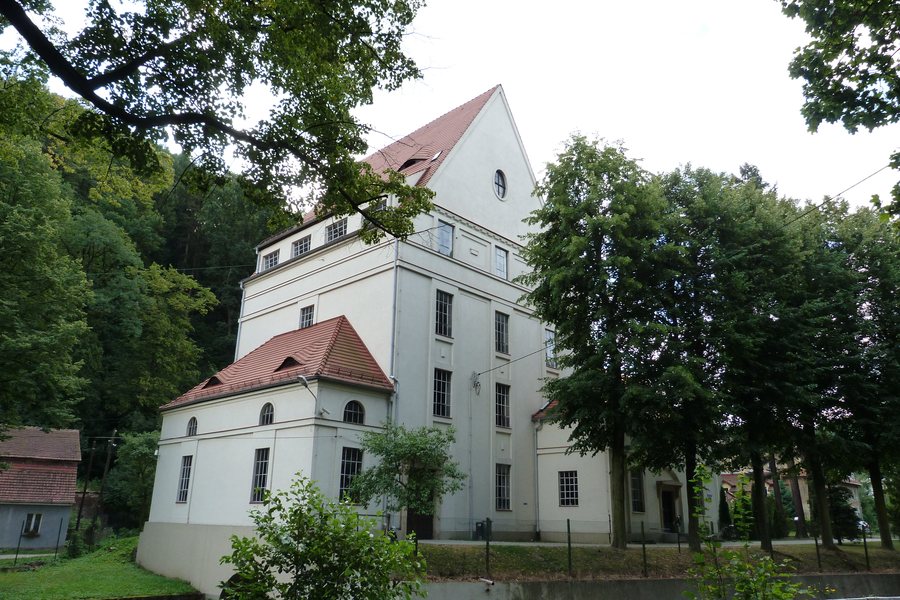 File:Lubachów, elektrownia wodna 03.jpg
Photo: Mirosława Mielczarek via Wikimedia Commons, CC BY 3.0
File:Lubachów, elektrownia wodna 03.jpg
Photo: Mirosława Mielczarek via Wikimedia Commons, CC BY 3.0
Lubachow at a glance
The Lubachow hydropower plant is located on the Bystrzyca River. The dam is 230 m long at its crest and up to 44 m high; it was completed in 1917. The reservoir created by the dam covers approximately 51 ha, stretches for 3.1 km along the river and has a capacity of 8 million m³ of water.
The village’s character is also shaped by a building designated as a power plant and museum, dating from 1913 to 1916; a bike park for practising various skills for singletrack trails and bike parks; and an archaeological protected area containing a group of mining sites from the 16th and 17th centuries.
What makes the reservoir near Lubachow distinctive?
The figures illustrate different aspects of the reservoir: its surface area is approximately 51 ha, while the body of water stretches for 3.1 km along the Bystrzyca. Its capacity of 8 million m³ describes how much water the reservoir can hold. These figures can help you gauge the size of the body of water when planning your trip, without making assumptions about its banks or individual viewpoints.
The dam is another defining feature of the waterscape. It measures 230 m at the crest and is up to 44 m high. The dam created the reservoir, linking a prominent structure with the body of water. If you are interested in landscapes and technical infrastructure, you can consider both when deciding whether to visit Lubachow.
What technology and history can you explore?
The Lubachow hydropower plant brings together several historical dates relating to different elements: the power plant building dates from 1913 to 1916, while the dam was completed in 1917. Many original fittings from the 1920s have been preserved inside the power plant. The construction period and later fittings thus represent distinct aspects of the history of technology.
Another example of infrastructure heritage is a railway bridge over a stream and an unpaved road. It dates from 1902 to 1904 and is located near the hydropower plant and a residential building. For travellers interested in the history of construction and transport, it adds an older example to the sites associated with hydropower.
Mining is also part of the area’s historical variety: Lubachow is home to an archaeological protected area containing a group of mining sites from the 16th and 17th centuries. This provides a distinct point of reference in terms of both time and subject, alongside the power plant and dam.
Which experiences suit your interests?
The bike park in Lubachow is used to practise various skills for singletrack trails and bike parks. This is a specific option for travellers who are interested in cycling. A tourism infrastructure project by the Świdnica municipality also included a bicycle station in Lubachow; this information describes an element of the project, not its current operating status.
If you would rather explore places and stories along the river, you can add the “Tajemnice Śląskiej Doliny” quest to your itinerary. It leads through Lubachow and its surroundings and covers places of interest along the Bystrzyca. This gives you a choice between a cycling skills training facility and a quest focused on places along the river.
Natural monuments are also part of the village and municipality’s character: Lubachow is one of the places in the Świdnica municipality where natural monuments can be found. There are 18 natural monuments in the municipality as a whole. This figure applies to the entire municipality, not to Lubachow alone.
How can you factor Lubachow into your travel plans?
District road 2882 D connects Lubachow with Wałbrzych-Rusinowa. This is a specific point of reference for planning your journey; it does not indicate a travel time or distance. When choosing accommodation, you can consider Lubachow as a search destination if you are particularly interested in the reservoir, hydropower history, mining sites or cycling opportunities. The topics described can help you assess the destination according to your preferences.
More destination pages in the travel guide: Żarów, Bystrzyca Górna, Zebrzydów, Złoty Las, Jugowa, Modliszów, Świebodzice and Jawor.
FAQ
How large is the reservoir near Lubachow?
The reservoir covers approximately 51 ha, stretches for 3.1 km along the Bystrzyca and holds 8 million m³ of water.
When was the dam completed?
The dam at the Lubachow hydropower plant was completed in 1917. It is 230 m long at the crest and up to 44 m high.
What historic sites are there in Lubachow?
Historical points of interest include the power plant building dating from 1913 to 1916, original fittings from the 1920s, the railway bridge dating from 1902 to 1904, and an archaeological protected area containing mining sites from the 16th and 17th centuries.
For the broader travel overview: Świdnicki.

