
Sędziszowa: Trails, natural monument and architectural history
Accommodation in Sędziszowa
Sędziszowa brings together marked trails, a protected natural monument and historic buildings. Nature and culture are both part of your travel decision: Organy Wielisławskie and Wielisławka on one side, the chapel and castle complex on the other.
Sędziszowa at a glance
- The blue-marked variant of the Wielisławka Trail runs from the Romanesque church on the left bank of the Kaczawa, through Sędziszowa, to a point below the Organy Wielisławskie natural monument.
- The black-marked cycling link from Sędziszowa to a green-marked trail in the direction of Sokołowiec is 2.2 km long.
- Organy Wielisławskie is a rhyolite outcrop protected as a natural monument.
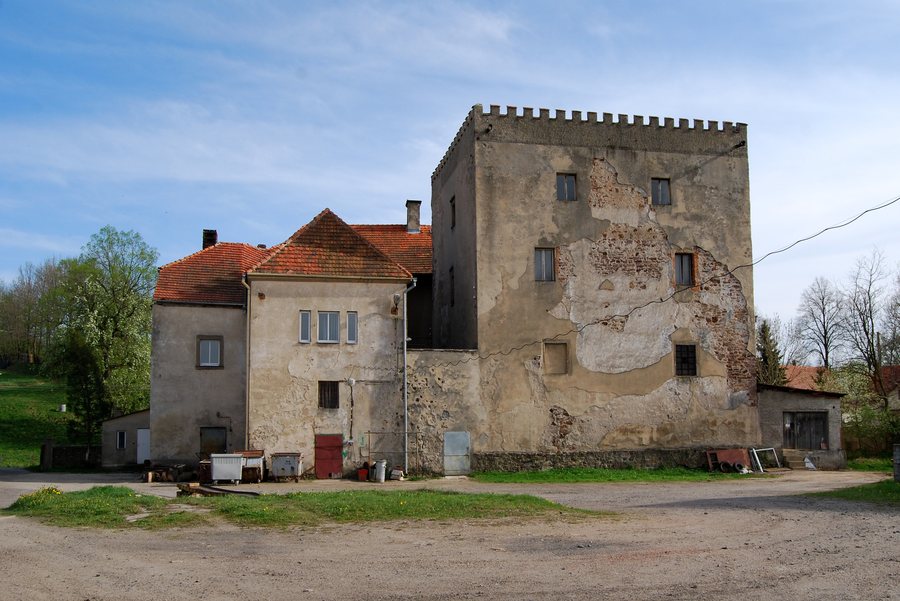
- The Chapel of St Catherine preserves fragments of a former rubble-stone church; the castle complex includes a residential tower that certainly dates from the 15th century and may date back to the 14th century.
Which trails help you find your way?
The blue-marked variant of the Wielisławka Trail runs from the Romanesque church on the left bank of the Kaczawa, through Sędziszowa, to a point below Organy Wielisławskie. Its described endpoint is therefore below the natural monument. Check local conditions before setting out.
The cycling link is 2.2 km long, marked in black, and connects Sędziszowa to a green-marked trail in the direction of Sokołowiec. If the distance is central to your decision, this link is the option with a stated length; you can identify the blue-marked variant by its route through the town and its endpoint. Also check the trail markings on site when planning your cycling route.
What do the chapel and castle complex tell us?
The Chapel of St Catherine preserves fragments of a former rubble-stone church. The church was built in the mid-13th century, altered in the 14th century and destroyed during the Hussite invasions. The surviving fragments point to a medieval religious building whose history includes construction, alteration and destruction.
The castle complex in Sędziszowa includes a residential tower. It certainly dates from the 15th century; its origins may go back to the 14th century. When comparing the buildings’ histories, it is important to note that the dates have different levels of certainty: the earlier date for the residential tower remains a possibility.
What is the significance of Organy Wielisławskie?
Organy Wielisławskie is an outcrop of rhyolite protected as a natural monument. An outcrop is a place where rock is exposed at the surface; here, the name therefore refers to a geological formation. The yellow-marked Szlak Wygasłych Wulkanów (Extinct Volcanoes Trail) passes by Organy Wielisławskie. From there, a nature trail leads to the summit of Wielisławka. The destinations differ: the blue-marked variant leads to a point below the natural monument, while the nature trail from there leads to the summit.
How do you choose the focus of your trip?
Then compare offers based on your personal requirements and travel plans.
Discover more destinations: Nowy Kościół, Złotoryja, Biegoszów, Wojcieszów and Schönau An Der Katzbach.
FAQ
Which cycling route is 2.2 km long?
The black-marked cycling link runs from Sędziszowa to a green-marked trail in the direction of Sokołowiec.
What is Organy Wielisławskie?
It is a rhyolite outcrop protected as a natural monument. The yellow-marked Szlak Wygasłych Wulkanów (Extinct Volcanoes Trail) passes by it.
How certain is the dating of the residential tower?
The residential tower certainly dates from the 15th century; it may have been built as early as the 14th century.
For the wider travel overview: Złotoryjski.

