
Złotoryjski: Nature, Geology and Mining History
Accommodation in Złotoryjski
When choosing Złotoryjski as a travel destination, specific nature and cultural themes in the municipality of Złotoryja can help you get your bearings. They range from marked observation stations and mining history to basalt formations and historic sites. This lets you decide before looking for accommodation whether trails, geology or culture should shape your plans.
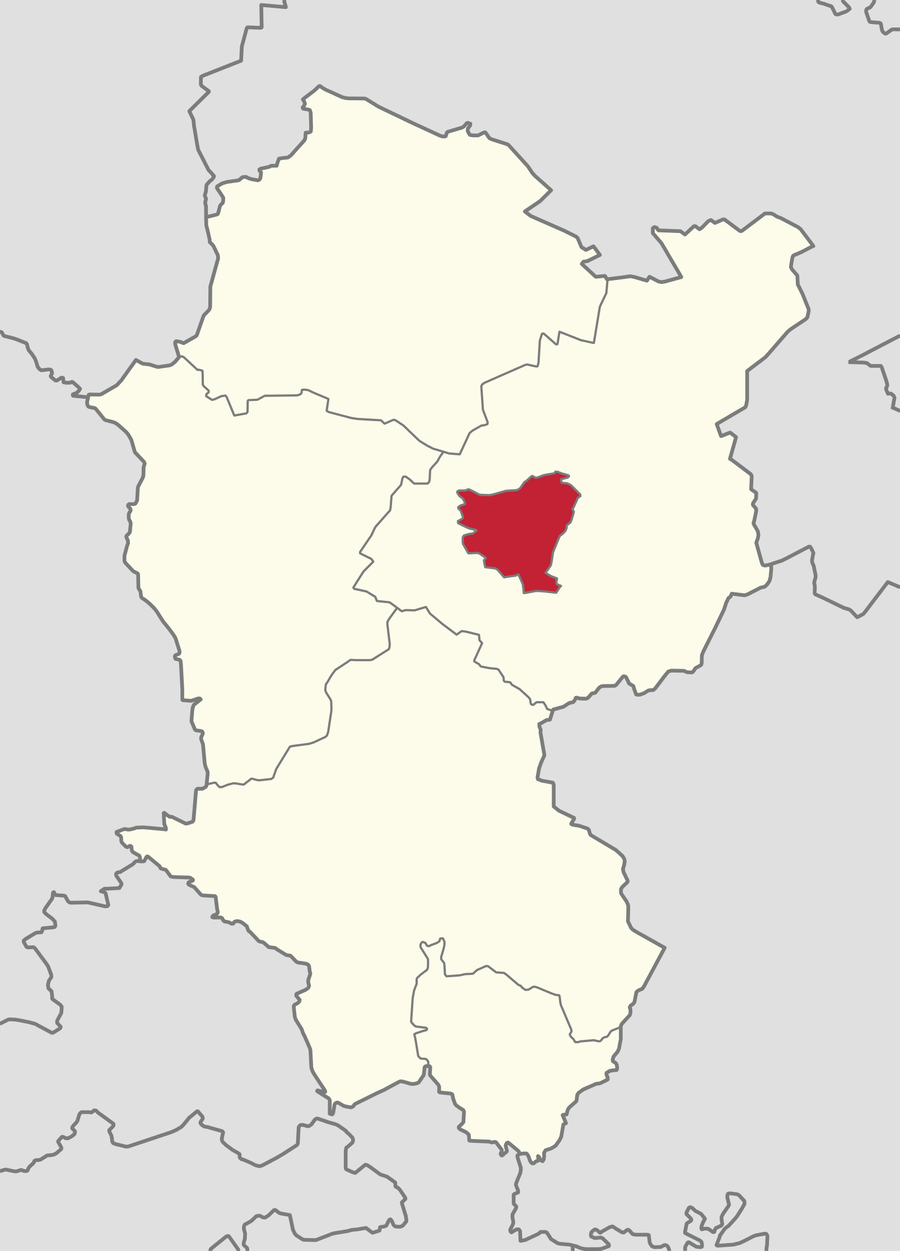 Location of the urban municipality of Złotoryja in Złotoryja County
Photo: Adam Biegaj via Wikimedia Commons, CC BY-SA 4.0
Złotoryjski at a glance
In the municipality of Złotoryja, the Synklina Leszczyny trail is about 3 km long and includes 17 observation stations marked along the route. The blue-marked Szlak Polskiej Miedzi runs through the municipality and is 26 km long. Other highlights include the Wilcza Góra Basalt Columns Nature Reserve, natural monuments in Leszczyna and historic sites in Rokitnica.
Which trails lead to nature and mining themes?
Synklina Leszczyny combines nature observation with regional history: along the approximately 3 km trail, you can observe unique plant species. Information boards and preserved monuments tell the story of former copper mining and smelting. The 17 marked observation stations give the trail a clear focus on discovering and understanding the surrounding area.
Other trails have their own distinct focus. The blue-marked Szlak Polskiej Miedzi runs through the municipality and is 26 km long. The Żelazny Krzyż nature and culture trail passes through the forest near Wilków, with 12 boards or stations. Comparing the stated lengths, Synklina Leszczyny is considerably shorter than the Szlak Polskiej Miedzi; the stations and boards also show different ways of conveying nature and cultural themes along the trails.
What does the region tell us about mining and metalworking?
In Leszczyna, the Skansen Górniczo-Hutniczy open-air museum features a reconstructed double furnace made up of two towers and an Izba Tradycji Górniczych. The technical installations and the space dedicated to mining traditions offer different ways of exploring the subject: the furnace points to metalworking, while the Izba focuses on mining traditions. Together with the boards and preserved monuments along Synklina Leszczyny, they provide a broad view of the history of copper mining and smelting.
Dymarki Kaczawskie also drew on this history. The open-air event was held near Wapień Niecki Leszczyny from 2000 onward and focused on the region’s mining and metallurgy traditions. For your plans, the cultural focus is what matters: the theme links historic trails and monuments with regional memories of mining and metalworking.
Which landforms shape the nature themes?
The Wilcza Góra reserve was established to protect a distinctive arrangement of basalt columns that resembles rose petals. Views from there extend across large parts of the Kaczawa Foothills, the Kaczawskie Mountains, the Karkonosze Mountains and the Silesian Lowland. This description brings together a striking geological feature and far-reaching views across several landscapes.
Other geological formations include Wilcza Jama, a 7 m-long rock overhang with a flat floor, and Niedźwiedzia Jama, a 12 m-wide, horizontally formed rock niche. In Leszczyna, Ciche Szczęście and Wapień Niecki Leszczyny are designated as natural monuments of inanimate nature. The Chełmy Landscape Park includes Leszczyna. Its buffer zone also includes Wilków, Rokitnica, Kozów, Kopacz, Łaźniki, Rzymówka, Prusice and Wysocko within the municipality; the southern part of the municipality lies partly within this buffer zone.
What historic sites are there in Rokitnica?
The Zamkowe wzgórze w Rokitnicy trail leads to the only surviving wall of the former castle. There is a picnic area with covered wooden tables and a fire pit. The trail starts at a small car park beside the county road from Rokitnica to Prusice. Beyond Rokitnica there is also an early medieval hillfort; its rampart and ditch remains date mainly from the 4th to the 9th century AD.
The Church of St Michael the Archangel in Rokitnica is another historic landmark, dating from the 13th century. Seen together, these sites represent different periods, from the early medieval rampart and ditch remains to the former castle and the church. For travelers interested in culture, this offers a concrete reason to explore each site in light of its history.
Discover more destinations: Nowy Kościół, Schönau An Der Katzbach, Wojcieszów, Biegoszów, Sędziszowa, Górowski and Neumarkt In Schlesien.
FAQ
What can you experience on Synklina Leszczyny?
The approximately 3 km-long trail has 17 marked observation stations. You can observe unique plant species there and learn more about the history of former copper mining and smelting from the boards and preserved monuments.
What makes Wilcza Góra special?
The reserve protects basalt columns whose distinctive arrangement resembles rose petals. Views from there extend across large parts of several landscapes, including the Karkonosze Mountains and the Silesian Lowland.
What was Dymarki Kaczawskie?
It was an open-air event celebrating the region’s mining and metallurgy traditions. It was held near Wapień Niecki Leszczyny from 2000 onward.
For the main travel overview: Lower Silesia.

