
Horbów
Accommodation in Horbów
Horbów is of particular interest to travellers who are keen to explore historic churches and the different religious connections of a place. The present-day church, a cemetery dating from the First World War and the Chapel of the Immaculate Conception of the Virgin Mary represent different historical themes. The dates mentioned range from a burial in 1794 to the chapel in 1934.
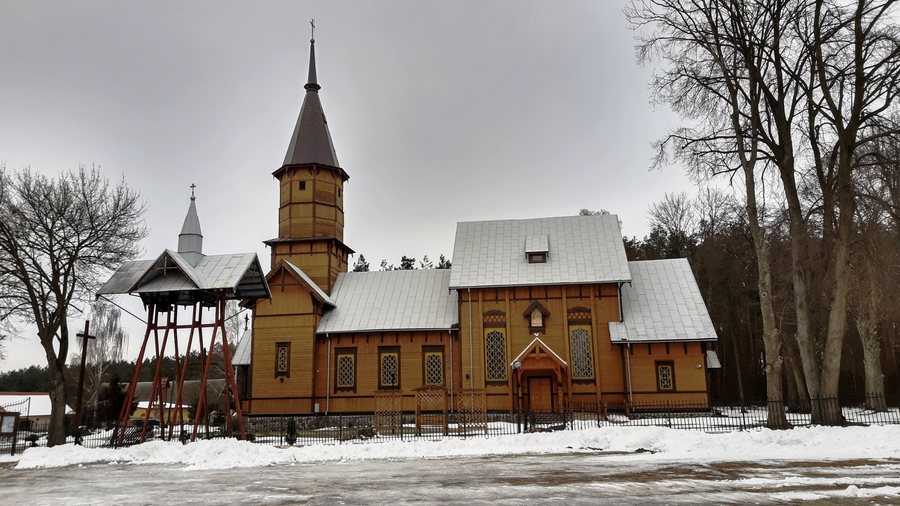
Horbów at a glance
- The present-day church was built from 1904 to 1908 as an Orthodox church on the site of an earlier Uniate church.
- On 17 August 1908, the Orthodox Bishop of Chełm, Eulogiusz, consecrated the church.
- In 1923, a ministry approved the transfer of the former Orthodox church to the Catholics; on 23 September, the church was consecrated and received its canonical dedication.
- A cemetery dating from the First World War lies along the road to the church. Stanisław Borkowski was buried in 1794 in the old cemetery in Horbów.
- The Chapel of the Immaculate Conception of the Virgin Mary was built in 1934 to mark the parish’s tenth anniversary.
What story does the church tell?
The building’s history begins with the present-day church, built between 1904 and 1908 as an Orthodox church. The site had previously been occupied by a Uniate church. This means two successive religious connections are represented here: the earlier Uniate church and the new Orthodox building. Its consecration on 17 August 1908 adds a specific date to the construction period. While the years 1904 to 1908 cover the building work, the August date marks the consecration by Bishop Eulogiusz of Chełm.
Two separate events are dated to 1923. On 26 June, the Ministry of Religious Denominations and Public Education approved the transfer of the former Orthodox church to the Catholics. On 23 September, the church was consecrated and received the canonical dedication “Przemienienia Pańskiego,” meaning “Transfiguration of the Lord” in English. The approval and the consecration were therefore not the same event. The separate dates help distinguish the decision made at the time from the later religious ceremony.
What other traces of history can be found?
A cemetery dating from the First World War lies along the road to the church. The burial of Stanisław Borkowski in the old cemetery in Horbów offers another historical perspective: the 24-year-old had been killed in combat and was buried on 23 December 1794. This date is much earlier than the church’s construction history and represents a distinct historical connection to Horbów.
The Chapel of the Immaculate Conception of the Virgin Mary is also connected with a specific occasion. It was built in 1934 to mark the parish’s tenth anniversary, on the bend in the road from Horbów to the church. On 13 May 1934, Bishop Czesław Sokołowski solemnly consecrated the chapel. The year it was built, the anniversary that prompted its construction and the date of its consecration describe different aspects of the same building: its creation, the reason for its construction and the subsequent ceremony.
The distinction between these places provides a helpful starting point for choosing what to explore: the church represents architectural history and the dated events of 1908 and 1923; the chapel is associated with a parish anniversary; and the cemetery references span different historical periods. This can help you decide whether to focus your trip planning on church and architectural history or on historic burial sites.
Discover more destinations: Kodeń, Małaszewicze Duże, Cieleśnica, Małaszewicze, Terespol, Konstantynów, Czosnówka, Kukuryki.
FAQ
When was the present-day church in Horbów built?
The Orthodox church was built from 1904 to 1908. On 17 August 1908, Bishop Eulogiusz of Chełm consecrated the church.
What happened to the church in 1923?
On 26 June, the responsible ministry approved the transfer of the former Orthodox church to the Catholics. On 23 September, the church was consecrated and received the canonical dedication “Przemienienia Pańskiego.”
When was the Chapel of the Immaculate Conception of the Virgin Mary consecrated?
Bishop Czesław Sokołowski consecrated it on 13 May 1934. The chapel had been built that same year to mark the parish’s tenth anniversary.
Return to the regional travel overview: Bialski.

