
Discover Małaszewicze
Accommodation in Małaszewicze
Małaszewicze is shaped by its railway history and a former air force base.
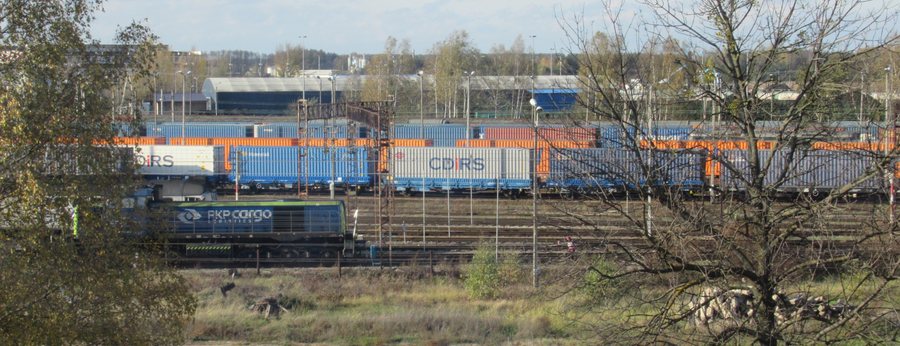
Quick facts about Małaszewicze
- Małaszewicze lies on the E-20 railway junction, which connects Europe and Asia.
- The town lies 1 km south of National Road 2, designated as European route E-30.
- Construction of the air force base began in 1936; the airfield officially began operations in spring 1939.
- The brick parish church was built from 1987 to 1991 and consecrated on 5 May 1991.
What role does the railway play in Małaszewicze?
The E-20 railway junction and freight transshipment give Małaszewicze a distinct transport-history profile. Here, freight is transferred from broad-gauge to standard-gauge rolling stock. This describes the town’s function; it does not imply specific timetables or travel connections. Małaszewicze’s location is also worth noting: it lies 1 km south of National Road 2, designated as European route E-30.
Freight transport also includes PKP’s internationally significant “dry” transshipment port, described as one of the largest in Europe. Together with the E-20 junction, this makes freight transport a defining feature of the town. If you are interested in railway and infrastructure history, you will find a different focus here than at a destination whose profile is shaped primarily by nature or leisure activities.
What does the airfield’s history tell us?
Construction of the air force base in Małaszewicze began in 1936 at the initiative of the Ministry of Military Affairs. The airfield officially began operations in spring 1939. By the summer of that year, 14 hangars, a runway made of compacted clay, and auxiliary facilities, barracks, administrative buildings, garages, warehouses, rail sidings, and a shooting range had been built there.
Before the outbreak of the Second World War, Małaszewicze was home to PZL-37 “Łoś” bombers, LWS4 “Żubr” bombers, and “Focker” FVII transport aircraft. The PZL-37s belonged to the 20th Bomb Squadron, the 7th Training Squadron, and the Aviation Supply Office. These details place the airfield within the history of pre-war military aviation. It continues to hold an important place in local and national history in the first half of the 20th century.
Which cultural sites add to the picture?
The parish church in Małaszewicze is also part of the town’s history. The brick church, designed in a contemporary style, was built from 1987 to 1991 at the initiative of Father Jan Grochowski. Bishop Jan Mazur, Ordinary of the Diocese of Siedlce, consecrated it on 5 May 1991. Its construction period and consecration date provide a more recent reference point in the town’s history alongside that of the airfield.
Nearby, on Warszawska Street in Małaszewicze Duże, you will find the Kolejowe Muzeum Edukacyjne. If you are planning a visit, contact the owners by phone in advance.
How can you use this information when looking for accommodation?
When choosing a hotel, you can first consider whether you are interested in Małaszewicze mainly for its railway history or for the history of the airfield. The town’s features can help you decide which theme interests you; for your specific plans, compare the accommodation’s address with your own itinerary. This keeps your search for a suitable base focused on your interests rather than relying on a place name alone.
Discover more destinations: Rokitno, Mokrany Nowe, Międzyrzec Podlaski, Horbów, Solinki, Cieleśnica, Woskrzenice Małe and Janów Podlaski.
FAQ
What was transferred between trains in Małaszewicze?
Freight is transferred from broad-gauge to standard-gauge rolling stock. Małaszewicze also lies on the E-20 railway junction, which connects Europe and Asia.
When did the Małaszewicze airfield begin operations?
The airfield officially began operations in spring 1939. By summer 1939, hangars, a runway made of compacted clay, and other facilities had been built there.
Where is the Kolejowe Muzeum Edukacyjne?
The museum is on Warszawska Street in Małaszewicze Duże, near the destination. Contact the owners by phone before visiting.
When was the parish church consecrated?
Bishop Jan Mazur consecrated the brick parish church, built from 1987 to 1991, on 5 May 1991.
For the broader travel overview: Bialski.

