
Discover Rejowiec
Accommodation in Rejowiec
Rejowiec offers several specific points of reference for understanding its architecture: a residential house with cross-barrel vaults, a Neoclassical palace, and two churches with different styles and dates. If culture is one of the factors shaping your travel decision, these buildings can be a helpful starting point for exploring the town.
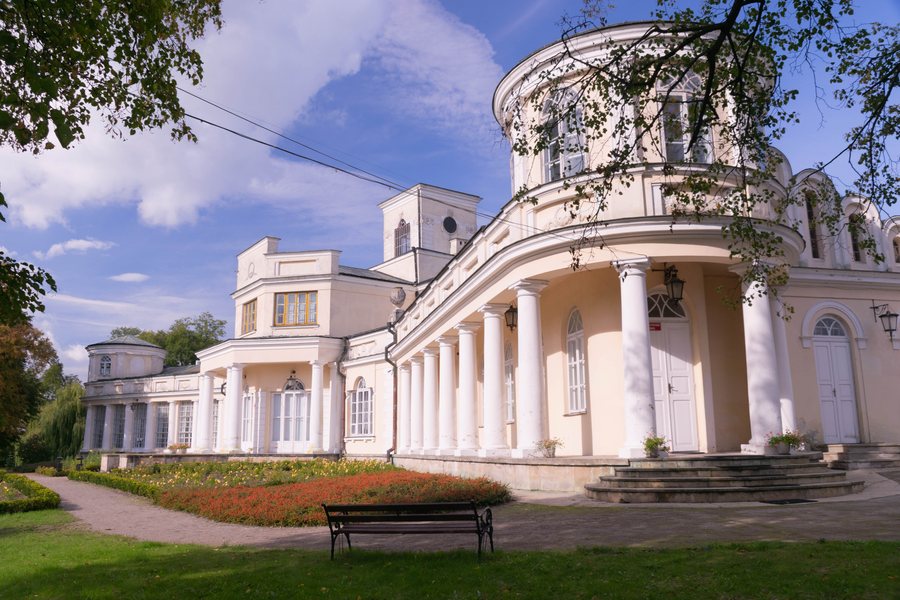
Rejowiec at a glance
The house at Rynek 1 is single-storey, built of opoka stone, and has a central-axis hallway running all the way through. Cross-barrel vaults can be found in the hallway and in the cellars. The palace is Neoclassical. The former Greek Catholic Church of St. Michael the Archangel was also built in the Neoclassical style at the end of the 18th century. The Roman Catholic Church of St. Josaphat dates from 1907 and is Neo-Gothic.
What architectural styles characterize the buildings described?
Several features of the house at Rynek 1 can be considered separately: its single-storey construction, the opoka-stone masonry, and the arrangement of the hallway running through the building along its central axis. The cross-barrel vaults in the hallway and cellars are another feature. These details relate both to the house’s external construction and to its spatial layout and vaulted areas.
The hallway along the central axis is a distinct detail, in addition to the building material and number of storeys. For a precise understanding, you can consider these details together without treating one feature as equivalent to another. The house therefore stands alongside the palace and churches in Rejowiec’s architectural overview, rather than in their place.
How do the palace and churches differ?
The palace is described as Neoclassical. The former Greek Catholic Church of St. Michael the Archangel is also assigned this style; it is additionally stated to have been built at the end of the 18th century. The palace and the former church therefore share a style designation, while the date refers to the church.
The Roman Catholic Church of St. Josaphat offers a different point of comparison: it was built in 1907 and is Neo-Gothic. The two churches thus differ both in their stated styles and in their dates. The former status is part of St. Michael’s description; it should not be confused with a statement about its current use.
What does this mean when looking for a hotel?
The architectural details give Rejowiec a distinct cultural profile that you can take into account when choosing a destination. They do not determine which accommodation is right for you: you can base that decision on your own travel plans and interests, and then look for a hotel in Rejowiec. Anyone particularly interested in architectural forms will find several distinct points of reference here—from a house’s masonry and spatial layout to the styles of the churches mentioned.
Discover more destinations: Stołpie, Brzeźno, Huta, Chełm, Czarnołozy, Gotówka, Romanówka and Dorohusk.
FAQ
What are the features of the house at Rynek 1?
It is single-storey and built of opoka stone. The hallway runs through the building along its central axis; cross-barrel vaults can be found in the hallway and cellars.
Which buildings in Rejowiec are Neoclassical?
The palace is Neoclassical. The former Greek Catholic Church of St. Michael the Archangel is also assigned this style.
What is the style and date of the Church of St. Josaphat?
The Roman Catholic Church of St. Josaphat was built in 1907 in the Neo-Gothic style.
Go to the broader travel overview: Chełmski.

