
Discover Warka: Culture and the Pilica Kayak Trail
Accommodation in Warka
Warka brings together cultural and historical highlights with a kayak trail on the Pilica. In the present-day district of Winiary, the Kazimierz Pułaski Museum is housed in a manor surrounded by a park; in the market square, a name and a Neoclassical town hall recall different chapters in the town’s history. If you are considering Warka for a trip, you can decide whether to focus your plans mainly on historic sites or on the kayak trail.
Warka at a glance
- The kayak trail on the Pilica was marked in 2008 and runs from Domaniewice to Mniszew; Warka is a particularly appealing point along the route.
- In Winiary, now part of Warka, the Kazimierz Pułaski Museum is housed in a 17th-century manor surrounded by a park.
- The market square is named Stefan Czarniecki Square in memory of the victory over the Swedes in 1656.
- A Neoclassical town hall from the first half of the 19th century stands beside the square. The parish Church of St Nicholas, Bishop, dates from the early 17th century; its late Renaissance altars have been preserved inside.
Which historic sites define Warka?
The name Stefan Czarniecki Square commemorates the victory over the Swedes in 1656. The Neoclassical town hall stands right next to the market square, and was built in the first half of the 19th century. Thus, one square brings together a historic commemoration and a later public building—two different points of interest if you are interested in history and architecture.
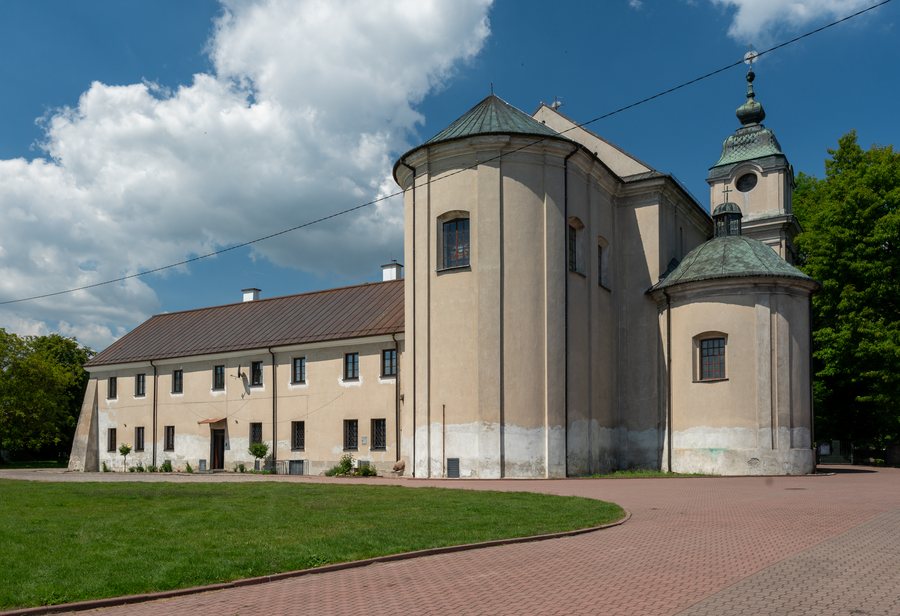
Another historic landmark is the parish Church of St Nicholas, Bishop. It dates from the early 17th century; its surviving interior details include late Renaissance altars. Together with the town hall and square, it offers a glimpse of different periods without assigning all the buildings to a single era. As you plan your trip, you can consider whether these historical and architectural themes should be the focus of your stay.
What can you expect at the Kazimierz Pułaski Museum?
The museum is located in Winiary, now part of Warka. It is housed in a 17th-century manor surrounded by a park. The combination of a historic building and a museum makes it a cultural attraction in its own right, alongside the memorials and buildings in the market square.
The exhibition “Warka – miasto dotknięte historią” (Warka – a town touched by history) combines original historical memorabilia with multimedia devices. Check before your visit whether the exhibition is being shown in this form. Wheelchair users can access the Kazimierz Pułaski Museum building.
What role does the Pilica kayak trail play?
The kayak trail on the Pilica was marked in 2008 and runs from Domaniewice to Mniszew. Warka is a particularly appealing point along this route. This offers a different focus when weighing up your interests: here, the emphasis is on a route on the water; elsewhere, it is on the museum, market square and architectural history. The year refers to when the kayak trail was marked.
If you are looking for a hotel in Warka, these themes can help you first assess the destination according to your interests. The cultural attractions and the kayak trail on the Pilica offer different focuses for planning your trip.
Discover more destinations: Niemojewice, Wola Kukalska, Budki Petrykowskie, Michalczew, Lesznowola, Chynowie, Grójec and Borowe.
FAQ
Where does the kayak trail on the Pilica run?
The kayak trail, marked in 2008, runs from Domaniewice to Mniszew. Warka is a particularly appealing point along the route.
What does the museum exhibition combine?
The exhibition “Warka – miasto dotknięte historią” (Warka – a town touched by history) combines original historical memorabilia with multimedia devices. Check before your visit whether it is being shown in this form.
Can wheelchair users access the museum?
Wheelchair users can access the Kazimierz Pułaski Museum building.
Go to the main travel overview: Grójec.

