
Discover Wyszogród: Churches, Castle Hill and Museum
Accommodation in Wyszogród
Wyszogród lies on the Vistula, about 40 kilometres east of Płock. Churches with distinctive architectural and decorative details, a castle hill and a museum offer a range of cultural highlights. The museum also invites visitors to take walks through the town and visit open-air exhibitions.
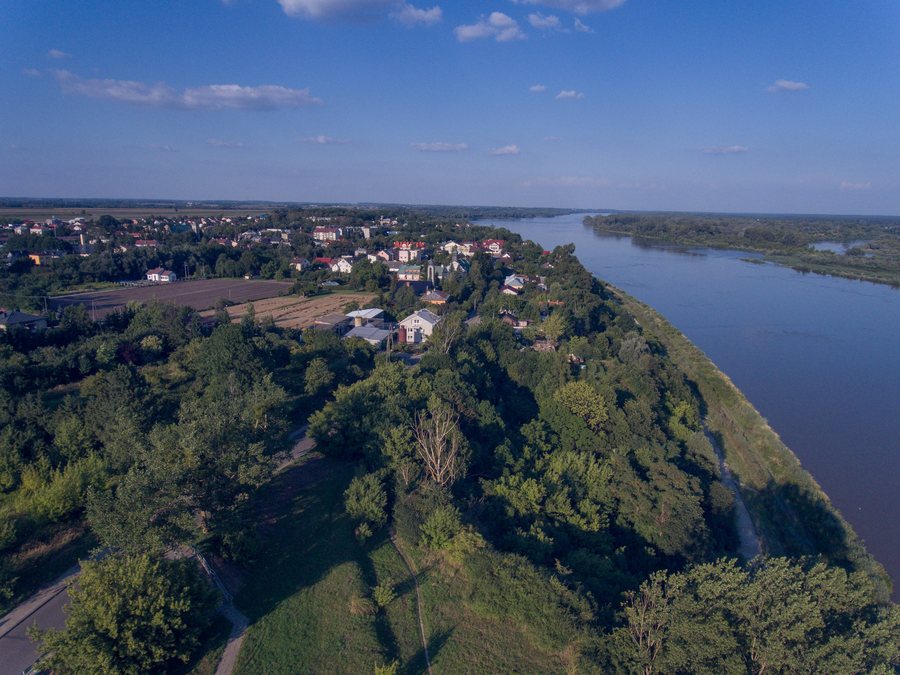
Wyszogród at a glance
The sights offer several themes to consider when planning your visit: sacred architecture, the history of Góra Zamkowa and archaeological finds at the Muzeum Wisły Środkowej i Ziemi Wyszogrodzkiej. The town’s location on the Vistula and its approximate distance from Płock provide geographical context.
Which churches shape a cultural visit?
At the Church of the Holy Trinity, take a closer look at the interior and its furnishings. Five bays of a groin barrel vault with transverse arches span the interior. The bays divide the vault into sections; the transverse arches form part of this architectural structure. This gives you another way to appreciate the church interior through its architectural design.
The furnishings include a late Gothic Crucifixion figure from the 16th century and a painting of Saint Barbara dating from around 1700. The two works provide different points of reference within the collection. Another stop is the Church of Matki Boskiej Anielskiej: its Gothic presbytery dates from 1408, and it also has a late Gothic chapel dedicated to Saint Anne. For sacred architecture, the precisely dated presbytery and the late Gothic chapel offer two distinct art-historical points of reference.
What do the castle hill and museum tell us?
Konrad of Masovia had a defensive watchtower built on Góra Zamkowa; a castle later stood there. Today, the site is an archaeological excavation. This progression leads from a medieval fortification to the site’s archaeological significance, without conflating multiple historical stages.
The Muzeum Wisły Środkowej i Ziemi Wyszogrodzkiej displays archaeological finds from Wzgórze Zamkowe. The museum is housed in the former building of the Płock branch of the Towarzystwo Naukowe Płockie. A visit thus brings together different aspects: finds associated with a named hill and the building’s former use.
The museum invites visitors to take walks through Wyszogród and visit open-air exhibitions. These include exhibitions at the wooden bridge, on Góra Zamkowa and by the aircraft wreck near the Szkutnia building. This offers a distinct focus alongside the churches: you can explore archaeological themes while also taking in the outdoor exhibition sites listed by the museum.
How is Wyszogród situated geographically?
Its location on the Vistula describes its geographical setting; the approximate distance of 40 kilometres east of Płock adds direction and scale. These are concrete points of reference when comparing destinations. Together with the cultural sites, this information can help you decide whether Wyszogród suits the themes you want to prioritise on your trip.
Discover more destinations: Kozłowo, Cekanowo, Płock, Grabina, Rydzyna, Słupno, Wola Łącka, Łąck.
FAQ
What architectural details can be seen in the churches?
The Church of the Holy Trinity has five bays of a groin barrel vault with transverse arches. At the Church of Matki Boskiej Anielskiej, the Gothic presbytery dating from 1408 and the late Gothic chapel of Saint Anne are notable features.
What is on Góra Zamkowa today?
After Konrad of Masovia had a defensive watchtower built there and a castle later stood on the site, it is now an archaeological excavation.
What does the museum offer in addition to its collection?
The museum displays archaeological finds from Wzgórze Zamkowe and invites visitors to take walks through Wyszogród and visit open-air exhibitions at the wooden bridge, on Góra Zamkowa and by the Szkutnia building.
For the main travel overview: Płock.

