
Discover Tarnau: St. Martin’s Church and Salt Tower
Accommodation in Tarnau
Tarnau combines a long history with distinctive details at St. Martin’s Church and a salt tower complex. If you are planning a stay, the building history, church art and the stated starting point of a cycling tour offer different ways to explore the area, depending on your interests.
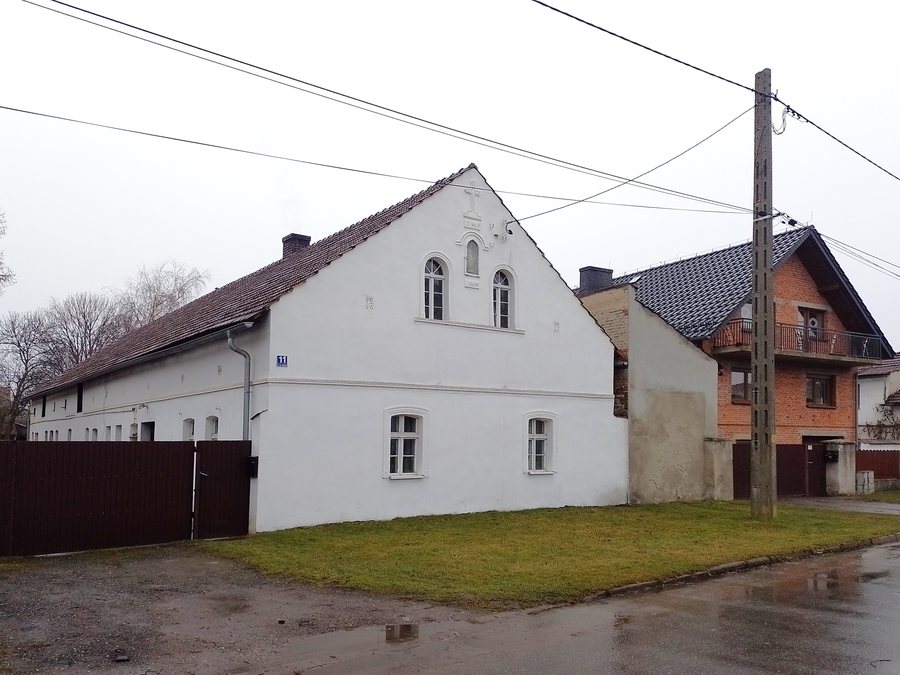 File:Tarnów Opolski, tradycyjny dom Świętego Marcina 11.jpg
Photo: Kamil Czaiński via Wikimedia Commons, CC BY-SA 4.0
Tarnau at a glance
- Tarnów Opolski is mentioned in 1293.
- The present-day St. Martin’s Church was built between 1913 and 1916; part of the earlier building was preserved.
- The church contains a Baroque altar and a Rococo baptismal font.
- A salt tower complex built in 2019 stands behind the municipal office.
- The description of Cycling Tour No. 3 gives Św. Marcina Street as its starting point.
What story do the dates tell?
The mention of Tarnów Opolski in 1293 and the 1447 church record are two different historical reference points. In 1447, the Church of St. Martin was recorded in the Peter’s Pence register of the Strzelce archpresbytery. These dates help distinguish the history of the town from the history of the church, without suggesting that they refer to the same kind of record.
The present-day church also preserves more than one building phase. It was built between 1913 and 1916, with part of the earlier building retained. The presbytery in particular—the area of the choir associated with the altar—dates from this older structure. Viewed from the entrance, it is on the right. The building thus brings together a more recent construction period and a surviving older section.
What details can you see at St. Martin’s Church?
Among the features mentioned is a Baroque altar with sculptures of Saints Michael, Joseph and Jadwiga. The church also has a Rococo baptismal font from the second half of the 18th century. The distinct style designations offer a specific reason to appreciate the altar and font as individual features, rather than categorizing the furnishings simply as historic.
Beside the church is an ossuary dating from the 18th and 19th centuries. The historical picture therefore extends beyond the church building and its furnishings to include a separate structure beside the church. For travelers interested in architectural history, this offers different kinds of details to distinguish: surviving building fabric, works of art inside the church and a freestanding ossuary.
What makes the salt tower complex distinctive?
Behind the municipal office, the salt tower complex built in 2019 stands in a green space. The structure is housed in a wooden pavilion surrounded by benches and is covered with blackthorn branches. This specific design sets the site apart from the church-history attractions and adds a complex with its own construction date and features.
The complex is described as free to access and open around the clock. If you are relying on this access information when planning, confirm it on site. That way, you can take it into account without treating it as a guarantee for every visit.
What other historical reference points are there?
The associated municipality also includes the separate Church of St. Peter and Paul in Nakło. It was built between 1938 and 1940. As another distinct reference point, it offers a chronological comparison with St. Martin’s Church in Tarnau: the church in Nakło was built after the present-day St. Martin’s Church.
Another point of interest in the associated municipality is the railway station in Przywory. It opened in 1912 and is notable for its architecture. The date and architectural description make it a subject in its own right, alongside the churches and the salt tower complex; on their own, they say nothing about current train services.
Where does the described cycling tour start?
The municipality’s 2020 description of Cycling Tour No. 3 gives the blooming square on Św. Marcina Street as the starting point. From there, the route heads toward St. Martin’s Church. If you are planning the tour, check its current route and conditions before setting out, as conditions may change.
Church history, architectural details and a cycling tour offer different ways to spend time in Tarnau. Which ones matter to you depends on your travel interests. When looking for a hotel, you can compare Tarnau as a destination with these specific interests, then check the options that suit your trip.
Discover more destinations: Chronstau, Sławice, Niemodlin, Dembiohammer, Proskau, Ochotz, Przysiecz, Lipowa.
FAQ
Is Tarnów Opolski mentioned as early as 1293?
Yes. Tarnów Opolski is mentioned in 1293. Another historical reference point is the 1447 entry for St. Martin’s Church in the Peter’s Pence register of the Strzelce archpresbytery.
Which part of the earlier building was preserved in St. Martin’s Church?
A section was preserved, especially the presbytery. Viewed from the entrance, it is on the right.
Where does Cycling Tour No. 3 start?
The municipality’s 2020 description gives the blooming square on Św. Marcina Street as the starting point and says the route heads toward St. Martin’s Church. Check the current route and conditions before setting out.
What access information is available for the salt tower complex?
It is described as free to access and open around the clock. Confirm access on site if you plan to rely on it during your visit.
For the broader travel overview: Opolski.

