
Lauenburg: Medieval Town and Living History
Accommodation in Lauenburg
Lauenburg, called Lębork in Polish, combines a riverside setting with well-preserved traces of its medieval history. The town’s fortifications, several themed walking routes and the museum are of particular interest when planning your trip: you can explore the town through its architectural history, exhibitions and marked route stops.
Lauenburg at a Glance
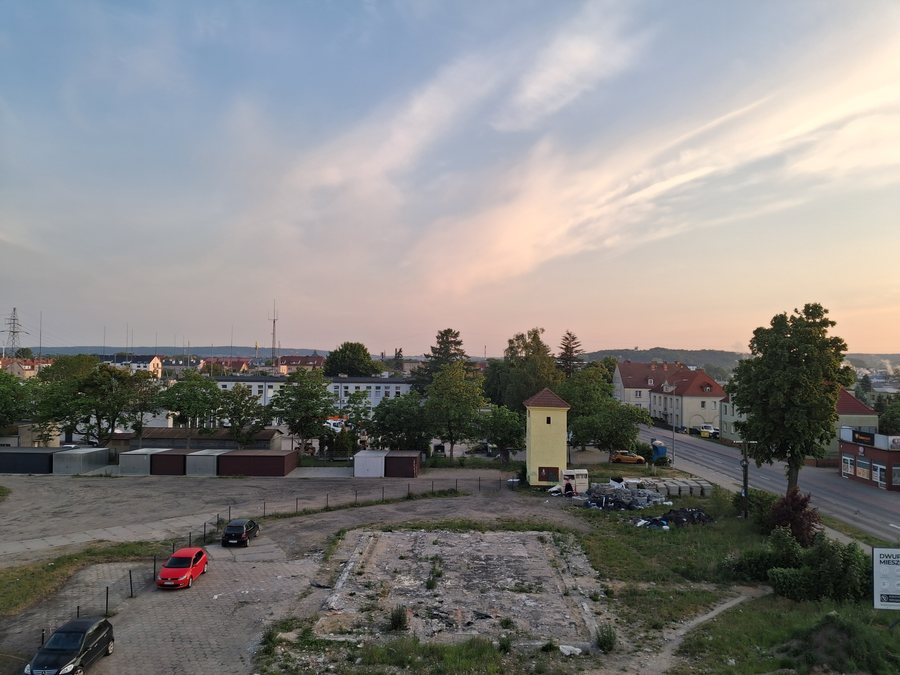
Lębork lies in the Łeba–Reda ice-marginal valley, bordered to the south by the Kashubian Lake District and to the north by the Żarnowiec Upland. The navigable Łeba River flows through the town. Partly wooded moraine hills with a strongly undulating relief surround the area to the north and south. Lębork is also on the international E28 road between Gdańsk and Szczecin, which is also known here as Polish National Road 6.
What Do the Medieval Town Fortifications Tell Us?
The town walls are among Lębork’s most striking historical landmarks. They were built from 1341 to around 1363 and were originally 1,220 metres long. One surviving part of these fortifications is Baszta Bluszczowa: the corner tower was built around 1363, during the construction of the town’s fortifications. This is an approximate date, not an exact year.
The Trasa średniowiecznego Lęborka (Medieval Lębork Route) also explores this history. The walking route starts at the intersection of ul. Staromiejska and ul. Skłodowskiej and continues along the medieval town walls. It offers a practical way to make the fortifications the focus of a visit to the town. Part of Lębork’s Teutonic castle already existed in 1363.
What Exhibitions and Historic Buildings Are There?
The Muzeum w Lęborku (Museum in Lębork) preserves and presents collections relating to the history of the town and region, early art, archaeology and ethnography. A 3-D film about Lębork’s medieval defensive system is also shown there. Visitors particularly interested in the town’s history can include both exhibits and a film portrayal of the fortifications in their exploration.
The reconstructed medieval towers No. 24 on ul. Derdowskiego and No. 27 on ul. Basztowa display copies of medieval clothing and weapons, everyday objects, products from vanishing crafts, and works by local artists from earlier centuries. Well-preserved sections of the town walls can be seen elsewhere in the town. Together, the walls and towers offer different perspectives: the surviving fortifications in one place, and exhibitions of objects and depictions of earlier ways of life in another.
The historic townscape also includes the town hall, built in the neo-Gothic style in 1900, and its grand council chamber, with stained-glass windows depicting the coats of arms of the local nobility. The townhouses on ul. Staromiejska and ul. M. Reja date from the turn of the 19th and 20th centuries; they are eclectic or Art Nouveau in style. The Church of NMP Królowej Polski dates from 1870, is neo-Gothic, and was formerly Protestant. By contrast, the Sanktuarium św. Jakuba Apostoła is a Gothic fortified church. It is thought to date from the turn of the 14th and 15th centuries; the year 1345 is also cited, but is uncertain.
Which Routes Explore Lębork’s History?
In addition to the walking route along the town walls, there is the Trasa Paula Nipkowa (Paul Nipkow Route). Television-shaped signs on buildings and at locations mark stops associated with Paul Nipkow. Small signs on posts and trees point the way between them. This route therefore has a different focus from the medieval route: it draws attention to places associated with Nipkow and the signs marking the way.
A section of the Pomorska Droga św. Jakuba (Pomeranian Way of St. James) also starts in Lębork: the Lębork–Łeba route begins at the Sanktuarium św. Jakuba Apostoła and connects the Apostolic sanctuaries in Lębork and Łeba. If you would like to consider other places for your trip, you can also find Łebień Łebień, Bukowina Bukowina, Lędziechowo Lędziechowo, Sarbsk Sarbsk, Poraj Poraj, Żarnowska Żarnowska, Łeba Łeba, Roszczyce Roszczyce, Dymnica Dymnica, Lebork Lebork and Wicko Wicko.
What Can You Discover from Above and Along the River?
Wieża Ciśnień (Water Tower) has an observation platform with views of Lębork and the surrounding landscape. This complements the perspective offered by the routes at ground level: from the platform, you can look out over the town and its surroundings, while the moraine hills form the landscape setting described above. The Łeba River flows through Lębork and is navigable; together with the views and undulating terrain, it shapes the town’s geographical character.
FAQ
Where is Lauenburg?
Lauenburg, known as Lębork in Polish, lies in the Łeba–Reda ice-marginal valley. The Łeba River flows through the town, and Lębork is on the E28 road between Gdańsk and Szczecin.
Where does the Trasa średniowiecznego Lęborka walking route start?
It starts at the intersection of ul. Staromiejska and ul. Skłodowskiej and continues along the medieval town walls.
What does the museum in Lębork display?
The collections cover topics including the history of the town and region, early art, archaeology and ethnography. The museum also shows a 3-D film about Lębork’s medieval defensive system.
Where does the Lębork–Łeba route start?
It starts at the Sanktuarium św. Jakuba Apostoła in Lębork and connects the Apostolic sanctuaries in Lębork and Łeba.
For the broader travel overview: Pomerania.

.jpg)