
Discover Lębork
Accommodation in Lębork
Lębork brings together traces of the city’s history and a signposted route along its medieval fortifications.
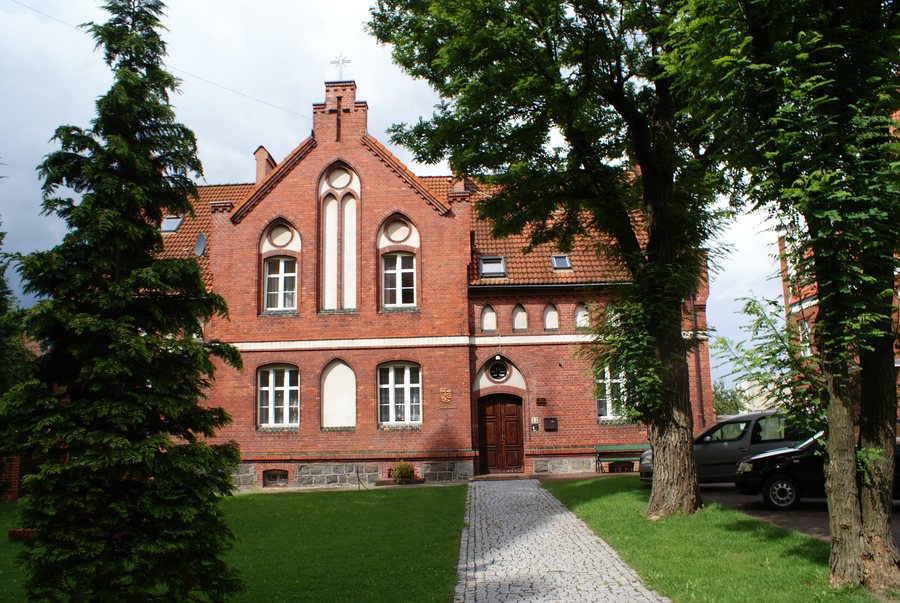
Lębork at a glance
- Lębork lies in the Łeba and Reda proglacial valley, between the hills of the Kashubian Lake District to the south and the Żarnowiec Plateau to the north.
- The navigable Łeba flows through the city, where the tributary Okalica joins it.
- The medieval Lębork Route is just under 1,200 metres long and runs mostly along the city fortifications.
- The railway station is on line 202 between Stargard Szczeciński and Gdańsk Główny. In summer, there is a rail connection to Łeba.
Which accommodation suits a stay focused on culture and city history?
If you are particularly interested in medieval city history, Lębork offers several different points of interest: fortifications, Baszta Bluszczowa, a Teutonic castle and the Sanctuary of Saint James the Apostle. The Muzeum w Lęborku complements these topics with a 3D film about the medieval defence system and an exhibition about inventor Paul Nipkow.
Rail connections may also factor into your decision. The station is served by trains operated by PKP Intercity and the SKM in the Gdańsk metropolitan area. A connection from Lębork to Łeba is also available during the summer months. If this connection matters for your trip, take the seasonal schedule into account when planning and check the connection that suits your specific travel dates.
What do the fortifications and historic buildings tell us?
Lębork’s medieval defensive walls were built from 1341 to around 1363. Originally, they were 1,220 metres long and included 32 towers and half-towers. Baszta Bluszczowa is a particularly vivid example of the city fortifications: this corner tower was built as part of the fortifications around 1363 and has been preserved in its original style.
The Teutonic castle already existed in 1363 and was the seat of Dytrych von Loupheim, the first Teutonic Order bailiff of Lębork. The Gothic brick Church of Saint James the Apostle offers another perspective on the city’s history. Built as a defensive structure, it is dated to the turn of the 14th and 15th centuries. Lębork thus features historic buildings from different periods and serving different purposes, which should not be conflated into a single building or period of construction.
Which routes and exhibitions can you include in your plans?
The medieval Lębork Route takes you back to the period when the city was founded in the 14th century, over a distance of just under 1,200 metres. It runs mostly along the medieval city fortifications and is marked with information boards in accordance with the applicable PTTK standards. This makes it possible to explore the city’s history on a dedicated walk; the stated length helps you fit the route into your day’s plans.
At the Muzeum w Lęborku, you can watch a 3D film about the medieval defence system. The museum also houses the “Gabinet Nipkowa”, an exhibition about inventor Paul Nipkow. At Baszta nr 24, an exhibition shows the lives of the city’s residents in the second half of the 15th century. If you are interested in the history of the fortifications, you can choose between a route through the city and a range of exhibition topics.
The Jarmarku św. Jakuba programme includes craft and trade stalls, family activities, historical events, Kashubian folklore and traditions associated with the city’s patron saint, Saint James the Apostle. The approximately 100-kilometre Lęborska Droga św. Jakuba is separate from the fair: it was signposted in 2007 and connects Sianowo with Smołdzino.
How do the city and its wider surroundings differ?
The varied terrain around Lębork offers opportunities for cycling and water-based activities. Within the city, by contrast, the Łeba and its tributary, the Okalica, shape the river landscape. When choosing where to stay, you can therefore consider whether you want to focus mainly on Lębork’s historical attractions or also explore activities in the wider area. The landscape is characterised by the proglacial valley and the different ranges of hills to the south and north.
Other places in the selection: Dymnica, Sarbsk, Poraj, Łebień, Roszczyce, Łeba, Wicko and Lędziechowo.
FAQ
How long is the medieval Lębork Route?
The route is just under 1,200 metres long and runs mostly along the medieval city fortifications. Information boards mark it in accordance with the applicable PTTK standards.
What exhibitions are there at the Muzeum w Lęborku?
Visitors can watch a 3D film about the medieval defence system there. The museum also includes the “Gabinet Nipkowa”, an exhibition about Paul Nipkow.
Is there a rail connection between Lębork and Łeba?
There is a rail connection from Lębork to Łeba in summer. Lębork station is also served by trains operated by PKP Intercity and the SKM in the Gdańsk metropolitan area.
What activities does the area around Lębork offer?
The varied terrain in the surrounding area offers opportunities for cycling and water-based activities.
Go to the main travel overview: Lauenburg.

