
Discover Lędziechowo
Accommodation in Lędziechowo
There are two ways to get to know Lędziechowo: through the development of a garden into a landscape and forest park, and through the trees found in the village. Together, they offer a concrete point of reference when choosing a destination with historic park design and landscapes in mind.
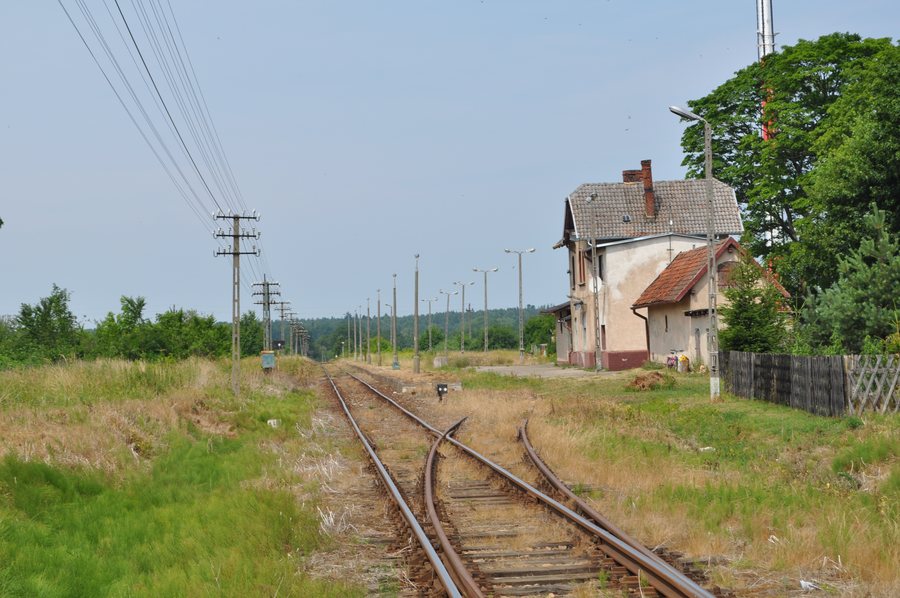 File:Lędziechowo - train station 02.jpg
Photo: Paweł 'pbm' Szubert via Wikimedia Commons, CC BY-SA 4.0
Lędziechowo at a glance
- The geometric garden dates from the late 18th and early 19th centuries. In the mid-19th century, it became a landscape park, and in the early 20th century it was expanded into a forest park.
- The original garden’s layout, with its paths and trees, has not survived; some of the tree stock remains.
- Trees growing in Lędziechowo include maples, elms, horse chestnuts, pedunculate oaks, ash trees, small-leaved limes and spruces, as well as other park trees and shrubs.
- Distinctive black poplars, eight elms—probably wych elms—and common ash trees grow along the road from the village to the railway station.
How did the garden develop into a park?
The site began as a geometric garden in the late 18th and early 19th centuries. In the mid-19th century, it was transformed into a landscape park; in the early 20th century, it was further expanded into a forest park. This sequence shows several distinct phases rather than a single, unchanged design.
In general, a geometric garden is more formally ordered, while a landscape park has a freer design. These terms help put the historic changes at Lędziechowo in context: first the type of garden changed, and later it was expanded into a forest park. This makes it possible to consider the development both chronologically and in terms of design styles.
What trees grow in Lędziechowo?
The tree description includes Norway maples, field elms, horse chestnuts, pedunculate oaks, common ash trees, small-leaved limes and Norway spruces. There are also other park trees and shrubs. The selection ranges from different deciduous trees to spruces, offering a broader picture than the idea of a single dominant tree species.
The variety of trees and the park’s history offer two different perspectives on the village: the development of the site describes its historical changes, while the species list describes the trees and shrubs growing in Lędziechowo. For travelers who consider cultural and landscape features when choosing a destination, these topics complement one another without telling the same story.
What trees grow along the road to the railway station?
Distinctive black poplars, eight elms—probably wych elms—and common ash trees grow along the road from the village of Lędziechowo to the railway station. The number eight refers to the elms; their identification as wych elms is uncertain.
This stretch of road is described more specifically than the broader range of trees and shrubs in the village. The poplars, elms and ash trees along the road should be distinguished from the wider variety of species in Lędziechowo.
What remains of the former garden?
The former garden’s layout of paths and trees has not survived. However, some of the tree stock remains. These two things should be distinguished: the historic arrangement was lost, while parts of the tree population remain. Thus, the garden’s development into a landscape and forest park describes the evolution of the site, not the unchanged preservation of its original layout.
Discover more destinations: Roszczyce, Sarbsk, Poraj, Lebork, Łeba, Żarnowska, Bukowina, Wicko.
FAQ
When did the garden become a landscape park?
The geometric garden dates from the late 18th and early 19th centuries. It became a landscape park in the mid-19th century; in the early 20th century, it was expanded into a forest park.
What tree species grow in Lędziechowo?
Species mentioned include Norway maples, field elms, horse chestnuts, pedunculate oaks, common ash trees, small-leaved limes and Norway spruces, as well as other park trees and shrubs.
What remains of the former garden?
The original layout of paths and trees has not survived. Some of the tree stock remains.
For the broader travel overview: Lauenburg.

