
Lubaczów: Discover Cultural Heritage and the Park
Accommodation in Lubaczów
In Lubaczów, cultural highlights range from churches and historic sites to a museum and places of remembrance. The park of the Zespół Zamkowo-Parkowy adds avenues, bodies of water and mature trees to the picture.
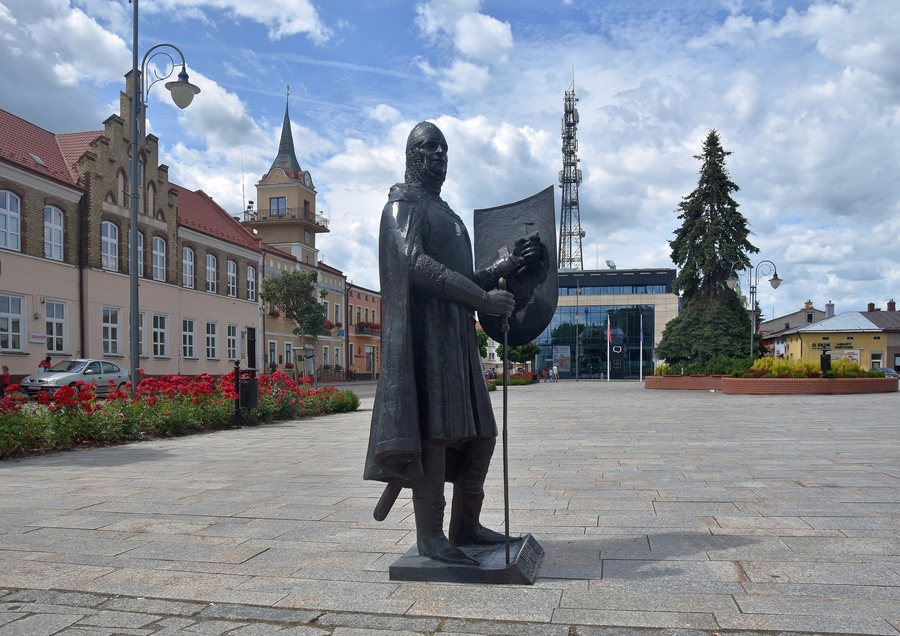
Lubaczów at a glance
- Lubaczów had existed as a medieval fortified settlement at least since the late 9th century.
- The Muzeum Kresów has three permanent exhibition halls, two temporary exhibition halls and a library with a scholarly collection.
- The park of the Zespół Zamkowo-Parkowy is used for relaxation and recreation.
Which buildings tell the story of Lubaczów’s history?
The Greek Catholic Church of St. Nicholas was built in 1883, to a design by Ukrainian architect Wasyl Nahirny, on the site of an earlier wooden church. Its floor plan is in the shape of a Latin cross: a dome rises above the crossing of the nave and transept, and the presbytery has a three-sided end. The brick bell tower was built in 1843 and remodeled in 1862.
Other buildings also offer concrete insights into architectural history. The church complex on Grunwaldzka Street consists of a church and a bell tower; it was entered in the Podkarpackie Voivodeship’s heritage register in 1988 under number A-316. The town hall stands on the western frontage of the Market Square. The single-storey, rendered brick building with a gabled roof was registered in 2011 under number A-568.
The brick granary on Sobieskiego Street dates from the first half of the 19th century. The three-storey, neoclassical building on a plinth was listed in 1984 under number A-708. The railway complex on Kolejowa Street comprises the station building and a water tower; it was entered in the heritage register in 1990 under number A-359. On Castle Hill are traces of settlement from before the brick-castle period, as well as the remains of a manor complex built in the early 19th century at the initiative of Count Pawłowski.
What stories do the museum and cemeteries preserve?
The permanent exhibitions at the Muzeum Kresów cover the history of Lubaczów and its region, the material culture of Lubaczów’s villages, and the history of the Kresy, the former eastern territories of the Republic of Poland. Two additional halls host temporary exhibitions, and there is also a library with a scholarly collection. Check the museum’s current visitor information for dates and possible closures.
The military cemetery on Cicha Street lies on a gentle rise and has a regular rectangular layout. A wide main avenue divides it into two main sections, and a metal mesh fence surrounds the grounds. In the western section are ten mass graves for soldiers of various nationalities who fell in the First World War, as well as for people who died in the local military hospital. In the northern section, memorial graves commemorate Polish soldiers under the command of Józef Kustroń who fell in 1939, and Red Army soldiers who fell fighting the UPA. A monument to airmen of the Army “Karpaty”’s 31st Reconnaissance Squadron also stands there.
The epidemic section of the cemetery on Cicha Street has a history of its own: several dozen stone tombstones commemorate those who died of cholera; most date from 1916 to 1918. There are also several stone cholera tombstones and an old stone cross dated to the turn of the 17th and 18th centuries. It was moved here from a now-vanished burial mound on Orzeszkowa Street. Lubaczów’s Jewish cemetery contains around 150 stone matzevot. The oldest date from the first quarter of the 17th century; some of the richly decorated stones bear traces of polychromy.
Which landscapes and routes shape the travel area?
In the park of the Zespół Zamkowo-Parkowy, avenues and paths are part of the landscape, along with streams and ponds. Its mature trees include black alders and individual small-leaved lime trees protected as natural monuments. The park also has a playground and outdoor fitness equipment.
The wider travel area includes the “Nad Tanwią” nature reserve. Established in 1958, it covers around 41 hectares. It protects sections of the Jeleń and Tanew valley, with small waterfalls. At the Tanew bend near Rebizanty, 24 cascades known as “szumy” stretch over a distance of 400 metres. The 189-kilometre Trasa VI Lubaczowska starts at kilometre 0 in the centre of Lubaczów and runs across the Tarnogród Plateau, mostly through the Południoworoztoczański Landscape Park.
Discover more destinations: Świdnica, Milkow, Gmina Lubaczów, Narol and Basznia Dolna. Also: Stalowa Wola, Kolbuszowa and Łańcut.
FAQ
What topics does the Muzeum Kresów cover?
The permanent exhibitions cover the history of Lubaczów and its region, the material culture of Lubaczów’s villages, and the history of the Kresy.
What is the layout of St. Nicholas Church?
The Greek Catholic church has a Latin-cross floor plan, a presbytery with a three-sided end, and a dome above the crossing of the nave and transept.
Where does Trasa VI Lubaczowska begin?
The 189-kilometre route starts at kilometre 0 in the centre of Lubaczów and runs across the Tarnogród Plateau, mostly through the Południoworoztoczański Landscape Park.
See the overview of the wider travel area: Podkarpackie.

