
Discover Przemyśl: Culture and Nature in Przemyśl County
Accommodation in Przemyśl
If you are considering Przemyśl as a travel destination, you can discover historic buildings, religious traditions and protected landscapes in Przemyśl County. When planning your trip, it is especially worth considering what mix of cultural sites, hiking trails and natural areas best suits your travel plans.
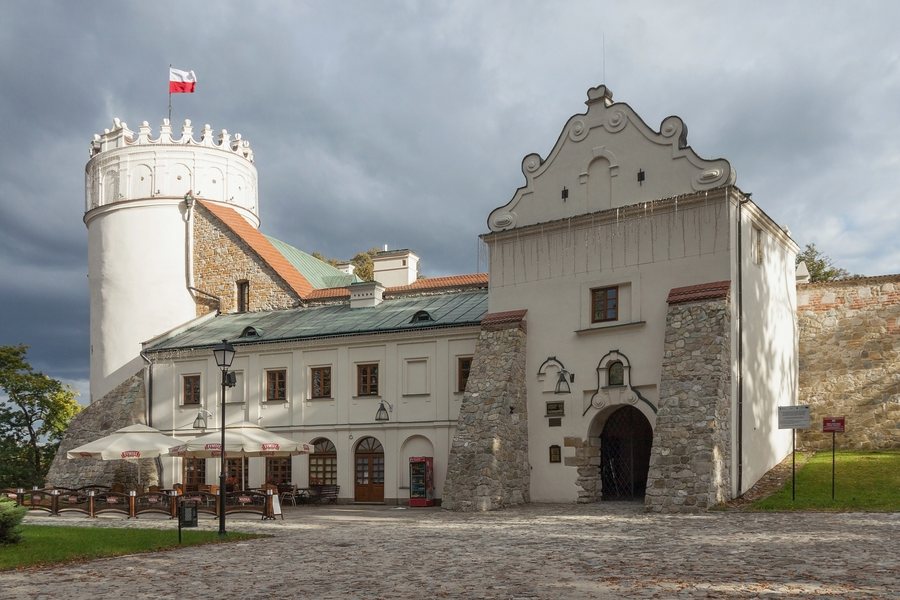
Przemyśl at a glance
Przemyśl County lies in the foothills of the outer Carpathian arc and mostly within the Pogórze Przemyskie mesoregion. Pogórze Przemyskie Landscape Park covers 61,862 hectares and extends across several municipalities in the county. Notable destinations include Krasiczyn Castle, the Przemyśl Fortress and the sanctuary in Kalwaria Pacławska. Hiking options range from a 22-kilometre pilgrimage route to longer trails through woodland.
Which cultural sites define the region?
Krasiczyn Castle dates from the 16th century and is considered one of Poland’s most valuable architectural monuments. It is surrounded by a 9-hectare park. The site thus combines a significant historic building with an extensive park. Another historic highlight is the church in Posada Rybotycka: it is considered Poland’s oldest brick fortified church and dates from the 15th century. Fragments of 17th-century polychrome decoration have been preserved inside.
The Przemyśl Fortress is also one of the area’s major historic attractions. It is one of the largest modern-era fortresses in Europe. If you are interested in its fortifications, the 28-kilometre Right-Bank Fortress Trail follows rural and wooded routes and leads to particularly interesting forts. The Sanctuary of the Passion of Christ and the Mother of God in Kalwaria Pacławska is a religious pilgrimage site. Religious celebrations are held there several times a year, attracting local residents as well as pilgrims and tourists from Poland and Ukraine.
Which trails and landscapes can you include in your plans?
There are trails of varying lengths and through different landscapes to choose from when planning a hike. The red hiking trail starts in Przemyśl, crosses the hills of Pogórze Przemyskie and runs for 39 kilometres within the landscape park. The blue hiking trail is 74 kilometres long, runs mostly through woodland and follows the San for a short stretch. Another notable route is the John Paul II Pilgrimage Route. Established in 1991, it is 22 kilometres long and leads to Kalwaria Pacławska. The route lengths and descriptions can help you choose trails that suit your travel plans.
The protected natural areas include a variety of places. Reberce Nature Reserve covers 190.96 hectares and preserves remnants of original Carpathian forest near Wola Korzeniecka, Kraja and Łomna. In Krówniki, the 16.67-hectare Szachownica Nature Reserve protects the very rare fritillary flower. Krępak Nature Reserve covers 134.46 hectares and protects a hill near Korzeniec with well-preserved old fir and beech forests.
What does the Bolestraszyce Arboretum offer?
Bolestraszyce Arboretum is located in Żurawica municipality, 7 kilometres north of Przemyśl, and covers 12.8 hectares. Its grounds include a park, a pomological orchard, nurseries and a Neoclassical manor house with a natural history museum. Visitors can see around 1,800 species, cultivars and forms of trees and shrubs, as well as around 1,200 species of herbaceous plants. The arboretum thus complements the protected woodlands and plant areas with an extensive collection of different trees, shrubs and herbaceous plants.
Which local pages can help you explore further?
Other destinations you can explore on their own pages include Leżajsk, Przeworsk County, Jarosław and Tarnobrzeg County. More local pages are available for [Wapowce](Wapowce), [Tarnawka](Tarnawka), [Brylińce](Brylińce) and [Przemyśl](Przemyśl).
FAQ
How long are the hiking trails described?
The red trail is 39 kilometres long within the landscape park, and the blue trail is 74 kilometres in total. The John Paul II Pilgrimage Route is 22 kilometres long.
What can you expect in Kalwaria Pacławska?
It is home to the Sanctuary of the Passion of Christ and the Mother of God. A Passion play is also performed in Kalwaria Pacławska in two parts, “Wieczernik” and “Na krzyż z Nim”.
Which protected natural areas are mentioned?
Examples include Reberce, with remnants of original Carpathian forest; Szachownica, with the rare fritillary flower; and Krępak, with old fir and beech forests.
For the broader travel overview: Subcarpathia.

.jpg)