
Discover Konskie
Accommodation in Konskie
Końskie offers a tangible introduction to history and culture: a castle and park complex, churches with distinctive architectural details, a trail to memorial sites and the SOWA each offer a different focus. When planning your visit, you can decide which themes you would like to shape your stay most.
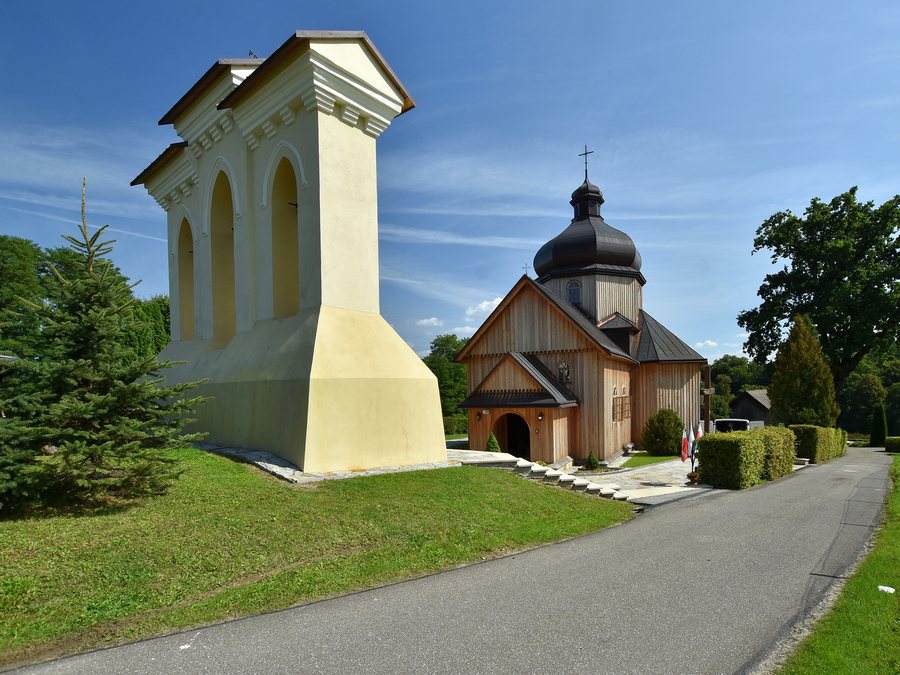 Końskie, Cerkiew Przemienienia Pańskiego
Photo: Henryk Bielamowicz via Wikimedia Commons, CC BY-SA 4.0
Końskie, Cerkiew Przemienienia Pańskiego
Photo: Henryk Bielamowicz via Wikimedia Commons, CC BY-SA 4.0
Końskie at a glance
- Jan Małachowski began building the castle and park complex around 1748, when he secured town rights for the settlement from King Augustus III.
- The Collegiate Church of St Nicholas and St Adalbert has a sundial dating from 1621 and a late Baroque high altar from 1749.
- The “Szlakiem zabytków i miejsc pamięci” trail leads to memorial sites, including Katyń Avenue and an obelisk on Warsztatowa Street.
- SOWA combines a permanent exhibition with a workshop for hands-on activities and workshops.
What architectural history can you discover in Końskie?
The history of the castle and park complex dates back to the mid-18th century. Around 1748, Jan Małachowski began construction after securing town rights for the settlement from King Augustus III. In the first half of the 19th century, Stanisław Małachowski brought the architect Franciszek Maria Lanci to Końskie. Among Lanci’s designs were an Egyptian orangery, a Neo-Gothic chapel and a park wall with towers. The two building phases reflect different historical influences: the origins of the complex in the 18th century and later architectural additions.
The churches, too, invite a closer look at their architectural details. The Collegiate Church of St Nicholas and St Adalbert has a sundial dating from 1621 on the southern retaining wall of its presbytery. Its stone late Baroque high altar, from 1749, features a crucifix beneath a canopy supported by columns. The Małachowski family commissioned the Church of St John the Baptist and St Anne from Jan Faygel in 1770. During restoration work in 2010, old frescoes were uncovered and restored there. The sundial, altar and frescoes each offer a distinct perspective on the churches’ furnishings and history.
Which memorial sites are on the trail?
The “Szlakiem zabytków i miejsc pamięci” trail leads to Katyń Avenue, where oaks and plaques commemorate the victims murdered in 1940. Another stop is on Warsztatowa Street, where an obelisk commemorates the violent death of Captain Jan Stoiński. He was the first commander of the Końskie ZWZ-AK district. The two sites offer different perspectives on remembrance; the trail links them as stops on the same route. Those interested in local history will find reason here to include memorial sites in their travel plans, alongside individual buildings.
What does SOWA offer, and who might enjoy it?
SOWA offers a permanent exhibition, a workshop where you can try things out for yourself, and workshops. This is different from the historic buildings and memorial sites: here, hands-on activities complement the exhibition. If you would like to include this in your plans, check current opening arrangements and the workshop programme before your visit.
When looking for a hotel, you could first consider whether you would most like to discover Końskie through its architectural history, church art, memorial sites or SOWA’s hands-on activities. These themes can give your plans a focus, without implying anything about the features of a particular accommodation.
Discover more destinations: Strzeboszow, Ruda Maleniecka, Stąporków, Sielpia Wielka, Fałków, Tama.
FAQ
What is special about the Collegiate Church of St Nicholas and St Adalbert?
A sundial dating from 1621 is set into the southern retaining wall of its presbytery. The stone late Baroque high altar, from 1749, features a crucifix beneath a canopy supported by columns.
What do the stops on the trail commemorate?
Katyń Avenue, with its oaks and plaques, commemorates the victims murdered in 1940. An obelisk on Warsztatowa Street commemorates the violent death of Captain Jan Stoiński, the first commander of the Końskie ZWZ-AK district.
What can visitors do at SOWA?
SOWA offers a permanent exhibition, a workshop for hands-on activities and workshops. Check current opening arrangements and the workshop programme before your visit.
Who designed the Egyptian orangery in Końskie?
The architect Franciszek Maria Lanci designed it in the first half of the 19th century. His designs for Końskie also included a Neo-Gothic chapel and the park wall with towers.
Go to the main travel overview: Końskie.

.jpg)