
Discover Samborzec: Church and History
Accommodation in Samborzec
The parish Church of the Holy Trinity gives Samborzec a distinct cultural and historical character: Baroque architecture meets Romanesque remains in the chancel. An archaeological discovery and the Sandomierski Szlak Jabłkowy add to the picture.
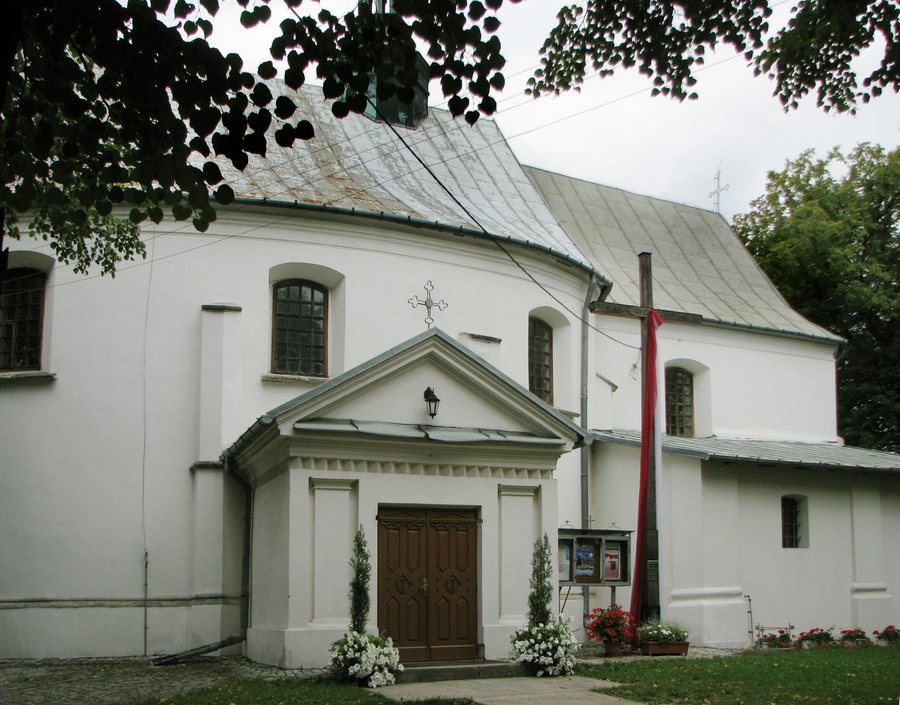 File:Samborzec Kościół Trójcy Przenajświętszej 02.JPG
Photo: Agnieszka Kwiecień, Nova via Wikimedia Commons, CC BY-SA 3.0
Samborzec at a glance
- The present-day Church of the Holy Trinity was rebuilt in 1691 by Stanisław Umiński and consecrated in 1728.
- The chancel walls contain Romanesque remains dating from the 13th century.
- The parish church was probably built in the mid-13th century by Paweł z Samborca.
- Excavations in Samborzec uncovered a settlement of the Linear Pottery culture.
- The Sandomierski Szlak Jabłkowy runs through the Sołectwo Samborzec; it was established on 14 March 2005.
- A small-leaved lime tree stood in the churchyard in Samborzec in 2015.
How can the church’s building phases be distinguished?
The parish church combines a present-day Baroque church with Romanesque remains in the walls of its chancel. These details point to different building phases and make the church a tangible reference point for travelers interested in architectural history. The stylistic description of the present-day church and the older masonry belong to different periods.
The parish church was probably built in the mid-13th century by Paweł z Samborca. The present-day Church of the Holy Trinity was built later: Stanisław Umiński rebuilt it in 1691, and it was consecrated in 1728. The early building history is described cautiously with the word “probably”; by contrast, the dates of the rebuilding and consecration are clearly stated. This makes it possible to distinguish the building phases without confusing their dates.
What other historical traces are there?
Excavations in Samborzec uncovered a settlement of the Linear Pottery culture. This discovery adds an archaeological perspective to the building history. Anyone interested in the history of a place can use it to distinguish different kinds of historical traces: structural remains at the church and a settlement discovered through excavation.
A small-leaved lime tree also stood in the churchyard in Samborzec in 2015.
What should you know about the Sandomierski Szlak Jabłkowy?
The Sandomierski Szlak Jabłkowy runs through the Sołectwo Samborzec and was established on 14 March 2005. Alongside the history of the church and settlement, it adds a route to consider when planning a trip. If you want to include the route in a specific outing, check its current course and accessibility beforehand.
How can this help you choose a destination?
You can weigh the topics according to your interests: the Church of the Holy Trinity offers the clearest reference point for building history, while the archaeological discovery provides a different historical perspective. The Sandomierski Szlak Jabłkowy is another point of interest for travelers who want to factor a route into their plans.
Discover more destinations: Konary, Sandomierz, Dwikozy, Ocinek, Pielaszów, Wielogóra, Klimontów, Kolonia Gałkowice.
FAQ
What is special about the Church of the Holy Trinity in Samborzec?
The present-day church is Baroque; its chancel walls contain Romanesque remains dating from the 13th century.
When was the present-day church built and consecrated?
Stanisław Umiński rebuilt it in 1691. It was consecrated in 1728.
What archaeological discovery is associated with Samborzec?
Excavations uncovered a settlement of the Linear Pottery culture.
What is known about the Sandomierski Szlak Jabłkowy?
It runs through the Sołectwo Samborzec and was established on 14 March 2005. Before planning a specific outing, check its current course and accessibility.
What is known about the small-leaved lime tree in the churchyard?
A small-leaved lime tree stood in the churchyard in Samborzec in 2015.
To the broader travel overview: Sandomierz County.

