
Włoszczowa
Accommodation in Włoszczowa
Włoszczowa offers ways to enjoy both physical activity and culture, including Nordic walking routes, a cycling route through mostly wooded surroundings, and historic sites in the town. You can weigh up which of these themes will shape your trip by considering each route, its starting and ending points, and the sights described along the way.
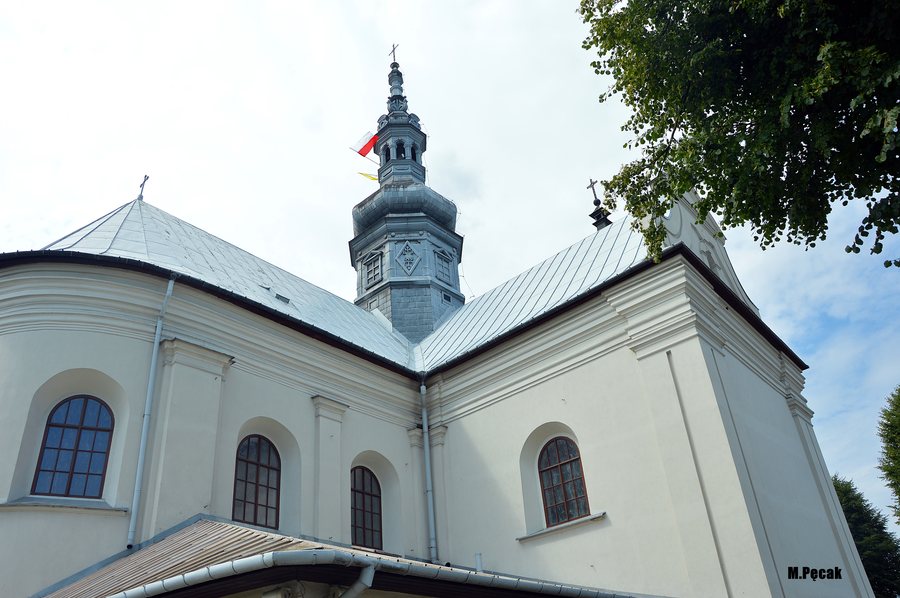
Włoszczowa at a glance
The green Nordic walking route No. 1 is about 6.4 km long. It starts and ends at the car park behind the Church of the Assumption of the Blessed Virgin Mary. Three Nordic walking routes were created and signposted in the Włoszczowa municipality in 2014. Cyclists can also take the “Lasami dookoła Włoszczowy” im. Bogusława Chowańca route, which runs mostly through wooded areas. Historic places to visit include the market square, Kopiec św. Jana, and the Church of the Assumption of the Blessed Virgin Mary. The rectory of the WNMP parish also houses a museum of sacred art, which must be arranged in advance.
Which routes can you include in your travel plans?
At about 6.4 km, Nordic walking route No. 1 has a clearly specified length; its starting and ending points are at the same car park behind the Church of the Assumption of the Blessed Virgin Mary. These details are a helpful guide if you want to identify a route by a familiar place in town. The three Nordic walking routes created and signposted in the municipality in 2014 also show that this activity is catered for, though no information about the length or course of the other two routes can be inferred from this.
A different route is described for horseback riding: it starts in Włoszczowa at the end of Wiejska Street, by a footbridge over the Czarna Struga, and continues to the forester’s lodge in Wola Świdzińska. Cyclists have a separate starting point at the market square. The black-marked cycling route from Włoszczowa to Konieczno starts there and connects with the “Lasami wokół Włoszczowy” cycling route. These route names and starting points help distinguish the routes by the activity you have in mind.
The “Lasami dookoła Włoszczowy” im. Bogusława Chowańca cycling route is described separately: it passes through the most interesting and scenic surroundings of Włoszczowa and runs mostly through wooded areas. The landscape is therefore a consideration alongside the starting point when choosing a route. Note the similar-sounding names “Lasami dookoła Włoszczowy” and “Lasami wokół Włoszczowy” as the names given for the respective routes.
What cultural and historic sites are there?
A museum of sacred art is located in the rectory of the WNMP parish. It opens by prior arrangement with its attendant, Teresa Orlikowska. If you want to include a visit in your travel plans, remember that arrangements are required in advance. The historic rectory is a 19th-century building that has been renovated from cellar to attic. The museum and the building offer different points of interest: sacred art on the one hand, and the history of the building on the other.
The Church of the Assumption of the Blessed Virgin Mary contains numerous commemorative plaques and epitaphs, including one in memory of Mikołaj Małachowski. A historic statue of Saint Florian stands in the market square. It was erected in the 19th century after a series of town fires. These two places offer distinct perspectives on local history: plaques and epitaphs in the church commemorate individuals, while the statue is connected with the town fires of its time.
Another distinctive feature is Kopiec św. Jana: the mound is about 5 metres high and has a truncated cone shape at the top; a figure of Saint John of Nepomuk stands on its summit. Archaeologists discovered the remains of a 16th-century bridge at the foot of the mound.
The market square is also connected with the founding of the town: it was laid out in 1539, when Hieronim Szafraniec received the charter of foundation and town rights for Włoszczowa from King Zygmunt I Stary. So the square can be seen not only as the starting point of the cycling route to Konieczno, but also in relation to the town’s development through this date.
What should you bear in mind when visiting KLEKOT?
The body of water KLEKOT can be reached from Włoszczowa in the direction of Łachów via a signposted asphalt road. The directions to Łachów and the road surface are therefore specified. If KLEKOT is of interest to you, you can take these details into account when planning your trip, without confusing this route with the Nordic walking, horseback riding, or cycling routes described above.
For further comparisons between places, you can visit the destination pages for Oleszno, Włoszczowa, Skarżysko, Końskie, Kielce, Starachowice, Kazimierza and Powiat Sandomierski.
FAQ
How long is the green Nordic walking route No. 1?
It is about 6.4 km long and starts and ends at the car park behind the Church of the Assumption of the Blessed Virgin Mary in Włoszczowa.
How are visits to the museum of sacred art arranged?
The museum in the rectory of the WNMP parish opens by prior arrangement with its attendant, Teresa Orlikowska.
What is at Kopiec św. Jana?
A figure of Saint John of Nepomuk stands on the mound, which is about 5 metres high and has a truncated cone shape at the top.
What is the historical significance of the market square?
It was laid out in 1539, when Hieronim Szafraniec received the charter of foundation and town rights for Włoszczowa from King Zygmunt I Stary.
For the broader travel overview: Świętokrzyskie.

