
Orzechowo: Village History and Lakes
Accommodation in Orzechowo
Orzechowo combines an early local history with a Protestant family cemetery and two nearby lakes of different sizes. The historical details and comparison of the lakes offer some initial points of reference to help you decide which aspects of the destination you would like to explore further.
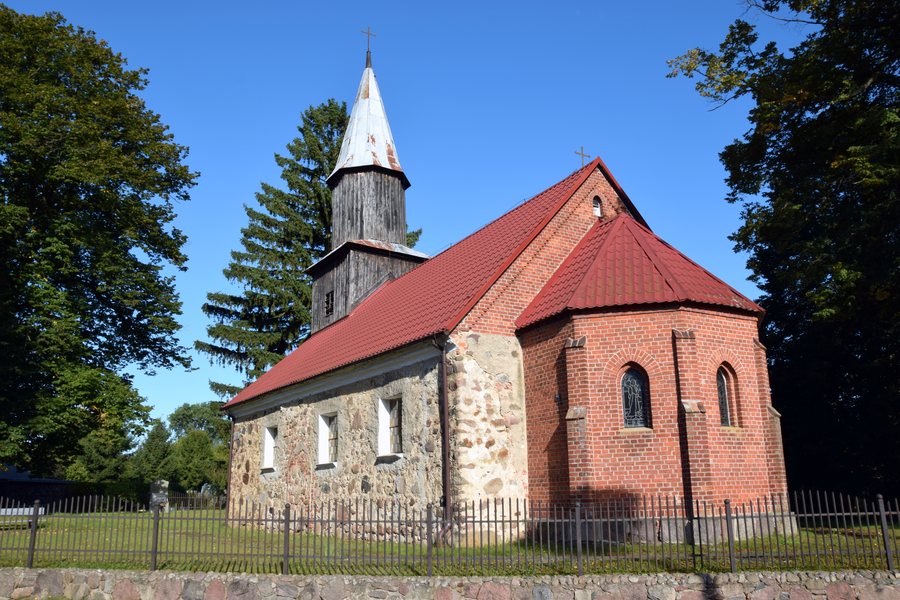
Orzechowo at a glance
- Orzechowo was the first rent-paying village in the area of today’s Stare Juchy municipality.
- Land for the village was granted on 24 February 1538.
- Orzechowo is home to a 19th-century Protestant family cemetery on the road to Gawliki Małe.
- Orzechówko, also called Szóstak Mały, lies south of the village. Szóstak lies between Orzechowo and Szczecinowo.
What does the village’s history tell us?
Orzechowo’s history can be tied to two specific details. First, the village was the first rent-paying village in the area of today’s Stare Juchy municipality. Second, 24 February 1538 is recorded as the date when land was granted for Orzechowo. The first detail places the village historically within the area of today’s municipality; the second gives a specific date associated with the village’s origins.
These details are particularly interesting when planning your trip if you choose places based not only on their landscapes but also on their history. The two facts offer different perspectives: Orzechowo’s historical place within today’s municipality and a precise date from the village’s history. This allows you to discover the destination through specific historical reference points without turning the information into a longer chronicle.
What is known about the family cemetery?
Orzechowo has a 19th-century Protestant family cemetery on the road to Gawliki Małe. Its designation and date identify it as a specific historic site in the village. If you are interested in the destination’s history, it offers another point of reference alongside Orzechowo’s early historical standing and the land grant of 1538.
How do the nearby lakes differ?
Orzechówko, also called Szóstak Mały, lies south of the village. The lake covers 16.30 hectares and is up to 4.7 metres deep. Szóstak lies between the villages of Orzechowo and Szczecinowo; it covers 490.05 hectares and has a maximum stated depth of 28.6 metres. The lakes differ in location as well as in size.
The comparison is clear: Szóstak is considerably larger and deeper than Orzechówko (Szóstak Mały). Comparing the lakes using these details gives you two distinct geographical reference points in the area around Orzechowo: one lake south of the village and another between two villages. The figures allow for an objective comparison of size, while the locations help you match each name to the right place.
Which local features can help you search for hotels?
When searching for hotels in Orzechowo, you can start by considering which aspect of the destination matters most to you: the village’s history, including its date and family cemetery, or the nearby lakes. The historical details relate to Orzechowo itself; the two lakes are geographically separate from it. Keeping this distinction in mind helps you understand the local features without treating the lakes as part of the village.
The information about Orzechowo offers an initial guide to the character of the destination; when choosing a specific hotel, what matters is what you are looking for on your trip.
Discover more destinations: Lepaki Wielkie, Bogusze, Straduny, Stare Juchy, Ełk, Rękusy, Bartosze and Zdunki.
FAQ
What historical significance did Orzechowo have?
Orzechowo was the first rent-paying village in the area of today’s Stare Juchy municipality. Land for the village was granted on 24 February 1538.
Where is the Protestant family cemetery?
The 19th-century cemetery is in Orzechowo, on the road to Gawliki Małe.
Which of the two lakes is larger and deeper?
At 490.05 hectares in area and up to 28.6 metres deep, Szóstak is larger and deeper than Orzechówko (Szóstak Mały), which covers 16.30 hectares and is up to 4.7 metres deep.
For the main travel overview: Lyck.

