
Sobiechy: The Węgorapa and the village’s history
Accommodation in Sobiechy
Sobiechy can be understood through two specific themes: the Węgorapa landscape, with the river near the village, and the area’s architectural and cultural traces. A kayaking route on the Węgorapa also offers another perspective on Sobiechy.
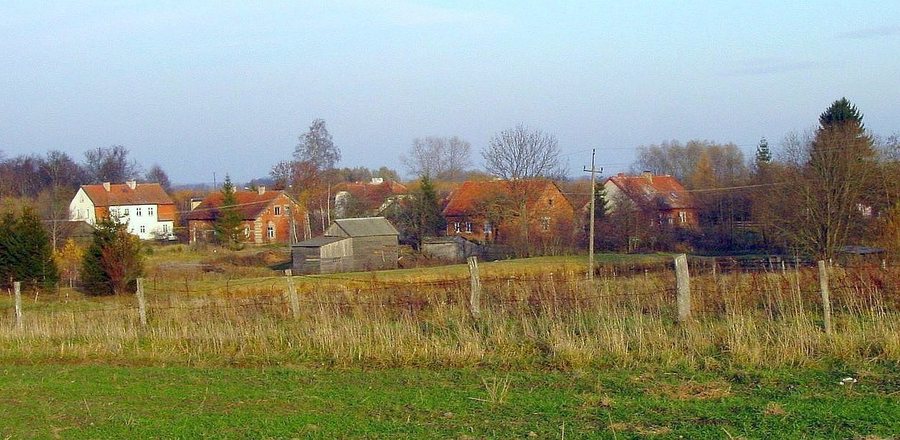
Sobiechy at a glance
- Sobiechy lies in the Węgorapa landscape, a natural continuation of the Great Masurian Lakes depression. The Węgorapa flows near the village.
- A group of brick buildings from the interwar period consists of a school and a utility building.
- Augusta Sperling’s former inn is just past the village entrance on the Pawłowo side.
- The “Garnki na tatulowym polu” project was carried out in 2004 to introduce pupils at the local primary school to aspects of archaeological heritage.
- A described kayaking route on the Węgorapa includes Sobiechy and Wężówko along its course.
How does Sobiechy fit into the landscape?
The landscape description and the reference to the river concern different scales. The Węgorapa landscape forms a natural continuation of the Great Masurian Lakes depression; the Węgorapa itself flows near the village. This places the broader landscape context alongside a specific waterway at the village.
When comparing Sobiechy with other destinations, you can consider these two aspects separately: is the landscape of primary interest to you, or are you looking for a place associated with a river? The information about Sobiechy offers clear points of reference without suggesting that the two themes describe the same thing.
What historical traces can be found in the village?
The group of brick buildings from the interwar period comprises a school and a utility building. Together, they provide an architectural link to the village’s history; the description also distinguishes the school’s use from the utility building’s supporting function.
The “Garnki na tatulowym polu” project offers another historical perspective. It took place in 2004 and was aimed at pupils at the local primary school. Its goal was to introduce them to various aspects of archaeological heritage. Alongside the buildings, this makes it a specific educational project with its own year, audience, and subject.
Augusta Sperling’s former inn is also part of the village’s history. Its location just after entering the village from the Pawłowo side provides a specific geographical reference. Together with the group of buildings and the educational project, it shows different facets of Sobiechy’s history: buildings, former uses, and engagement with archaeological heritage.
What role does the Węgorapa play in a kayaking trip?
The Węgorapa is not only part of the landscape context but also the setting for a described kayaking route that includes Sobiechy and Wężówko. This adds a water-based route connection to the village’s history. If you are planning a trip, check the current conditions along the route in advance.
Discover more destinations: Trygort, Ołownik, Jakunówko, Kolonia Rybacka, Przystan, Stręgielek, Kal and Budry.
FAQ
What landscape is Sobiechy in?
Sobiechy lies in the Węgorapa landscape, a natural continuation of the Great Masurian Lakes depression. The Węgorapa flows near the village.
What historic buildings are there in Sobiechy?
The village has a group of brick buildings from the interwar period: a school and a utility building. It is also home to Augusta Sperling’s former inn.
What was “Garnki na tatulowym polu”?
The project, carried out in 2004, aimed to introduce pupils at the local primary school to various aspects of archaeological heritage.
Which kayaking route is associated with Sobiechy?
A described route on the Węgorapa includes Sobiechy and Wężówko along its course. Check the current conditions along the route before planning a trip.
Go to the main travel overview: Węgorzewski.

