
Discover Budry
Accommodation in Budry
Budry’s municipality combines impressive landscapes with cycling and waterways, as well as historic sites. When planning your trip, explore its different themes: nature and wildlife, viewpoints, cycling routes or cultural heritage.
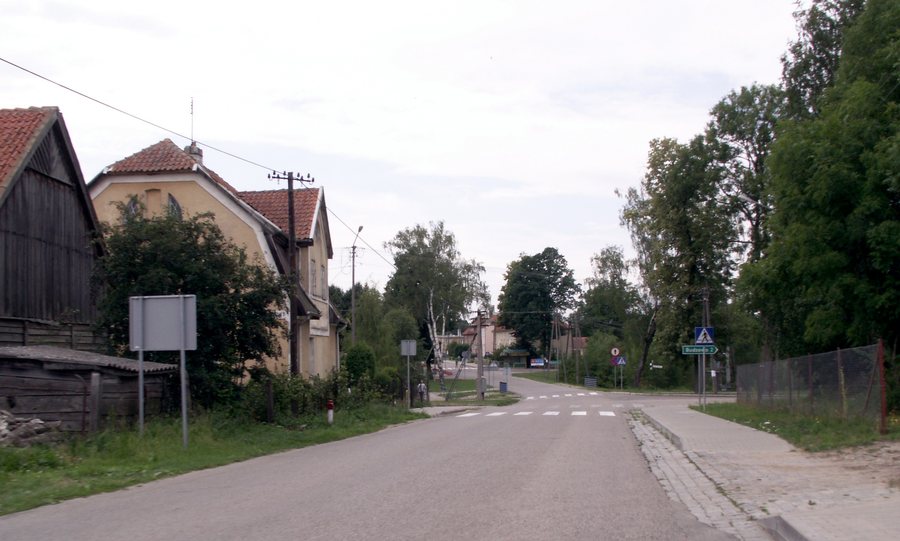
Budry at a glance
- Cranes, storks and white herons can be seen in the meadows of the Niecka Skaliska.
- A boreal forest, extremely rare in Poland, grows in the Lasów Skaliskich, where wolves and lynx are also found.
- The Green Velo route crosses the municipality from west to east and connects with local cycling routes.
- Former aristocratic manor houses are located in Więcki, Pochwałki and Budzewo.
What landscapes and wildlife can you expect?
The Niecka Skaliska is known for its open meadows and wetlands, where flocks of cranes, storks and white herons can be seen. The forests of the Lasów Skaliskich complex offer a different kind of landscape. A boreal forest, extremely rare in Poland, grows there, and wolves and lynx are also found in the area. Together, the two areas give a clear impression of the variety of landscapes in the municipality.
Panoramic views are another landscape highlight: the Wyniesienie Pawłowskie and the Dowiackie and Piłackie hills offer particularly picturesque vistas. The viewpoints also include Góry, at 161 metres, and Brzozowska Góra, at 151 metres above sea level. These elevations help distinguish the two names; both are listed as viewpoints.
Which routes can you include in your plans?
For a cycling trip, Green Velo is a named route through the municipality: it runs from west to east and connects with numerous local cycling routes. The yellow-marked Szlak Buderskich Wzgórz adds to the routes mentioned.
Waterways are also part of the picture. Routes on the Węgorapa, the Gołdapa and the Kanał Brożajcki are found in the municipality. On a canoe trail through the Lasów Skaliskich, the Kanał Brożajcki is an unusual hydraulic engineering structure and a tourist attraction. This makes cycling routes and waterways distinct themes to consider when planning your trip.
Where can you find historical and cultural points of interest?
Former aristocratic manor houses are located in the villages of Więcki, Pochwałki and Budzewo. The place names provide a useful guide to the cultural landscape of the municipality. Zabrost Wielki is known for its distinctive historic village architecture. Together, these examples show different facets of the architectural heritage: manor houses in three specifically named places and distinctive village architecture in Zabrost Wielki.
If you’d like to compare other destinations, also discover Wesołowo, Stręgielek, Kolonia Pozezdrze, Trygort, Węgorzewo, Pozezdrze, Przerwanki and Jakunówko.
FAQ
Which birds can be seen in the meadows of the Niecka Skaliska?
Flocks of cranes, storks and white herons can be seen there.
Which cycling route crosses the municipality?
Green Velo crosses the area from west to east and connects with numerous local cycling routes.
Where are the former manor houses located?
Former aristocratic manor houses are located in Więcki, Pochwałki and Budzewo.
What is known about the Kanał Brożajcki?
The Kanał Brożajcki is an unusual hydraulic engineering structure and a tourist attraction on a canoe trail through the Lasów Skaliskich.
For the broader travel overview: Węgorzewski.

