
Discover Goscino: Church, Watermill and Cycling Routes
Accommodation in Goscino
If you are looking for a hotel in Goscino, you can get a sense of the place through its cultural and outdoor activities. A fieldstone church, historical traces of water power, cycling routes and sports facilities offer different starting points for planning your visit.
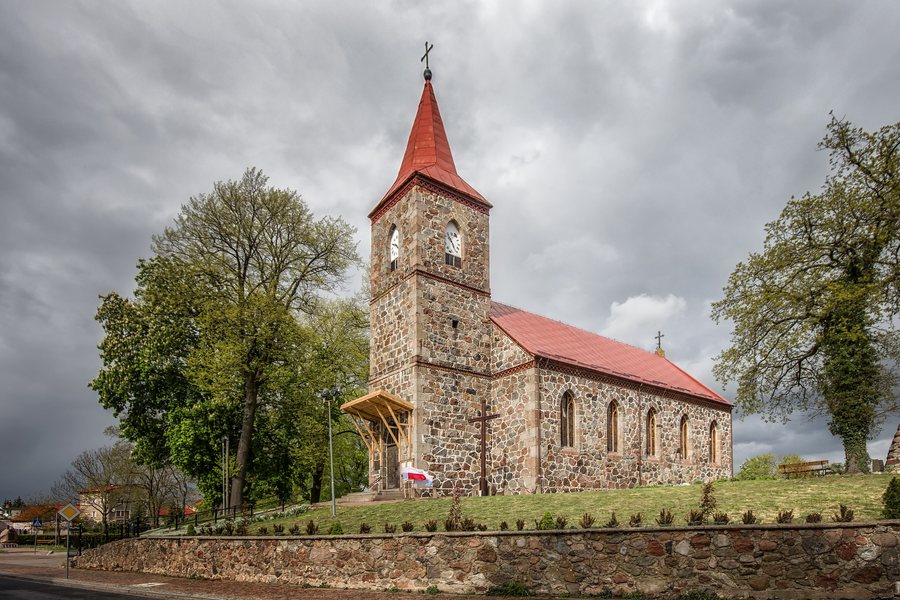
Goscino at a glance
- The Parish Church of St. Andrew Bobola was built from fieldstone in the Neo-Romanesque style in 1865.
- A stone baptismal font in the church dates from the turn of the 12th and 13th centuries.
- Cycling routes lead from Gościno to municipal boundaries and as far as Lake Kamica.
- A skate park is connected to a sports centre that includes a fitness studio and a bowling alley.
What historical traces shape the town?
The Parish Church of St. Andrew Bobola has three notable features: it was built in 1865, is Neo-Romanesque in style and is made of fieldstone. The chalice-shaped stone baptismal font inside the church also has a notable history. Carved from a single erratic boulder of Gotland limestone, it dates from the turn of the 12th and 13th centuries. The church and the font thus represent distinctly different periods.
Water power is another historical feature of the town. A watermill still stands on the Gościnka in the southeastern part of the town. On the Gościnaka, which flows through Gościno, sluices and mechanisms for impounding water survive from a former watermill. The mill and the waterworks offer different insights into local history.
Which routes and activities can you compare?
From Gościno, cycling routes run via Pławęcino to the boundary between the municipalities of Gościno and Siemyśl, and from Gościno to the boundary between the municipalities of Gościno and Karlino. Another cycling route heads towards Dargocice and continues to Lake Kamica. The routes therefore have different stated destinations: municipal boundaries for the first routes and the lake for the route via Dargocice.
There are also Nordic walking routes in Gościno. Cycling and Nordic walking are thus different ways to enjoy outdoor exercise. Voivodeship Road 162 also passes through Gościno, along with several county roads and municipal and local roads. These road details provide a different kind of orientation from the cycling routes mentioned above.
What sports facilities are available?
The skate park is connected to a sports centre as part of a shared complex. The sports centre includes a fitness studio and a bowling alley. This distinction helps clarify how the facilities are arranged: the skate park is part of the complex, while the fitness studio and bowling alley belong to the sports centre.
What natural features can you find by the church?
A weeping ash, protected as a natural monument, grows by the church. Old chestnut trees, small-leaved lindens and sycamore maples also stand nearby. The trees add a specific natural feature in the town to the history of the church and its architecture.
Discover more destinations: Dzwirzyno, Rymań, Budzistowo, Dygowo, Nieżyn, Stary Borek, Bogusławiec and Stramnica.
FAQ
When was the Parish Church of St. Andrew Bobola built?
The Neo-Romanesque fieldstone church was built in 1865. The stone baptismal font inside the church, by contrast, dates from the turn of the 12th and 13th centuries.
Where do the cycling routes from Gościno lead?
The routes described run via Pławęcino to the boundary between the municipalities of Gościno and Siemyśl, from Gościno to the boundary between the municipalities of Gościno and Karlino, and towards Dargocice as far as Lake Kamica.
Which facilities are part of the sports complex?
The skate park is connected to the sports centre as part of a complex. The sports centre includes a fitness studio and a bowling alley.
For the broader travel overview: Kolberg.

