
Spore by the lake and the Gwda
Accommodation in Spore
A lake, a canoe route and a distinctive church shape different sides of Spore. When planning your trip, the key question is whether you are mainly looking for a relaxing swim, a canoe trip or culture in the village setting.
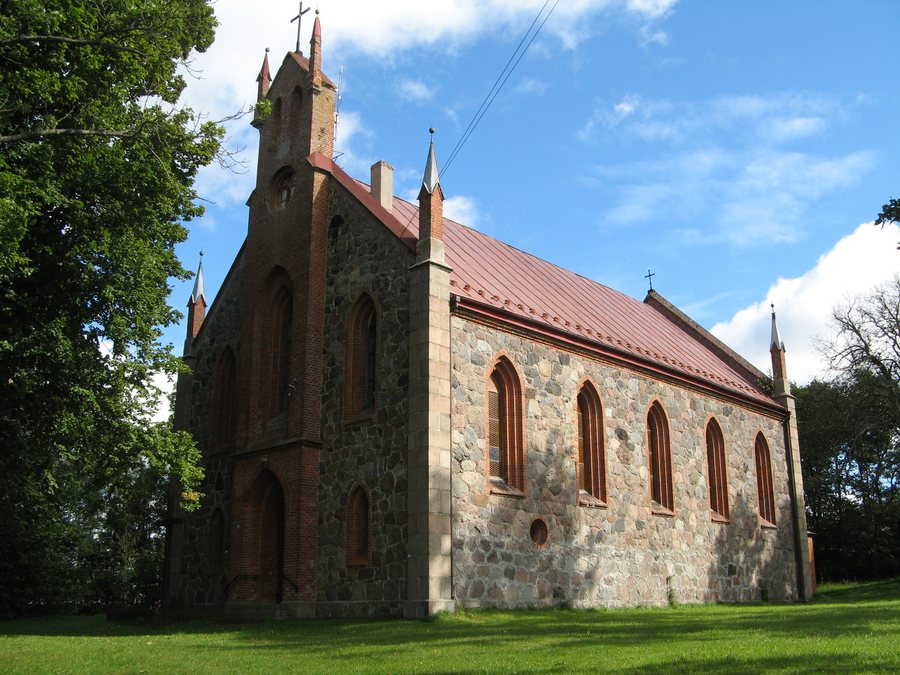 File:2011-08 301 Spore, kościół Najświętszej rodziny (Sparsee Kirche).jpg
Photo: Hans-Peter Balfanz via Source, CC BY-SA 3.0
File:2011-08 301 Spore, kościół Najświętszej rodziny (Sparsee Kirche).jpg
Photo: Hans-Peter Balfanz via Source, CC BY-SA 3.0
Spore at a glance
- Spore lies on a high lakeside embankment.
- Lake Spore covers 90 hectares and is suitable for swimming and family recreation.
- The Gwda flows through the western part of Spore.
- The “Gwda” canoe route passes through Spore between Lake Smolęsko and Lake Wielimie.
- The Neo-Gothic Church of the Holy Family was built from fieldstone between 1859 and 1865.
What shapes Spore’s landscape?
Its position on a high lakeside embankment gives Spore a clear connection to the surrounding landscape. The lake covers 90 hectares and is suitable for swimming and family recreation. Those choosing a destination for its waterscapes will find a clear focus for their stay here.
The Gwda also flows through the western part of Spore.
What opportunities are there for swimming and canoeing?
Lake Spore is suitable for swimming and family recreation. If you are comparing waterfront destinations for a family trip, this is a useful point of reference. This describes the lake’s suitability; it does not indicate any specific swimming facilities or other amenities.
The “Gwda” canoe route passes through Spore between Lake Smolęsko and Lake Wielimie. This makes the village part of this named route. In the municipality concerned, the upper section is 45 kilometres long and can be paddled in 2–3 days. Almost the entire section lies within the municipality of Szczecinek. The duration refers to this upper section.
What does the church tell us about Spore?
The Church of the Holy Family is Spore’s most important landmark in the landscape. It was built from fieldstone in the Neo-Gothic style between 1859 and 1865. Its construction dates, building material and architectural style give it a clearly defined historical character within the village.
For travellers interested in church architecture, the church is a specific cultural point of interest alongside the lake and river. Its role as a landmark also makes it an important part of the village’s appearance. Spore can therefore be explored not only as a destination for water-based activities, but also through its Neo-Gothic architecture.
How can you tailor your hotel search to your trip?
If you are looking for a hotel in Spore, first decide what matters most for your trip. Swimming and family recreation, a canoe trip on the Gwda or an interest in the Church of the Holy Family each point to a different focus. This distinction helps you assess whether Spore suits your interests, rather than viewing it simply as a lake destination.
For a canoe trip, you can use the upper section’s 45-kilometre length and stated duration of 2–3 days as a guide when planning your trip. If you are mainly looking to relax by the lake, you can focus instead on its suitability for swimming and family recreation. For a culture-focused stay, the church is one of Spore’s key features. This way, you can first decide what kind of experience you want and then look for suitable accommodation.
If you would like to compare Spore with other destinations, you can also find Sitno, Krągi, Pilawa, Stare Wierzchowo, Rakowo, Borne Sulinowo, Silnowo and Lubowo.
FAQ
How large is Lake Spore?
Lake Spore covers 90 hectares.
Between which lakes does the “Gwda” canoe route pass through Spore?
It passes through Spore between Lake Smolęsko and Lake Wielimie.
How long is the upper section of the canoe route?
The upper section is 45 kilometres long and can be paddled in 2–3 days.
For the broader travel overview: Neustettin.

.jpg)