
Bran: Castle History, Museum and Carpathian Landscape
Accommodation in Bran
Bran Between Castle History and the Carpathians
Bran combines castle history, royal heritage, regional culture and the landscape of the Southern Carpathians. Bran Fortress was built at the end of the 14th century and strategically dominates the pass between Transylvania and Wallachia. On 1 December 1920, Bran Castle became the preferred residence of Queen Marie after the inhabitants of Brașov offered it to her. Thus, in Bran, medieval architectural history and the memory of the Romanian royal era are directly connected.
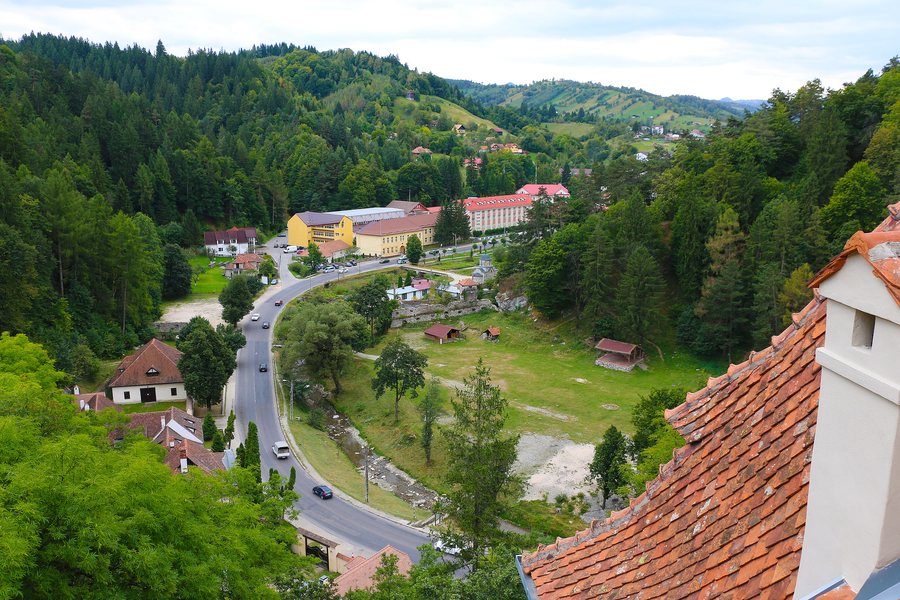 File:Ansamblul vămii Branului, sat Bran; comuna Bran.jpg
Photo: Prymasal via Wikimedia Commons, CC BY-SA 3.0 ro
File:Ansamblul vămii Branului, sat Bran; comuna Bran.jpg
Photo: Prymasal via Wikimedia Commons, CC BY-SA 3.0 ro
Royal Collections and Museum Rooms
The core collections of the Bran National Museum originate from the royal collections of Bran Castle. The museum presents its collections in the “Regina Maria” history section and in an open-air ethnographic section. The museum structure separates the historical area from the ethnographic presentation outdoors. The two sections therefore combine different forms of presentation: the interiors focus on history, while the ethnographic collection is displayed outdoors. Bran Castle is known worldwide as “Dracula's Castle” because it corresponds to Bram Stoker’s description.
History in the Time Tunnel
The Time Tunnel is considered a former secret passage and is now a gallery of history and fantasy. Modern multimedia technology tells visitors stories there about the people and myths of Bran Castle. Its architectural background dates back to 1937: the Czech architect Karel Liman connected the well shaft with a horizontal gallery in order to create a vertical lift. This enabled direct access from the Royal Park to Bran Castle. The Time Tunnel therefore encompasses both the presentation of a former passage and the memory of a specific technical solution from the castle’s history. Historical narrative, technical construction and multimedia remain recognisable as separate perspectives.
Mountain Landscape of the Southern Carpathians
Piatra Craiului National Park is located in the Southern Carpathians. It encompasses the entire Piatra Craiului Ridge as well as parts of the neighbouring Rucăr–Bran and Rucăr–Zărnești corridors. Its geographical classification therefore includes both the fully incorporated ridge and the named sections of the two corridors. The landscape is presented in the article alongside Bran’s historical and cultural sites without merging with them into a single exhibition or local area.
Getting There and Local Context
For connections from Brașov, Bus Station No. 2 offers regular services to Bran–Moieciu. On weekdays, buses run every 30 minutes; at weekends, they run hourly. The bus station in Bran is located in the town centre near the main entrance to Bran Castle. Thus, both the departure point in Brașov and the arrival point in Bran are specified together with their respective service intervals and locations.
Other Local Destinations: For comparison, you can also include Prejmer, Holtesdorf, Ghimbav, Honigberg, Codlea, Recea, Cheia and Kálbor in your comparison.
Traditions in Bran Village
The “Zestrea Branului” folklore ensemble preserves Bran’s traditions through authentic clothing, songs and dances. The Adormirea Maicii Domnului Church in Bran village dates from 1826. Both references expand the historical context of the place to include living culture and a specific sacred building in Bran village.
For the broader travel overview: Brasov.

