
Berzasca between the Danube, caves and history
Accommodation in Berzasca
Berzasca between nature and local history
The Iron Gates Natural Park is one of the local tourist attractions of the municipality of Berzasca. This establishes a specific destination at municipal level for the nature aspect of a stay, without equating the park with individual caves or structures. Those considering Berzasca as a destination can treat this natural park as a separate thematic area alongside the historical sites.
Berzasca is also home to the Orthodox Church of “Sfinţii Arhangheli Mihai şi Gavriil”. It is a historic architectural and cultural monument in Berzasca. Thus, the village itself has an individual cultural site that differs from the monastery ruins on the Sirinia River and the history of Drencova’s fortress.
Caves and named routes
The 77-metre-long Voinicovăţ Cave is located in the Almăj Mountains in the Berzasca Valley. La-Gaura Cave can be reached via Chiacovăţ–Berzasca and is 121 metres long. Socolovăţ Cave is located in the Almăj Mountains in the Siriniei Valley, is 35 metres long and can be reached via a route starting from Berzasca. Voinicovăţ and Socolovăţ share the Almăj Mountains, but not the valley association: one destination is in the Berzasca Valley, the other in the Siriniei Valley. Their lengths also differ significantly: La-Gaura Cave is the longest and Socolovăţ Cave the shortest of the three. For a travel plan featuring natural attractions, the location, access and size of each cave remain clearly distinguishable.
A waterside resort in the Danube Gorge
Complex Egreta consists of 15 wooden houses floating above the Danube and connected by a waterfront promenade. Complex Egreta is an artificial floating island in the Danube Gorge and a waterside resort described as the first of its kind in Romania. For travel planning, this provides a separate Danube focus alongside the caves in the mountains. The Danube Gorge forms the geographical setting of this destination, while the wooden houses float above the Danube.
Drencova: border fortress and ruins in the Danube
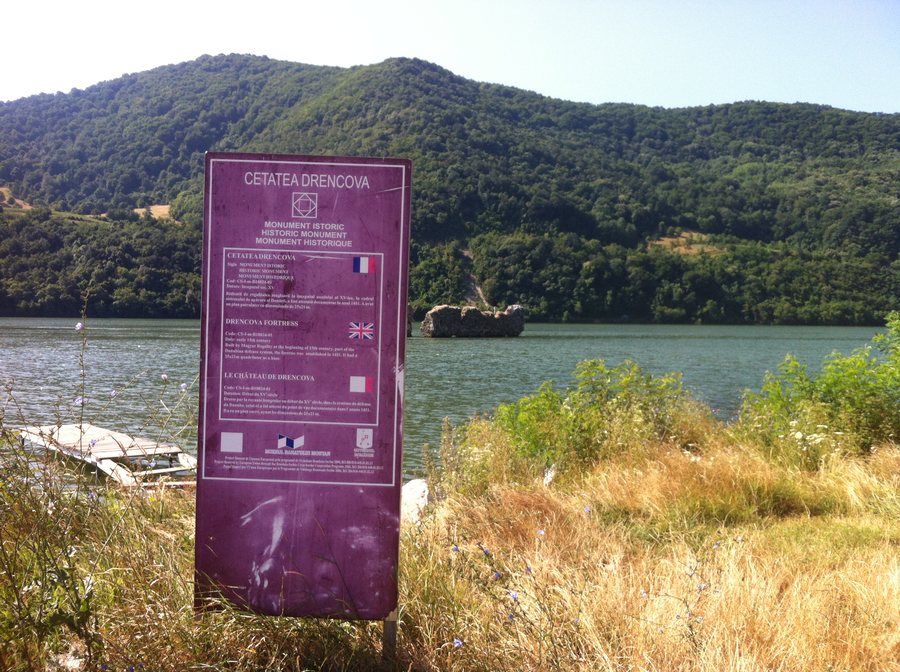
Fortificația Drencova was built around 1419 as a border fortress. Since the flooding in 1969, the ruins have been lying in the Danube. The ruins of Drencova Fortress can be seen from national road DN 57 near Berzasca. Those viewing historical sites according to their time of origin and later location will find here a border fortress, ruins in the Danube and a specific visual connection to DN 57.
Monastery ruins and village festival
The ruins of the Romanian Orthodox Sirinia Monastery were identified in 2002 on the right bank of the Sirinia River. Ruga Berzasca is an important village festival that the residents of the municipality and other people look forward to and at which families, friends and acquaintances celebrate together. For a culturally oriented stay, these two destinations represent different forms: monastery ruins on the Sirinia River and a village festival involving communal celebrations in the municipality of Berzasca.
Other places
Reşiţa, Sasca Montană, Turnu Ruieni, Novákfalva, Buchin, Oravița, Kohldorf, Franzdorf
For the higher-level travel overview: Caraş-Severin.

.jpg)