
Oravița: Culture, Nature and Historic Railway
Accommodation in Oravița
Oravița combines early theatre and railway history with historic sacred buildings, museums, natural areas and hydraulic engineering facilities. The Teatrul Mihai Eminescu is Romania’s first theatre; its building houses a museum with elements of local culture. For planning purposes, different focuses can be compared here: cultural monuments, a historic railway line, nature and hydraulic engineering.
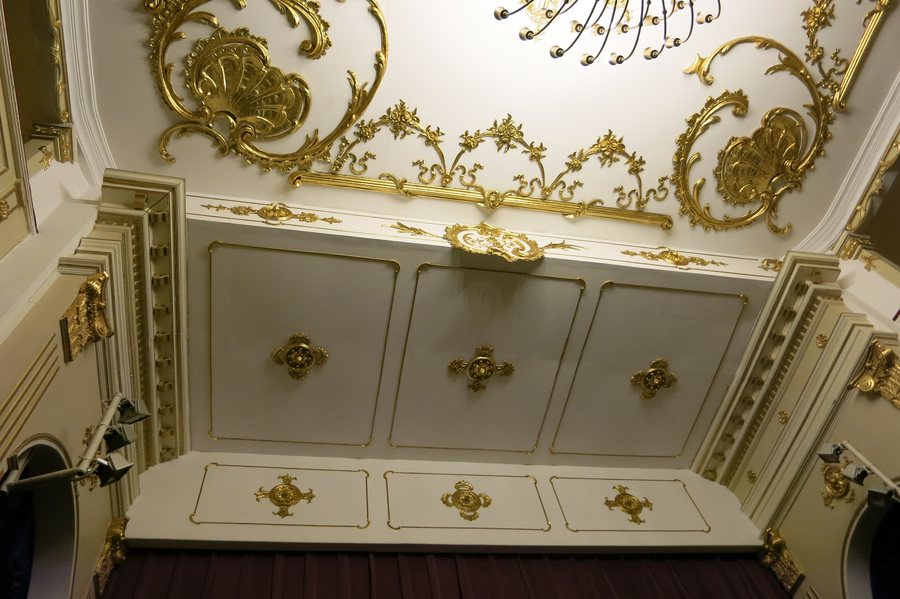 File:Teatrul vechi, azi Teatrul Mihai Eminescu, oraș Oravița 01.JPG
Photo: Munteanu Anca via Wikimedia Commons, CC BY-SA 4.0
File:Teatrul vechi, azi Teatrul Mihai Eminescu, oraș Oravița 01.JPG
Photo: Munteanu Anca via Wikimedia Commons, CC BY-SA 4.0
Culture and History
The Teatrul Vechi Mihai Eminescu is a historical and architectural monument with elements of late Baroque or Viennese Baroque. The Muzeul de Etnografie, Etnologie și Folclor „Țara Carașului“ is a permanent exhibition unit of the Centrul Cultural „Teatrul Vechi Mihai Eminescu“. The Knoblauch museum pharmacy is considered the first mining pharmacy in the Banat and in the Romanian cultural sphere. The Muzeul de Istoria Farmaciei Montanistice Bănăţene preserves a document archive and a library of old books. Those comparing historic sites can distinguish here between architecture, exhibitions and the history of pharmacy.
The sacred buildings include the Biserica ortodoxă ADORMIREA MAICII DOMNULUI, a historic monument dating from 1781 that was built between 1781 and 1784 in the Baroque style. Its iconostasis was made in Vienna. The Biserica Romano-Catolica din Oravița is also a historic monument; it was built between 1718 and 1722 in the provincial Baroque style. The Primăria veche is a historic monument dating from 1796 and was originally built as the seat of the „Administrația Monetară şi Minieră“ for the imperial Banat. The Cazarma grănicerească is a historic monument dating from 1747.
Nature and Hydraulic Engineering
Cheile Nerei-Beușnița National Park includes areas within the administrative territory of Oravița. In the middle section of the Oravița Valley, the hydrotechnical complex Lacul Mare–Lacul Mic was created between 1727 and 1733. It includes some of the oldest hydraulic engineering facilities and Romania’s first gravity dams. In addition to serving local industry, the complex was also used for the recreation of residents. The different topics provide two clearly distinguishable focuses for planning a day, without having to combine them into a single experience. For classifying the landscape, two different facts therefore stand side by side: the national park describes an administrative relationship, while the complex in the Oravița Valley is characterized by its construction history, its industrial use and the recreation of residents. This makes it possible to consider the natural area and hydraulic engineering separately, without obscuring their respective historical contexts.
Railway and Getting There
The Oravița–Anina railway line is Romania’s first mountain railway and dates from 1863. At the same time, it is a Category A historical monument and a masterpiece of engineering. Oravița railway station was completed in 1847 as Romania’s first railway station and is a starting point for the Oravița–Anina railway line. Oravița can be reached by train from Reșița and Timișoara. For planning a route, the station, railway line and train connections can be classified as separate points.
Other Places
Other location pages: Băile Herculane, Berzasca, Buchin, Sasca Montană, Novákfalva, Karansebesch, Eftimie Murgu, Reşiţa.
For the overarching travel overview: Caraş-Severin.

