
Viştea – Church, Stone and Rural Tradition
Accommodation in Viştea
The Reformed Church of Viștea is listed as a historic monument. Viștea also features distinctive and interesting traditional rural architecture.
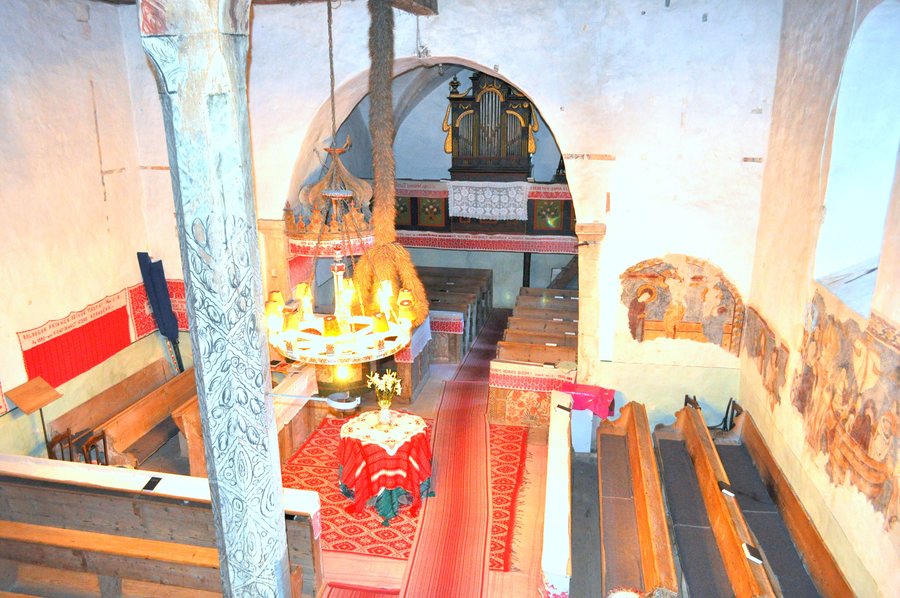 File:Biserica reformată din Viștea.jpg
Photo: Țetcu Mircea Rareș via Wikimedia Commons, CC BY-SA 4.0
File:Biserica reformată din Viștea.jpg
Photo: Țetcu Mircea Rareș via Wikimedia Commons, CC BY-SA 4.0
When comparing hotels in Viştea, you can consider travel dates, room category and cancellation policies separately. For budget-conscious travel planning, this approach creates a factual structure on the offer pages; the site's cultural themes can then be considered according to time, place and material. For travel planning, the themes can be organised by location, building materials, period and craft. You can focus on archaeology, church art, the history of materials or local traditions and compare the individual connections separately.
Archaeology and the Local Landscape
The Viștea–Păluta archaeological site lies to the north-northeast of the village on a lower terrace on the right bank of the Nadăș. Municipal road DC141A connects the centre of Viștea and is 2 km long. For spatial orientation, you can regard the archaeological site and the municipal road as two separate reference points.
Church and Visual Art
In 2013, a rotunda was discovered in the church of Viștea. The oldest wall paintings in the Reformed Church of Viștea date from the first half of the 14th century. Another fresco in the Reformed Church of Viștea dates from around 1400. The walls of the nave of the Reformed Church of Viștea are made of stone from Viștea and have largely been preserved in their original state. When viewing the church interior, visual art and building materials can be treated as two separate areas of focus. For the thematic emphasis, two perspectives are available: the chronological classification of the art and the material classification of the church interior.
Stone as Craft and Material
The Viștea–Golombud limestone quarry on the right slope of the Nadăș was used in antiquity. In the 1870s, men from Viștea learned the stoneworking trade while working with Italian stonemasons on the construction of the Cluj–Oradea railway line. Stone from Viștea was used, among other things, for famous buildings such as Casa Poporului and the Parliament Building in Budapest. In the area of Gârbău, stone carving is documented as a craft tradition. To classify the stone-related theme, you can distinguish between the place of extraction, the craft that was learned and its use in buildings. Particularly with the subject of stone, a comparison according to origin, craft and use is worthwhile. The three perspectives can be considered separately and then classified as different local connections.
Traditions and Cultural Connections
Beadwork is regarded as a craft tradition associated with the women of Viștea. Fiii satului Viștea is listed as a local village festival held at the end of July. Navicella din Viștea is a work of art that represents a copy based on a painting by Giotto; in connection with the cultural centre, it is considered interesting for visitors.
For the broader travel overview: Comuna Gârbău.

