
Covasna between spa resort, technology and culture
Accommodation in Covasna
Covasna between spa resort and technological history
Covasna is a spa resort with striking examples of spa, technological and cultural history. Balta Dracului opened as a public bath in 1881 and was initially used to treat rheumatism. This gives the town a specific historical starting point for exploring the development of Covasna.
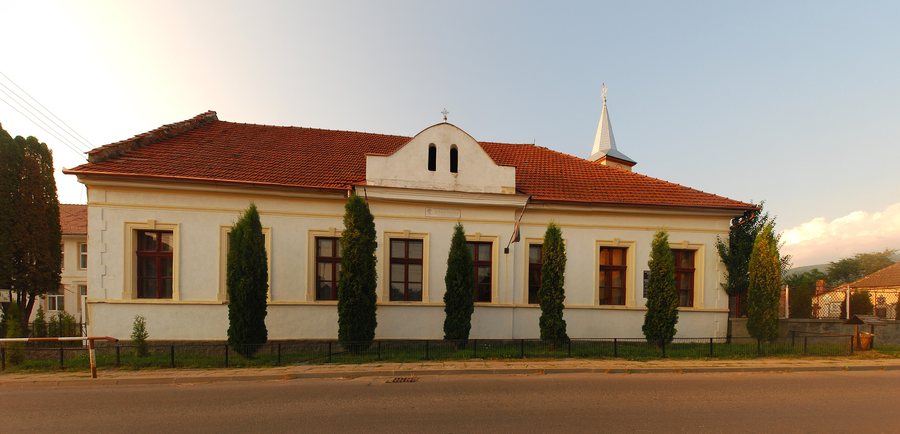 File:RO CV Covasna Voinești schoolhouse.jpg
Photo: Andrei Stroe via Wikimedia Commons, CC BY-SA 3.0 ro
File:RO CV Covasna Voinești schoolhouse.jpg
Photo: Andrei Stroe via Wikimedia Commons, CC BY-SA 3.0 ro
The Planul Înclinat is located in the Valea Zânelor area of the town of Covasna and is a unique technical monument in Europe. The installation is 1,236 metres long and has an elevation difference of 327 metres between its stations. The Planul Înclinat uses gravity to transport wagons loaded with timber along an inclined route without any other energy sources. For visitors who want to experience technological history in a tangible way, this structure is one of the town's particularly concrete attractions.
Valea Zânelor and the Dacian fortress
The landscape of Valea Zânelor also includes Cascada de sub Șiclău. The waterfall is located near the Planul Înclinat, approximately 100–150 metres upstream from Covasna's water treatment plant. The approximate distance describes its location within this area without specifying an exact route through the terrain.
Cetatea Zânelor is situated on the 960-metre-high Muntele Cetății between Pârâul Cetății and Pârâul Mișca. Ancient terraces cut into the rock define the site. Cetatea Zânelor is one of the largest and best-preserved Dacian fortresses outside the Orăștie Mountains and is considered unique in the Dacian world because of its terraced fortification system.
Art, remembrance and regional history
In addition to the technical monuments, several cultural sites contribute to the character of Covasna and its surroundings. Bazarul is a reconstruction of the bazaar that operated next to Balta Dracului until the middle of the 20th century. The Kádár-László Art Gallery in Covasna presents exhibitions in painting, graphic art and visual art. Works by local artists as well as established artists from Romania and abroad are on display.
A statue in Chiuruș is dedicated to Kőrösi Csoma Sándor, a 19th-century linguist and traveller associated with the first Tibetan-English dictionary. Chiuruș also has a replica of the imaginary Csoma House with a memorial room and contemporary Szekler-style interior furnishings. The two sites have different focuses: the statue commemorates a historical figure, while the Csoma House presents a memorial room and regional interior design.
Railways and experiences for different generations
The local railway line 404 between Sfântu Gheorghe and Brețcu runs through the spa resort of Covasna. Buses run from Covasna railway station to the centre of the spa resort. For further orientation around Valea Zânelor, the sections of the CFF between Comandău and Valea Zânelor are also relevant; they are currently used for tourism.
A leisure railway pulled by a steam locomotive runs through Valea Zânelor and offers rides for children and adults. Visitors can taste mineral water from the springs in Valea Hankó–Horgász. These two offerings appeal to different interests: the train ride brings the industrial tradition to life as an excursion, while the springs complement Covasna's spa resort character with a specific regional connection.
Further destinations besides Covasna include Baraolt, Târgu Secuiesc, Bățanii Mici, Turia, Micfalău, Sfântu Gheorghe, Ilieni and Comandău.
For the main travel overview: Covasna.

