
Covasna: Hotels and Accommodations
Accommodation in Covasna
Muntele Puturosu, also called Puciosu, is part of the Ciomad-Balvanyos Massif, reaches an altitude of 1,143 meters, and is the southernmost above-ground occurrence of post-volcanic phenomena in the Eastern Carpathian range.
For your trip to Covasna, you can book a hotel in Covasna.
Nature
The Puturosu Cave, also called Grota Puturosu, is a 14-meter-long natural mofette and is considered the largest natural mofette in Europe. Cheile Vârghișului is located in the northern part of the Perșani Mountains, is crossed by the Vârghiș stream, and offers opportunities for hiking and caving.
Culture and History
The Haszmann Pál Museum in Cernat is housed in the Damokos family mansion, built in the neoclassical style. The grounds feature Transylvanian houses and gates, a watermill, and carved Transylvanian funerary monuments made of wood and stone. The museum also organizes traditional craft workshops on furniture painting, wood carving, and decorating Easter eggs.
The fortified Roman Catholic Church of Saint Emeric in Ghelința dates back to the 13th century, preserves architectural elements of the Romanesque, Gothic, Renaissance, and Baroque styles, and is considered one of the most valuable religious buildings in Covasna County. The fortified Unitarian church in Aita Mare has five-meter-high surrounding walls, two opposing bastions, a stone pulpit made of four carved panels, and a stone balustrade dated 1710.
The Museum of Transylvanian Life is housed in the 17th-century Kálnoky Castle and displays original weapons, reconstructions of contemporary clothing, books belonging to the aristocracy, and antique musical instruments. Guided tours of Kálnoky Castle begin on the hour by reservation.
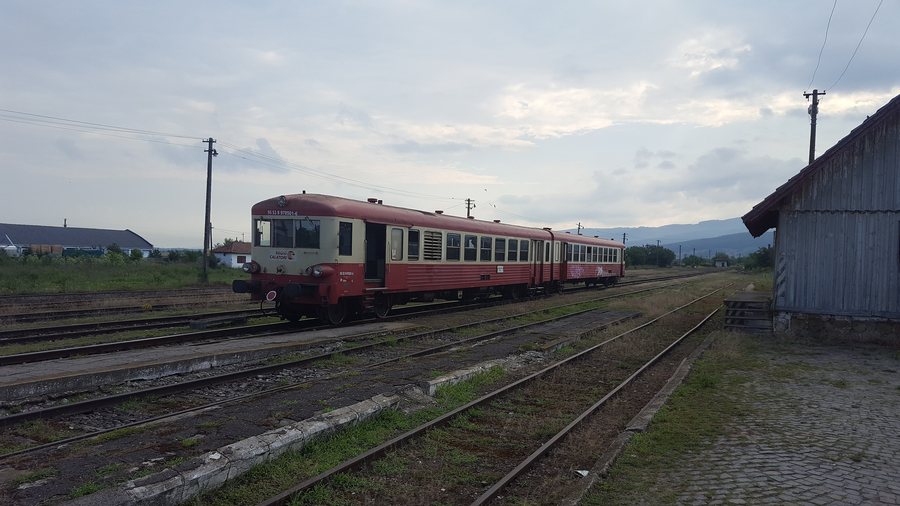
The Covasna–Comandău narrow-gauge forest railway was built in 1882 and is an industrial heritage attraction. Some sections of this forest railway are currently used for tourism. An excursion train pulled by a steam locomotive runs through Valea Zânelor.
Health Spa and Activities
Valea Zânelor has hiking trails suitable for walking and jogging. Balta Dracului is a gas eruption that keeps a vortex of mud and mineral water in motion.
The balneoclimatic spa resort of Covasna has hotels with therapy facilities, wellness and spa areas, and private mofettes. In Covasna County, mineral waters are used for spa treatments for internal or external use, while carbon dioxide emissions in mofettes are used for balneotherapeutic treatments.
Regional Cuisine
Malomkert Center offers a kürtőskalács workshop where visitors bake their own chimney cake pastries. It also offers a workshop on making homemade potato bread.
Other Subareas
Other subareas: Turia, Bățanii Mici, Moacşa, Comandău, Zăbala, Baraolt, Micfalău, Dobârlău Commune, Sfântu Gheorghe Municipality, Târgu Secuiesc, Întorsura Buzăului, Dalnic, Bita, Sfântu Gheorghe, Covasna, Ozun, Ilieni.
For the higher-level travel overview: Romania.

