
Cib: Hiking Routes, Nature and History
Accommodation in Cib
In Cib, a marked hiking route crosses the entire village and continues along a more than 4 km long, partially paved road to the village of Cheile Cibului. The Zlatna–Cheile Cibului–Ardeu–Cheile Măzii route is marked with a red cross, is 17.8 km long, has an elevation gain of 506 m, takes 8 hours and has a medium difficulty level.
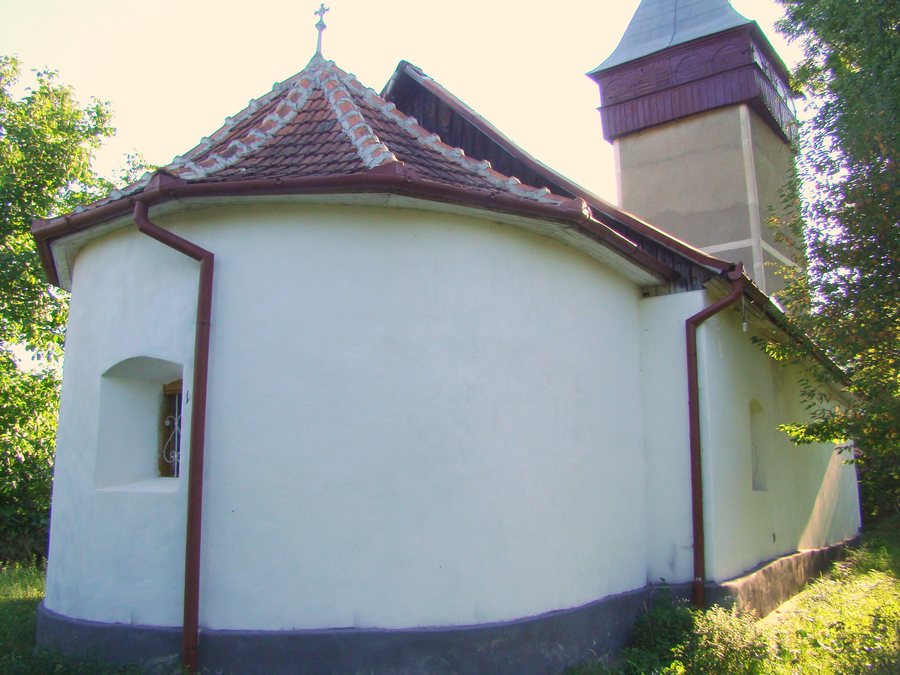 File:RO AB Biserica Sfantul Nicolae din Cib (13).jpg
Photo: Țetcu Mircea Rareș via Wikimedia Commons, CC BY-SA 4.0
File:RO AB Biserica Sfantul Nicolae din Cib (13).jpg
Photo: Țetcu Mircea Rareș via Wikimedia Commons, CC BY-SA 4.0
Paths and landscape
The route information shows two different ways of travelling in Cib. On the one hand, there is a continuously marked hiking route with clearly described distance, elevation profile, time required and difficulty level. On the other hand, a separate, partially paved road section leads from the village onwards to Cheile Cibului. By comparing the information, visitors can distinguish between a thoroughly surveyed tour and a shorter, section-specific route without combining the two descriptions into a single route.
Nature
Cheile Cibului, 1.4 km downstream from Cib, is designated as a nature reserve. Vârful Fericelii is a mountain in the vicinity of Cib. In the wider regional surroundings of Cib are Geamăna, a mountain, and Muntele Vulcan, also a mountain. Dealul Uroiului is also a hill in the wider regional surroundings of Cib.
The approach to Cheile Cibului from the Ampoi Valley leads from the DN74 between Alba Iulia and Zlatna via the Zlatna–Almaşu Mare road and then through Nădăştie and Cib.
Culture and history
The masonry church of Sf. Nicolae in Cib is dated to 1786. In the cemetery surrounding this church, traces of an older wooden church can be seen on a small plateau above the church. Cib is home to a thatched-roof house that has been inhabited by more than five generations since 1857 and was saved from disappearing. The interior of this house was still in use 160 years later. Thus, different periods of time exist side by side in Cib: the dating of the masonry church, the visible traces of an older wooden structure, and the documented history of use of the thatched-roof house across generations. The cultural evidence therefore differs in terms of its form of construction, dating and continued use.
The cultural references of Cib thus bring together a religious building, traces of an earlier wooden structure and a residential house with a documented history of use. This distinction is decisive when considering the village: for Sf. Nicolae, the year and the location of the traces of the older church are the focus, while for the thatched-roof house, the long period of habitation and the preserved use of the interior are central. Both testimonies belong to the history of the village, but preserve different forms of historical memory.
When selecting a hotel for Cib, travel dates, room category and cancellation conditions can be compared separately.
Other destinations at this level are Uricani, Orăştie, Simeria, Topliţa, Hateg, Câmpu Lui Neag, Peștişu Mare, Vața De Jos.
For the higher-level travel overview: Eisenmarkt.

.jpg)