
Floreşti – Hills, Churches and Memorial Sites
Accommodation in Floreşti
The central village of Floreşti, which shares its name with the commune, lies in a landscape shaped by hills and valleys. This landscape area includes the hills Godeanu, Golul Merişului, Gârdoaia, Scroafa and Sudoame. It is also crossed by the Peşteana watercourse and its tributaries. The surrounding area therefore combines different geographical features: elevated landscape points, valleys and a water system.
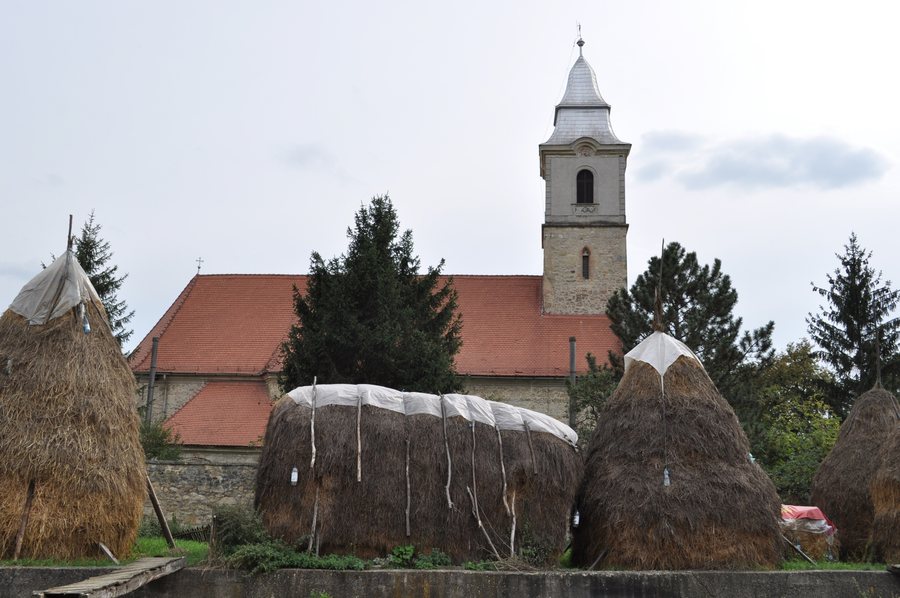 File:Biserica romano-catolica din Floresti (11).JPG
Photo: Țetcu Mircea Rareș via Wikimedia Commons, CC BY-SA 3.0 ro
File:Biserica romano-catolica din Floresti (11).JPG
Photo: Țetcu Mircea Rareș via Wikimedia Commons, CC BY-SA 3.0 ro
Landscape
The peaks Dealul Cârleşti, Cioacă Înaltă and Teiul lui Truşcă are located in the vicinity of Floreşti. The peak Vârful Liseţ is also located in the wider regional surroundings of Floreşti. The three peaks in the immediate vicinity and the more regionally situated Vârful Liseţ form two clearly distinct spatial levels. This makes it possible to compare the different distances directly when selecting nature destinations. The landscape features all share the same local reference, while retaining their distinct designations as hills, valleys, waterways and tributaries.
Events
In 2024, the Zilele Comunei Florești reached its 15th edition. During a new edition of the Zilele Comunei Florești, an artistic performance took place at the commune's stadium. The year and edition number define the temporal framework, while the stadium and type of performance provide more specific details about the character of this particular event.
For accommodation in Floreşti, travel dates, room category and cancellation conditions can be compared at your leisure. These details provide a practical comparison for travel planning, while the landscape, churches, museum, events and memorial sites remain separate topics.
Other places that you can access from this page include Dubova, Eșelnița, Orșova, Şimian, Gura Văii, Baia de Aramă, Godeanu and Corcova.
Culture and History
The churches Biserica Lupoiţa, Biserica Ortodoxă Roşiuţa and Biserica Mătăsari are located in the vicinity of Floreşti. The museum Muzeul Regiunii Porțile de Fier is located in the wider regional surroundings of Floreşti. This spatial classification distinguishes the three churches in the vicinity from the museum in the wider regional area.
In April 2014, two cremation graves were discovered on the Culmea Motrului hill during searches with a metal detector. The find connects a specific location with a precisely dated event and a specific type of archaeological discovery.
The monument to those who fell in the First World War consists of hewn stone, a stepped base and a three-part obelisk that ends in a capital and a sphere. Its named components give the memorial site a clearly described architectural form.
A monument erected by the Episcopia Severinului şi Strehaiei with the support of the Primăria Comunei Floreşti commemorates the heroes who fell in the First and Second World Wars, as well as the anti-communist fighter Nicolae Trocan from Peşteana. The memorial sites thus focus both on those killed in the two world wars and on a named individual who was an anti-communist fighter. The two memorial sites therefore differ in their described form and in the people or groups commemorated.
To the higher-level travel overview: Mehedinti.

.JPG)