
Veștem between Churches, Bodies of Water, and Routes
Accommodation in Veștem
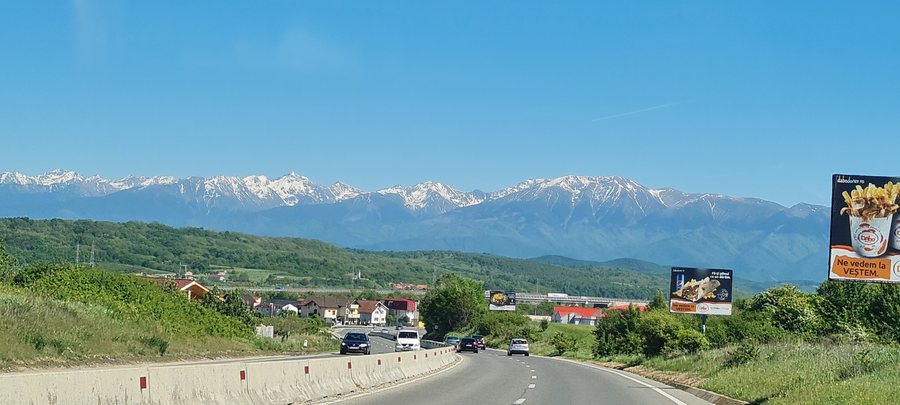
Veștem lies at an elevation of 448 m in the municipality of Șelimbăr, which is located in the center of the Sibiu Depression along the middle course of the Cibin River. The DN1 passes through the village and heads west from there toward Avrig, Făgăraș, and Brașov. For geographical orientation, elevation, the river area, and the direction of the road can be considered separately.
When comparing hotels in Veștem, you can first compare travel dates, room category, and cancellation conditions on the respective offer pages. For the village itself, location, churches, bodies of water, and routes are presented as separate topics. Depending on your travel interests, you can focus on culture, water, or route patterns.
Culture and History
The foundation stone for the Veștem Schitul was laid in 2007 on land donated by several families from Veștem. The “Înălţarea Domnului” Schitul in Veștem comprises a church, a cell block, a summer altar, and other ancillary buildings. The “Înălțarea Domnului” Church of the Veștem Schitul was consecrated during a service attended by pilgrims from the surrounding villages and from other parts of Romania.
The Biserica “Cuvincioasa Paraschiva” is also part of the village’s history: it was built in 1842 and painted in the same year; further painting work is attributed to 1852. A note from 1683 records the sending of a Gospel to the church in Veștem. The different dates provide several historical points of reference, without limiting the building’s history to a single era.
Nature and Bodies of Water
When choosing a nature-related topic, you can distinguish between a historically associated lake and bodies of water described in terms of fishing. Lacul Taberei lies between Veștem and Mohu and is associated with the historic camp of Mihai Viteazu. At Tocile/Veștem, fishing lakes 1 and 2 are facilities for recreational and sport fishing. The bodies of water at Tocile/Veștem are considered part of areas used for fishing, with a great diversity of species in which cyprinids predominate. Thus, a historical connection to a body of water and a fishing-oriented aquatic area are presented as separate topics.
Other Destinations
Other destinations include Biertan, Slimnic, Apoldu de Sus, Hohe Rinne, Tilischen, Tălmaciu, Mediasch and Șura Mică.
Routes
For planning purposes, the two routes can be distinguished by the sequence of places, surface, and connection to the river. One route following “Sibiu – Guşteriţa – Dealul lui Tablă – Capul Dealului – Valea Daia – Daia – Caşolţ – Dealul Bradului – La Trei Morminte – Veştem – Mohu – Bungard – DJ106 – Guşteriţa – Sibiu” leads from “La Trei Morminte” via Veștem to Mohu. Another route leads to the pasture of Veștem, downhill along a sandy path, and then follows the river to Mohu and onward to Bungard. The two routes differ in their course: the first connects several named points and leads via Veștem to Mohu; the second mentions the sandy descent to the pasture and the subsequent route along the river. In this way, the sequence of places and the character of the path emerge as separate features.
For the overarching travel overview: Hermannstadt.

