
Hotels in Ilirska Bistrica: Nature, Culture and Historical Traces
Accommodation in Ilirska Bistrica
The Sušec Waterfall is located in the centre of Ilirska Bistrica. Kindler Park also offers numerous walking paths and small bridges over the pond.
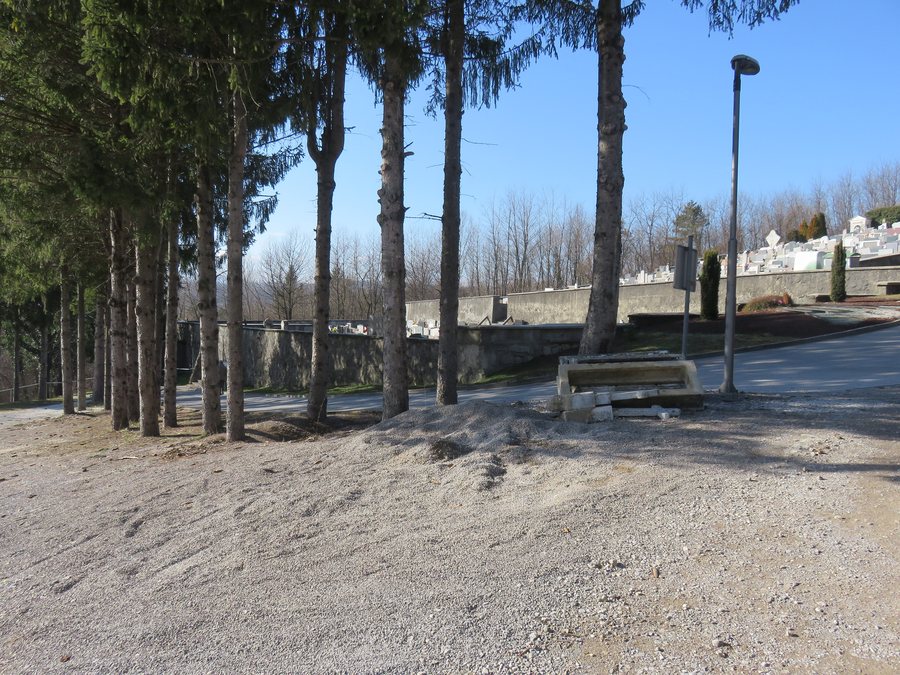 File:Ilirska Bistrica Slovenia - Cemetery Mass Grave 1.jpg
Photo: Doremo via Wikimedia Commons, CC BY-SA 4.0
File:Ilirska Bistrica Slovenia - Cemetery Mass Grave 1.jpg
Photo: Doremo via Wikimedia Commons, CC BY-SA 4.0
Nature
Kindler Park is home to 110 different plant species, including 45 conifer species and 65 deciduous tree species, as well as exotic plants. The Bistrica and Sušec rivers flow through the northwestern part of the park. This brings together paths, bodies of water, groups of trees and a diverse flora, without any single landscape element having to take centre stage.
Routes
The Trans Dinarica Route passes through the Karst and the Brkini Hills before leaving Slovenia near Ilirska Bistrica. Its route is available exclusively in digital form; it is also not specially signposted. Another route is the “K izviru Reke” cycle route. It leads from Ilirska Bistrica along the main road to Kuteževo.
Culture
The centrally located Hrib svobode monument was designed by academic sculptor Janez Lenassi and architect Živa Baraga. The adjoining memorial park commemorates those who fell in the final battles for the liberation of Ilirska Bistrica and its surroundings, as well as all overseas units that fought in the Second World War. The monument was created in the style of socialist modernism.
The town’s cultural offerings also include various smaller and larger points of interest. The Pavlovčeva Gallery is Ilirska Bistrica’s central exhibition centre. The shoemaker’s workshop of Ludvik Perše has been set up in an information centre located in the hair salon at Plac.
History
The former Bistrica Castle is now evidenced by overgrown foundations and some remaining sections of wall. Bistrica Castle, also known as Utrdba Gradina, was probably built at the beginning of the 13th century. Breda Museum Park is located at Ilirska Bistrica railway station. Visitors can see two locomotives, a museum carriage and a water crane there. Breda Museum Park was fully restored in 1986 and prepared for tourist journeys by the museum train.
Another historical theme is preserved by the Kettejeva pot literary trail. It is dedicated to the writer Dragotin Kette (1876–1899), a representative of Slovenian Modernism. The route runs between Prem, the birthplace of Dragotin Kette, and Trnovo, now a district of Ilirska Bistrica, where the poet spent his holidays. In one direction, the Kettejeva pot is just over 9 km long in total.
The Škoromati are an important and particularly wild part of the carnival procession through the streets of Ilirska Bistrica. At the same time, the Škoromati are among Europe’s most remarkable surviving carnival traditions and bear witness to the rich heritage of Ilirska Bistrica and its history spanning several thousand years.
There is a register of local tourist guides for the Zeleni kras destination in the municipality of Ilirska Bistrica.
More destinations
For further options, you can also visit Mereče, Knežak, Podgrad and Brce.
To the overarching travel overview: Ilirska Bistrica.

