
Theresienstadt: Memorial Sites, History and Visiting
Key facts: Theresienstadt
The name of Theresienstadt in northern Bohemia is inseparably linked with the concentration camp. Today, the town is a memorial to the victims of Nazi terror. Theresienstadt was originally built in 1780 by Joseph II as a fortified town. Laid out in a chessboard pattern, the town was named after Queen Maria Theresa and served as a garrison town.
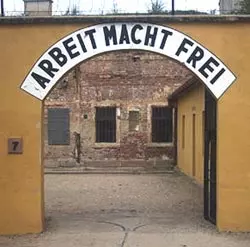 Eingangstor des ehemaligen Ghettos Theresienstadt mit der Inschrift ARBEIT MACHT FREI.
- Theresienstadt, known in Czech as Terezín, is in northern Bohemia and is an important place of remembrance for Nazi persecution.
- The historic fortified town and its individual memorial sites do not form a single, short exhibition visit.
- The ghetto, places of detention, cemeteries and exhibitions call for a thoughtful, respectful visit plan.
- A visit can be combined with Prague or other historic destinations in northern and central Bohemia.
- Opening hours, admission, guided tours, accessibility and current visitor guidance may change.
- Historical facts are considered separately from present-day transport, safety and visitor conditions.
- Theresienstadt, known in Czech as Terezín, is a historic memorial site in northern Bohemia.
- The fortress, former places of detention, memorial sites and exhibitions commemorate Nazi persecution and the history of the town.
- A visit calls for sufficient time, attention and respectful engagement with the memorial.
- The various memorial sites are not all located in one exhibition venue.
- Check opening hours, admission, accessibility and the memorial’s latest visitor information.
In November 1941, the German war criminal and “Reich Protector” Reinhard Heydrich had all of Theresienstadt converted into a ghetto and concentration camp. Those deported there included, above all, artists, intellectuals, Communists, and German Jews who had been wounded or highly decorated in the First World War. Prominent artists from Germany, Austria and the Czech lands, including the actor Kurt Gerron, were among the prisoners. Theresienstadt was presented to the public as a model settlement for resettled Jews. Nazi propaganda staged cultural and sporting events in Theresienstadt for the public, in order to deceive the Red Cross and other international organizations about the machinery of murder operating there. In reality, Theresienstadt was “only” a transit camp for deportations to the extermination camps—but it was an important propaganda tool for the Nazis.
Between 1941 and 1945, around 140,000 people passed through Theresienstadt—35,000 of them died there, while a further 85,000 were taken from there to concentration camps and murdered. When the Soviet army liberated Theresienstadt from the Nazis in 1945, it found only 18,000 survivors there.
Visitors to Theresienstadt should visit the Ghetto Museum (Muzeum ghetta). It is in the building on the main street, at the corner of Town Hall Street, where accommodation for the deported children (boys aged 10–15) was located. You can also visit the quarters used by the perpetrators: opposite the town park is a former SS officers’ headquarters. Right beside the main entrance is a cemetery with almost 2,300 mostly unmarked graves—and next to it, in the “Small Fortress” (Malá pevnost), the prison and Gestapo torture center, where a total of 32,000 political prisoners—mostly Communists—were held.
Visiting Theresienstadt respectfully
Theresienstadt calls for different preparation from a conventional day-trip destination. The fortified town, former ghetto and memorial sites bear witness to persecution, deportation and the culture of remembrance. A visit should therefore be planned with plenty of time, at an unhurried pace and with respect for the site. It makes sense to consider the historical context, exhibitions and routes between the different areas together. Check the memorial’s current visiting hours, guided-tour options and visitor information before setting out.
Visiting Theresienstadt responsibly as a place of remembrance
Theresienstadt is suited to travelers who want to engage with the history of the town and Nazi crimes. Allow plenty of time for the memorial sites, exhibitions and walks; a casual stopover does not do justice to the subject. Prague can serve as a base, while Mělník and Kutná Hora offer other historical points of interest.
A route through the Czech Republic can also include Pilsen, Pardubice, Hradec Králové, Karlovy Vary and events. Mariánské Lázně offers a different kind of travel experience and should not be conflated with the memorial site. Before visiting, check the memorial’s current opening hours, guided-tour options, access arrangements and visitor guidance directly.
Visit memorial sites with time and respect
Theresienstadt calls for different preparation from an ordinary day-trip destination. The fortified town and its memorial sites recall persecution, deportation and Nazi crimes. Allow sufficient time for the exhibitions, walks and personal reflection; a casual photo stop does not do justice to the place.
Prague makes a suitable base. Other historical destinations include Mělník, Kutná Hora, Pilsen, Pardubice, Hradec Králové, Karlovy Vary and Mariánské Lázně. Set aside separate blocks of time for each destination rather than combining them with the act of remembrance.
Before setting out, check transport and getting there and travel preparations. The official Theresienstadt Memorial provides information about opening hours, guided tours, exhibitions and visitor guidance. Confirm these details again shortly before your visit.
FAQ about Theresienstadt
How much time should you allow for Theresienstadt?
Allowing half a day to a full day is sensible for the main memorial sites and exhibitions. The exact duration depends on guided tours, walking distances and how much time you want for personal reflection.
What should you keep in mind when visiting?
Quiet, respectful behavior and enough time to engage with the exhibits are important. Check the current rules, opening hours and access arrangements with the memorial in advance.
Can Theresienstadt be combined with Prague?
Prague makes a suitable base if travel to and from Theresienstadt fits your plans. The memorial site should be planned as a dedicated, focused part of your itinerary.
Are there several memorial sites in Theresienstadt?
The memorial includes several historic areas and exhibitions. Check their locations, accessibility and current visitor rules on the official website before setting out.
