
Prague: Old Town, the Vltava and the Castle District
Prague brings together the Old Town, the Vltava, the Castle District and a variety of neighbourhoods. You can plan a first day on foot between Old Town Square, Charles Bridge and Malá Strana; to reach Prague Castle, the tram makes the climb up to the ridge easier. Two or three days also leave room for museums, quieter neighbourhoods and breaks.
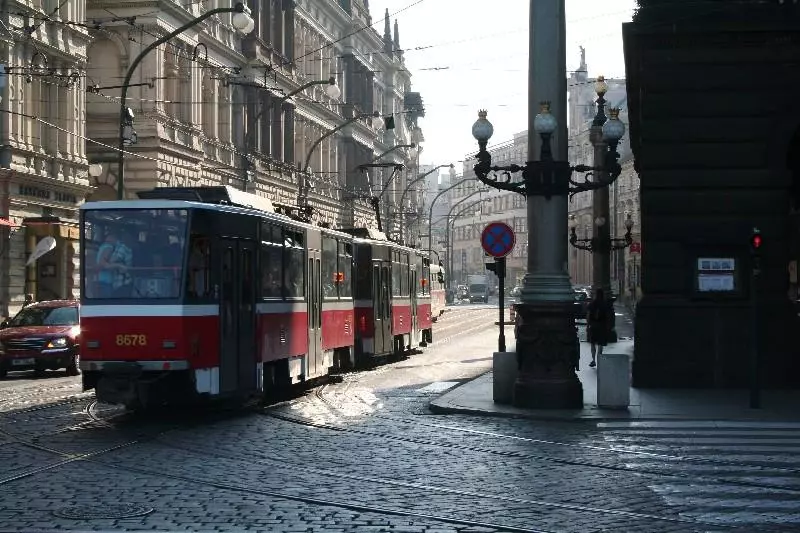 Straßenbahn in einer Straße der Prager Innenstadt.
Photo: Dago Wiedamann
Prague at a glance
- Prague combines a historic city centre, the Castle District, the banks of the Vltava and modern neighbourhoods.
- Old Town Square, Charles Bridge, Malá Strana and Prague Castle make for a well-connected sequence of stops.
- Tram 22 stops at Pražský hrad; Pohořelec and Královský letohrádek are other stops for routes to the castle.
- In 2026, single tickets for 30 minutes cost CZK 36 in the PID Lítačka app and CZK 39 on paper; 24-hour tickets cost CZK 140 and CZK 150, respectively.
- A weekend is enough to cover the main highlights, but not every museum and excursion.
- With more time, Bohemian towns and countryside can be added as separate legs of a trip.
Old Town, the Vltava and the Castle District
The top sights in Prague are not all part of a single walking route. Old Town Square, Charles Bridge and the lanes of the Old Town make up a compact historic area. Across the Vltava are Malá Strana and Prague Castle. If you visit both sides in one day, allow time for hills, crowds and photo stops.
The Vltava is more than a scenic backdrop. Bridges, riverside paths and changing viewpoints help you understand the city’s layout. A stroll along the water can provide a quieter interlude after a museum visit. In very hot or rainy weather, shorter routes between indoor attractions make more sense than an overambitious circuit through every neighbourhood.
Neighbourhoods and culture
Prague’s neighbourhoods differ noticeably in atmosphere, architecture and pace. Josefov is associated with Jewish history and museums, while the New Town has broad squares, shops and busy streets. Malá Strana and Hradčany, meanwhile, are more defined by historic buildings and their hillside settings. Another area may be better for cafés, restaurants and evening entertainment than the one where you stay.
A museum or concert can give structure to the day, especially when the weather is changeable. Film history enthusiasts may find the Barrandov Studios a more specialist point of interest. For city history and art, central collections, churches and historic squares work well as individual stops.
Prague as a base
Prague works both as a city-break destination in its own right and as a starting point for a trip through Bohemia. Czechia offers very different additions, including Český Krumlov, Kutná Hora, Pilsen and Karlovy Vary. It is best not to plan them all as spontaneous day trips, since travel time, time spent at each destination and the return journey to Prague determine whether an excursion is worthwhile.
For a weekend, two or three set priorities are usually enough. With four days or more, you can combine another neighbourhood, a museum day and an excursion. Depending on the operator, trains to Prague arrive at Praha hlavní nádraží (the main station) or Praha-Holešovice station, among others; departure and return times depend on the day of travel. If you are driving, parking outside the centre and onward transport matter more than having centrally located accommodation that is difficult to reach.
Seasonal timing and practical planning
Spring and autumn are often ideal for long walks around the city. Summer brings long evenings and larger crowds; early sightseeing and a lunchtime break help pace the day. In winter, museums, cafés and shorter routes create a different rhythm.
The weather can also affect the order of your plans. In the rain, you can combine the castle, Old Town and a museum using public transport; in good weather, riverside walks and viewpoints are well worth seeking out. The Terezín Memorial explores the history of the ghetto and the Small Fortress; both memorial sites and the journey there deserve their own full day in your itinerary.
Planning a route through the Old Town, along the Vltava and up to the Castle District
A first walk can link Old Town Square and Prague’s neighbourhoods with Charles Bridge, the Vltava and the Castle District.
Prague works both as a city-break destination in its own right and as a base for exploring Bohemia. Czechia offers different additions, including Český Krumlov, Kutná Hora, Karlovy Vary and Pilsen. Terezín explores the history of the ghetto and the Small Fortress and can be planned as a separate stop, with enough time for both memorial sites.
You can reach Prague Castle on Tram 22 to Pražský hrad, or via the Pohořelec and Královský letohrádek stops. In 2026, standard PID tickets cost CZK 36 in the app and CZK 39 on paper for 30 minutes; CZK 46 and CZK 50 for 90 minutes; CZK 140 and CZK 150 for 24 hours; and CZK 340 and CZK 350 for 72 hours. Paper tickets from vending machines and sales outlets must be validated once, at the start of the first journey; tickets already stamped with a time from on-board terminals or railway ticket offices are valid immediately. App tickets must be activated before travel. The tram and the walking route are two practical ways to reach the castle; you can plan other journeys around the city using Getting there and getting around. Your return journey, ticket and accommodation address are all part of trip planning. For a day exploring the city, accommodation near the Old Town or Malá Strana makes it easier to get around on foot; finding accommodation in Prague is a good place to start.
Frequently asked questions about Prague
How many days should I spend in Prague?
Two to three full days are a good amount of time for a first visit. More time leaves room for museums, quieter neighbourhoods and an excursion without packing your schedule too tightly.
Which places should I include on a first visit?
You can combine Old Town Square, Charles Bridge and the Vltava with a walk through Malá Strana. The castle sits higher up and can be reached by tram or on foot along the uphill route; set aside a separate block of time for its interiors and museums.
Is Prague a good starting point for a tour?
Yes. You can combine the city with towns in Bohemia and other destinations in Czechia, as long as you plan realistic travel times and overnight stays.
What should I know about popular sights?
Charles Bridge and the narrow lanes of the Old Town are quieter early in the morning. The tram makes the climb to the Castle District easier; the interiors and museums can be planned as a separate stop.
When do I need to validate a paper ticket?
Tickets from vending machines and sales outlets must be validated exactly once, at the start of the first journey: on a tram or bus, immediately after boarding; in the metro, before entering the platform area. Tickets with a validity time already printed on them, such as those from on-board terminals or railway ticket offices, are valid from the time of purchase and do not need to be stamped.
