
The Balkans: travel between the Adriatic, the Danube, and the Black Sea
The Balkans are particularly diverse as a travel destination, with coastlines, mountains, cities, rivers, and historic regions all close together. When including the Balkans in a trip, it is worth thinking about location, travel times, length of stay, and the right season—not just collecting individual sights. This makes for a more relaxed itinerary on the ground while leaving enough time for city walks, breaks, meals, museums, or excursions.
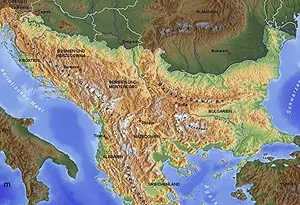 Die Balkanhalbinsel wird heute zumeist als Südosteuropa bezeichnet. Der Balkan läßt sich geographisch nicht vollständig abgrenzen.
Photo: Captain Blood / Wikipedia GNU Free Documentation License
Die Balkanhalbinsel wird heute zumeist als Südosteuropa bezeichnet. Der Balkan läßt sich geographisch nicht vollständig abgrenzen.
Photo: Captain Blood / Wikipedia GNU Free Documentation License
Character and location
Between the Adriatic, the Danube, the Carpathian region, and the Black Sea, landscapes and cultures change more quickly than a map might suggest. When planning a trip, it is important to decide whether a place will be a base, a day trip, or a stop on a longer tour. Capitals, spa towns, coastal resorts, and inland areas differ considerably, especially in the Baltics and the Balkans. Taking these differences into account early helps avoid overlong days and makes it easier to choose the surrounding area wisely.
For a well-planned trip, it helps to treat the Balkans not as one single route but as a series of smaller sections. Choose accommodation that suits your main focus: centrally located for short city walks, somewhere quiet for relaxation, near transport for excursions, or close to the water if beaches and strolls are the priority. In older town centres and popular excursion destinations, consider parking, routes with luggage, and peak season separately.
What to see and do
Historic town centres, coastal resorts, national parks, monastery landscapes, capitals, and mountain routes are among the main types of travel experience. Early mornings are often the most pleasant time to visit popular places, viewpoints, and museums. Afternoons are well suited to parks, waterfront paths, cafés, or shorter side trips, while evenings offer a quieter perspective on old-town lanes, squares, and promenades. At busy destinations, it is better to make a clear selection than to attempt an overly long list.
Combining a city with its surrounding landscape can be especially rewarding—for example, a capital with a lake, canyon, coast, or mountain town. To explore more deeply, seek out neighbourhoods, markets, local cuisine, small museums, and everyday routes. These details make a trip more memorable than photo stops alone. At the same time, it is important to stay flexible, as the weather, traffic, and local events can change the best plan for the day.
Excursions and combinations
This overview complements the pages for Albania, Bulgaria, Croatia, Montenegro, North Macedonia, and other countries. Albania Bulgaria Montenegro It makes sense to combine destinations that fit together geographically and thematically. A capital can be paired with spa towns, lakes, or historic sites; an overview of the Balkans, meanwhile, helps you organise coastlines, mountains, and cities to suit your pace of travel.
Borders, journey times, season, and road conditions can matter more than distance, so it is important to leave some leeway. For multi-day routes, two or three fixed bases are often better than moving every day. This keeps journeys manageable and leaves time for spontaneous stops. When travelling by bus, train, or rental car, actual journey time matters more than the distance on the map.
When to go and practical planning
Spring and autumn are often good seasons for city breaks, tours, and walks, as temperatures and crowds are usually more comfortable. Summer is particularly suited to coastlines, lakes, long evenings, and outdoor terraces, but demand for accommodation and transport connections is higher. In winter, museums, wellness, cafés, and short walks around town may take priority over long outdoor activities. For the Balkans, departure points, connections, and return journeys should therefore be planned around the specific itinerary.
Before setting off, check current opening hours, admission rules, ferry and bus connections, local advisories, and weather conditions. This is especially important in border regions, on islands, in national parks, at popular viewpoints, and at places with seasonal opening. Leaving some flexibility in the schedule makes for a more relaxing trip and makes it easier to adapt to changes. For the Balkans, departure points, connections, and return journeys should therefore be planned around the specific itinerary.
Putting the trip into perspective
The Balkans suit many different kinds of trip, from a beach holiday to a grand tour, but require a clear choice of countries and stages. A place becomes more meaningful when it is considered as part of a suitable route rather than in isolation. With a clear selection, realistic travel times, and a little time for everyday moments, even a short stop can become a rewarding part of the trip.
Understanding the Balkans as a travel region
The Balkans are not a single, uniform destination but a multifaceted region of coasts, mountains, river valleys, historic cities, and widely varied languages. For trip planning, it helps to organise destinations by theme: Adriatic towns, the Danube and Sava regions, the Black Sea coast, mountain areas, and capitals can be combined to suit the time available. Check border crossings, journey times, and local rules before setting out on a specific trip. One enduring planning principle is worth keeping in mind: short distances on the map can take longer to cover in mountainous regions.
Balkans: making your travel plans more specific
The Balkans are diverse. Borders, transport routes, landscapes, and local rules need to be checked separately for every itinerary. The order of stops depends on your time, mode of transport, season, and interests.
Plan stages to suit your own pace
A reliable itinerary starts with asking what is actually reachable in a day. Maps show distance, but do not necessarily account for connections, walks, luggage, waiting times, or finding your way around an unfamiliar station. Group nearby destinations around a shared focus and treat longer excursions as separate stages. Allowing some time for weather, delays, and changes makes it easier to decide what to do on the spot. For the Balkans, departure points, connections, and return journeys should therefore be planned around the specific itinerary.
Before making a confirmed booking, check current information with official bodies, transport providers, accommodation providers, and attractions. A travel article can explain the context, but it does not replace advice about entry requirements, safety, opening hours, permits, or timetables. This information can change. For the Balkans, choose accommodation based on the main daily routes and realistic breaks.
Combine cities, landscapes, and culture
Plan city visits by neighbourhood: a historic centre, a museum or viewpoint, and a quiet place to take a break. For countryside destinations, consider the weather, trail conditions, available facilities, and the return journey to your accommodation. Historic buildings, religious sites, and museums may have their own visitor rules. Photos do not guarantee access. For the Balkans, choose accommodation based on the main daily routes and realistic breaks.
Families, older travellers, and people with limited mobility benefit from short distances, places to sit, accessible toilets, and good transport links. When visiting natural areas and river landscapes, include water, suitable clothing, medication, and an offline alternative in your day plan. For the Balkans, plan routes and breaks with the needs and stamina of everyone travelling together in mind.
Assess transport realistically
When travelling by train, bus, car, or excursion boat, check departure points, connections, luggage rules, and the return journey together. For long distances, an overnight stop that is easy to reach can be useful. Rental-car travellers should check documents, insurance, local traffic rules, fuel availability, and whether the route is passable. For the Balkans, departure points, connections, and return journeys should therefore be planned around the specific itinerary.
Even within a city, straight-line distance is no reliable guide to travel time. Stations, bridges, waterfronts, pedestrian zones, and changes in elevation can make journeys longer. One main destination, one additional stop, and a break often make for a better day than a long list. Check bookings and opening hours directly with the provider. For the Balkans, departure points, connections, and return journeys should therefore be planned around the specific itinerary.
Travel respectfully and stay informed
Language, mealtimes, payment options, and customs can vary from one region to another. Ask before taking photographs in religious or private spaces. Put historical and political topics into context objectively. When information conflicts, official institutions, museums, local authorities, and reputable specialist sources are a better basis for decisions. For the Balkans, plan indoor visits, access, and the routes between each main stop separately.
Practical checklist
- Check current entry, transport, weather, and health information.
- Plan stages according to actual journey times, not straight-line distance.
- Prepare accommodation, the return route, breaks, and an alternative.
- Check opening hours, reservations, and visitor rules directly.
- Bring documents, medication, payment methods, and offline information.
- Do not make decisions based on uncertain, unverified information.
Frequently asked questions
How many destinations can you fit into one day?
It depends on distance, transport, opening hours, and your pace. A few nearby destinations are usually more realistic.
What should you check shortly before travelling?
Entry requirements, transport, opening hours, weather, health information, and local rules can change.
How can you keep an itinerary flexible?
Choose one main destination, one nearby addition, time for breaks, and an alternative in case of bad weather or transport disruptions.
