
Bosnia and Herzegovina: Cities, Mountains, Rivers, and Trip Planning
Bosnia and Herzegovina links Sarajevo and Mostar with river valleys, mountains, and historic places. For a first visit, the two cities work well as separate stops; the Neretva corridor connects the south with central Bosnia. A mountain hike is a separate leg of the trip: Sutjeska National Park provides access to Prijevor and a guided hike to Trnovačko Lake. Choosing roads and trails is also a safety matter, as mines and other remnants of war remain in rural areas.
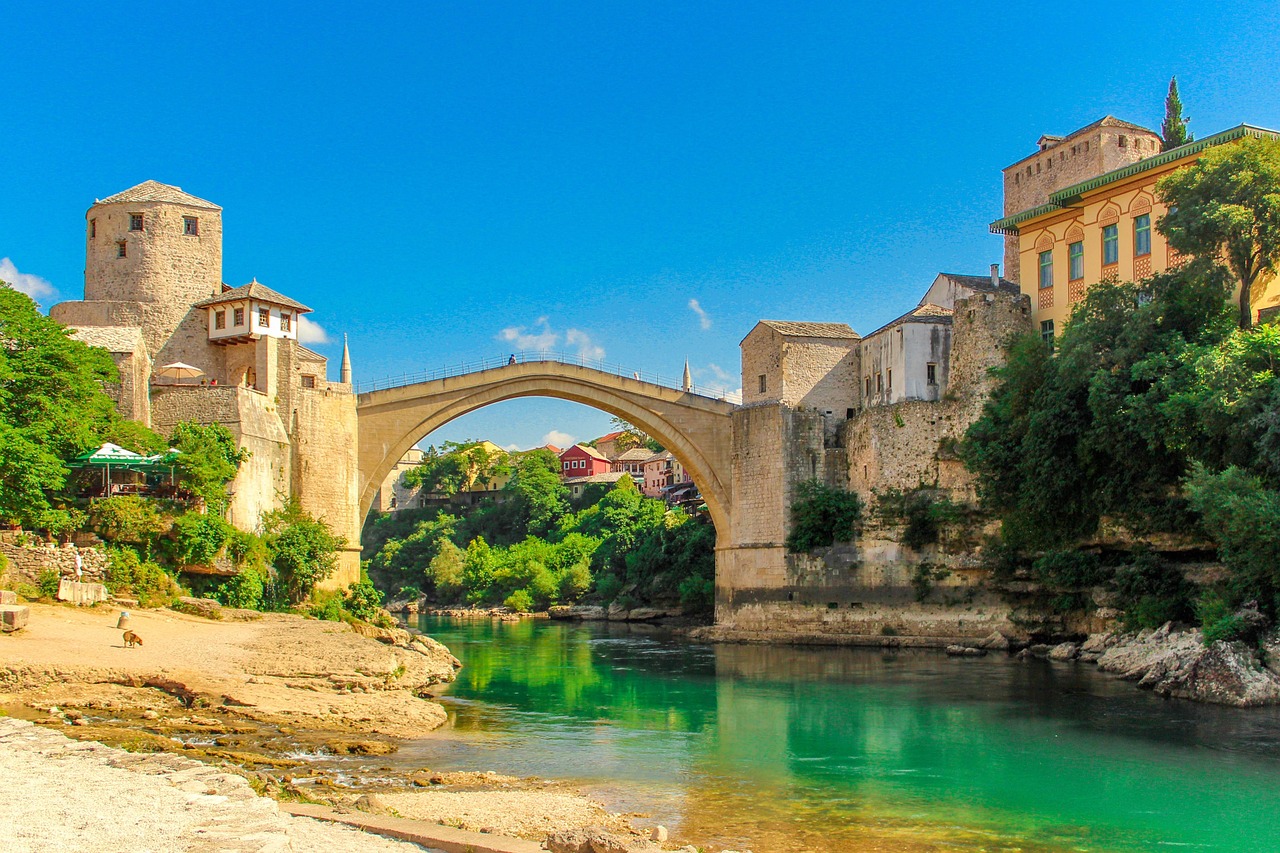 Die Brücke Stari most überspannt die Neretva in der Altstadt von Mostar.
Photo: Bild von Thales Paz auf Pixabay
Bosnia and Herzegovina at a glance
- Sarajevo brings together an old town, markets, and neighborhoods in a valley basin.
- Mostar lies on the Neretva and serves as a starting point for visits to Herzegovina.
- Banja Luka is a separate urban hub in the north.
- Sutjeska National Park offers mountain and nature destinations around Tjentište.
- Trnovačko Lake is in Montenegro; the park tour approaches it from the Bosnian side via Prijevor.
- There is still a risk of mines in rural and sparsely populated areas: do not leave roads and paved paths without an experienced guide.
- Choose accommodation and the length of your stay to suit your city stop, mountain hike, and onward journey.
Sarajevo and Mostar as two city stops
Sarajevo sits in a valley basin and brings together Baščaršija, religious buildings, markets, and traces of different eras. For a first day, explore the old town and its lanes and squares; viewpoints and museums add extra walking and sightseeing time. A stay of several days leaves time to visit different neighborhoods and choose cultural sites at a more leisurely pace.
Mostar offers a different focus, with Stari most, the old town, and the Neretva. A visit reveals more than the bridge if you also make room in your itinerary for the lanes, the river valley, and the history of Herzegovina. Sarajevo and Mostar can be combined as consecutive stays; the drive between them is a separate leg of the trip and takes time for the transfer, parking, and arrival.
In both cities, consider staying somewhere with convenient access to the old town and your onward route. If you want to explore central Sarajevo on foot, compare accommodation near the old town with access to the neighborhoods you plan to visit; in Mostar, weigh up the riverside, proximity to the old town, and the drive to your accommodation. When looking for accommodation, consider proximity to the old town and access to the neighborhoods you plan to visit.
A specific mountain hike: Trnovačko Lake via Sutjeska
Trnovačko Lake lies in Montenegro’s Piva Nature Park; according to Sutjeska National Park, the most accessible approach is from the Bosnian side via Prijevor. The park tour starts in Tjentište and reaches Prijevor in an off-road vehicle. From there, the trail passes through Suva Jezerina to the lake. The one-way distance is about five kilometers, with around three hours of walking for the round trip; the entire excursion is estimated to take four to six hours. The park rates the hike as moderate.
The tour on offer includes local transport and a licensed guide. The route crosses alpine terrain: sturdy hiking boots, warm clothing, water, and provisions are among the recommended items. Trnovačko Lake is therefore not a quick viewpoint stop on a Sarajevo–Mostar drive, but a full-day excursion starting and ending in Tjentište. Banja Luka is another city destination in the north and is best planned as a separate stop.
Mine risks and safe routes
Landmines and other unexploded ordnance from the 1992–1995 war remain in less populated and rural areas. The British government advises against leaving roads and paved areas without an experienced guide. Take particular care around former front lines, roadsides, open terrain, abandoned buildings, unpaved paths, forests, and overgrown plots. This guidance is directly relevant to hikes and detours in the countryside.
For the hike to Trnovačko Lake, the national park lists an off-road vehicle transfer and a licensed guide as part of its offering. These guided nature excursions differ from taking self-chosen shortcuts or leaving paved routes. For excursions, the specific route and local safety conditions matter. The risk of mines affects travel and transport in rural areas; an experienced guide is part of trip preparation for staying safe on the move away from paved routes.
Rivers, neighboring countries, and longer routes
The Neretva corridor connects Mostar with other destinations in Herzegovina. Sarajevo, Mostar, and Tjentište lie on different sections of the route; combining all three is better suited to several days than a short weekend. Sarajevo and Mostar can be combined with Montenegro, Serbia, or Croatia as part of a Balkan itinerary. Kotor and Dubrovnik are possible coastal stops west and south of Bosnia and Herzegovina.
You can also include Albania, Montenegro, Croatia, Slovenia, and Bulgaria in longer itineraries. A trip to Hungary lies farther north and offers a distinct contrast with the cities and mountain landscapes of the western Balkans. The Balkans encompass varied transitions between the Adriatic, mountains, and inland areas; allow for border crossings and driving days when planning your route.
Sarajevo and Mostar bring together culture and history; the Neretva and Sutjeska define nature and landscapes. Preparing for city stops and border crossings also means considering money and payments and language and communication.
Frequently asked questions about Bosnia and Herzegovina
How are Sarajevo and Mostar different?
Sarajevo combines its valley-basin setting with Baščaršija, markets, and several cultural neighborhoods. In Mostar, visits center on Stari most, the old town, and the Neretva valley.
How do you get to Trnovačko Lake?
Sutjeska National Park offers a guided excursion from Tjentište. An off-road vehicle takes the group to Prijevor, from where a hiking trail of about five kilometers leads to the lake.
How much time does the hike take?
The national park estimates four to six hours for the excursion, including about three hours of walking for the round trip. The hike is rated moderate.
What precautions should you take when hiking in rural areas?
Mines and unexploded ordnance remain outside densely populated areas. Do not leave roads and paved areas without an experienced guide; avoid forests, unpaved paths, roadsides, and abandoned buildings.
Which months does the national park list the tour for?
The park’s website lists the offered tour to Trnovačko Lake from April through November.
How many destinations can you fit into a weekend?
Sarajevo and Mostar can be planned as two city stops. The guided mountain hike from Tjentište requires an additional full day and a separate journey there.
