
Rossija Airlines: History and Overview
Rossija had become one of the largest airlines in the Russian Federation. On October 27, 2006, the merger that had been pursued since 2003 was officially completed between Pulkovo Airlines—a Russian airline based in Saint Petersburg—and Rossija, which had previously operated mainly government flights. In fact, Pulkovo is the principal partner in this new alliance. Rossija contributed the brand and several government aircraft.
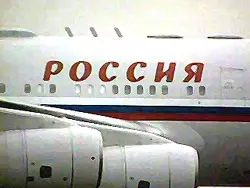 Flugzeug der russischen Airline Rossija mit dem Schriftzug am Rumpf.
Photo: Rossija
Flugzeug der russischen Airline Rossija mit dem Schriftzug am Rumpf.
Photo: Rossija
According to the latest ranking of Russian airlines, Pulkovo ranked third in passenger numbers, after Aeroflot and Sibir. Since November 2006, the aircraft of both airlines have flown together under the Rossija brand alone.
In 2010, a merger between Rossija and the state-owned Aeroflot was announced. Since March 30, 2014, Rossija has also operated under Aeroflot’s “SU” flight code.
Thanks to the merger, Rossija now has two main airports: Pulkovo Airport in Saint Petersburg and Vnukovo Airport in Moscow. The airline is headquartered in Saint Petersburg, while its Moscow branch handles government flights. Since the merger, Rossija has planned a series of measures. It has opened its own ticket sales agency and planned a major rebranding.
Today, Rossija aircraft serve many cities across Russia, including Saint Petersburg, Kaliningrad, Magadan, and the resort cities of Anapa and Sochi. The airline also operates numerous charter flights. It is currently negotiating with the international airline alliance OneWorld about joining.
A corresponding partnership between Rossija and OneWorld—which includes British Airways and American Airlines, among others, and is led by them—would benefit both sides, especially the customers of the airlines involved.
OneWorld currently serves 142 countries around the globe. Through the international air hub at London Heathrow, Rossija could improve access to destinations in these countries, and especially to destinations in the United Kingdom, the United States, and Southeast Asia.
In return, the OneWorld member airlines could reach additional destinations in the former Soviet republics via the two Russian airports—Vnukovo in Moscow and Pulkovo in Saint Petersburg—where connections would be available.
Rossija’s CEO, Sergei Mikhaltschenko, considers it possible to conclude the negotiations before the end of the year. This would allow the changes to be reflected in the flight schedules valid from summer 2009.
Quick facts: Rossija
- Rossija Airlines is connected to the historical development of Pulkovo Airlines and air travel in Saint Petersburg.
- Pulkovo in Saint Petersburg and Vnukovo in Moscow feature in the company’s history as important airport links.
- The connection with Aeroflot changed how the brand and its flight code were classified.
- Historical routes, charter plans, and fleet information apply only to the periods for which they are documented.
- An airport name in an old document does not confirm that it is served today.
- Check current schedules, entry requirements, baggage rules, terminals, and return travel separately.
Understanding Rossija as a historical airline
Rossija represents an earlier period in Russian aviation and its connection with Pulkovo. This information provides historical context about the company and should not automatically be treated as a current flight schedule. The development of brands, airports, and government or regional roles in aviation is particularly revealing when studying the history of air travel. When dealing with old company names, also check before booking whether a brand continued, was renamed, or was incorporated into another company.
For a specific trip to Moscow or Saint Petersburg, check current airlines, airports, entry requirements, baggage rules, and connection times separately. Historical route information is not suitable as a booking recommendation. For day-to-day travel planning, rely on the confirmed itinerary, the transfer to the airport, and a sufficient time buffer.
When reviewing historical information about Rossija, travelers should also distinguish between the brand, the operating airline, and the airport. For a current itinerary, the information on the confirmed booking is authoritative. For a connection in Moscow or Saint Petersburg, check the terminal, transfer time, and baggage transfer arrangements. Older route networks may be of historical interest, but they are no substitute for a current schedule or authoritative information on entry and transit rules.
Distinguishing Rossija, Pulkovo, and Aeroflot by period
Rossija Airlines can only be understood in its historical context. The airline was connected with Pulkovo Airlines and later became closely integrated into the Aeroflot structure. Historical company names and flight codes should therefore not be used in current travel information without specifying the year.
Pulkovo is the airport associated with Saint Petersburg, while Vnukovo is associated with Moscow. Old documents should be read with reference to the departure airport, date, flight number, and actual operator. Changing airports can involve additional travel, costs, and overnight stays.
For comparisons within Russian aviation, see Aeroflot, Sibir Airlines, UTair, and Ural Airlines. The fact that they appear together in an old market report does not mean that current schedules or booking procedures are the same.
Anyone planning a specific trip should check Russia, travel and transport, ticket conditions, baggage, entry requirements, and the return journey. For current offers, rely on confirmation from the provider actually selling and operating the service; historical Rossija articles are for context only.
Rossija Airlines FAQ
How should Rossija Airlines be viewed historically?
Its development is connected with Pulkovo Airlines, Saint Petersburg, and, later, the Aeroflot structure. The period in question should always be specified.
Which airports are associated with Rossija?
Historical sources mainly refer to Pulkovo in Saint Petersburg and Vnukovo in Moscow. For current flights, check the specific airport on the latest ticket.
Are old Rossija flight schedules still valid?
No. Old routes, flight numbers, and charter information are historical sources, not a promise of a current service.
What matters when changing airports?
Check the terminal, distance, transfer, baggage, entry requirements, and time buffer before booking. Moscow’s airports are not interchangeable.
