
Planning transit and onward travel for connections
Transit and onward travel are easier to plan when each part of the route is considered separately. For a connection, it is not just the departure and arrival times that matter, but also the terminal, baggage, passport control, security screening, and the route to the next mode of transport. Especially when traveling on separate tickets or switching between a plane, train, bus, and ferry, you should work out before booking how much time to allow realistically.
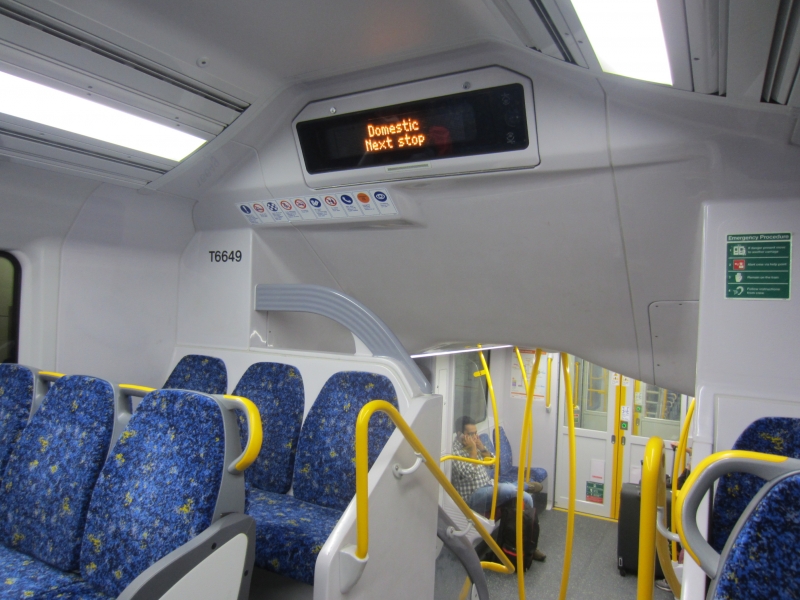 Innenraum eines Flughafenzugs mit Anzeige für die nächste Station.
Photo: Markus
Innenraum eines Flughafenzugs mit Anzeige für die nächste Station.
Photo: Markus
Quick facts: Transit and onward travel
- A connection may be within one terminal, between terminals, or at a different railway station or airport.
- Separate tickets are not automatically treated as one continuous journey.
- Depending on the connection, baggage may need to be collected, checked in again, or taken to another mode of transport.
- Transit rules depend on your passport, the transit country, the airport, and whether you leave the transit area.
- A time buffer should account for walking, checks, delays, and finding your way around the transfer point.
- An address saved offline and a plan for the first night can help if your onward journey does not go as planned.
Break the entire route into sections
Start planning by setting out a simple sequence: departure, first connection, next leg, arrival, and the final journey to your accommodation. For each section, note the location, terminal or station, departure and arrival times, and required documents. Getting there and transportation helps you check connections, transfers, and local routes in advance.
A tight connection often looks easier on screen than it is in practice. Traveling between a plane and a train involves walking through terminals, going through checks, and getting to the station. If you need to change airports, you also have to account for travel time, traffic, and baggage. A later connection may be a better choice if it helps you avoid an overnight stay or a difficult-to-reach connection.
Allow more time when traveling with children, older people, or a lot of luggage. Unfamiliar scripts, a large station, or a transfer late at night can also make it take longer to find your way. The travel checklist and schedule help you identify these factors before departure.
Check passport control and transit requirements
Before traveling onward internationally, check whether you can leave the transit area without entering the country. This depends, among other things, on the airport, the countries involved, your passport, and your ticket. If you need to collect baggage, change airports, or reach accommodation outside the transit area, you may have to go through immigration. Entry requirements and documents outlines the relevant questions.
Depending on the route, citizens of the European Union may need different documents from travelers from non-EU countries. Check the current requirements against your passport and every transit country. The European Union’s information on travel documents provides a general official overview; for a specific route, the relevant authorities and carriers are also key sources.
Keep permits, booking confirmations, and contact details accessible in your hand luggage. Keeping travel documents secure digitally explains how to keep details of the first leg, accommodation, and important phone numbers available even without internet access. You must still carry the original documents.
Baggage and tickets for separate bookings
With a through booking, the provider may handle baggage and connections together under certain conditions. With separate tickets, however, you need to check whether you must collect your baggage at the transfer point and check it in again. Allow time for this, and consider access to the baggage claim area and check-in opening hours. Baggage and hand luggage helps you keep essential items within reach.
The rules for delays can also differ. A delay on the first leg does not automatically protect your next ticket. So, gather contact details, booking references, a payment method you can access, and a realistic alternative in case changes are needed. Time buffers, contacts, and a Plan B adds to this preparation.
Getting around after arrival
Check the final leg just as carefully as an international connection. This includes the route from the airport or station, the last available service, a meeting point, and the address written in the local script. If you arrive late, it may help to have a simple alternative, such as an accessible place to stay overnight or another transfer option. Language and communication helps with addresses, translations, and important words offline.
A few spare essentials in your hand luggage, a charged power bank that complies with applicable transport rules, and a paper note with your accommodation and contact details can make the onward journey easier. In case of loss or illness, Travel safely can help with the next steps. More practical topics are listed under Practical information.
Frequently asked questions
How much time do I need for a connection?
It depends on the airport, terminal, checks, baggage, and ticket. The published minimum connection time does not replace checking your own route.
What applies when I have separate tickets?
The legs usually need to be considered independently. If there is a delay, you are not automatically guaranteed onward travel with the next provider.
Do I have to enter the country during transit?
Not always. However, you may need to enter the country if you leave the transit area, collect baggage, or change airports.
What should I keep within reach in my hand luggage?
Keep your passport, permits, booking references, medication, charger, accommodation address, and important contacts accessible until you arrive.
